Sydney Soars as Asian Markets Dip Amid Chinese Policy Anticipation
On Wednesday, while most Asian stock markets fell, Sydney’s index bucked the trend by reaching a historic high.
The Shanghai Composite Index in China dropped by 0.45% to 2,962.85 points, with the Shenzhen Composite also falling 0.78% to 1,599.29 points.
Declines in oil and aluminum shares primarily fueled these downturns. Investors had their eyes set on the Chinese Communist Party, hoping for economic stimulus announcements at a four-day leadership meeting.
However, promises remained unfulfilled as the meeting neared its end.
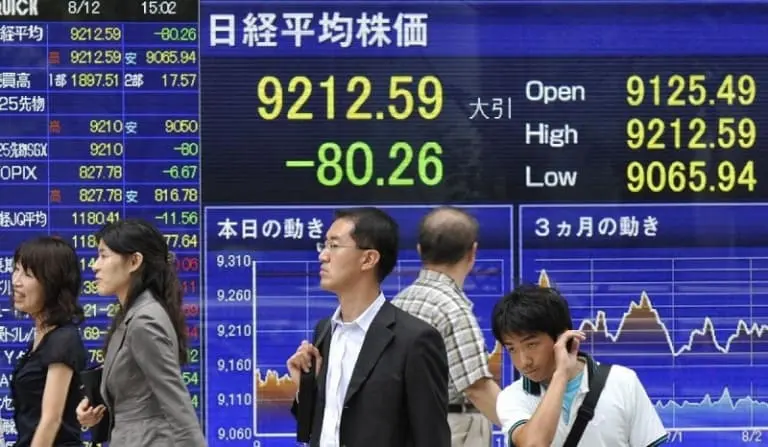
In Tokyo, the Nikkei index decreased by 0.43% to 41,097.69 points, influenced by struggles in the electronics sector.
Similarly, South Korea’s Kospi lost 0.80%, settling at 2,843.29 points. Taiwan’s Taiex also saw a reduction, dropping 0.95% to 23,769.82 points.
Contrastingly, the Hang Seng in Hong Kong managed a marginal gain of 0.06%, reaching 17,739.41 points, offering a glimmer of resilience amidst regional declines.
Australia’s S&P/ASX 200 emerged as a beacon of positivity, advancing 0.73% to an all-time high of 8,057.90 points.
This marked its third record-setting close in just four sessions. The climb was largely supported by robust performances in the real estate and technology sectors.
These movements in the stock markets are not just numbers but indicators of economic sentiments and potential shifts in global finance.
Asia’s usual vibrancy was overshadowed by cautious investor behavior, driven by uncertainty about China’s economic policies.
Australia’s market surge, capitalizing on favorable conditions, may attract more global investors seeking growth opportunities.
This divergence highlights how regional dynamics distinctly influence global economic landscapes.
This article was produced by The Rio Times’ automated newsroom system. How we use AI · Report an error
LatAm Markets: Live Signals → — real-time movers, turnover leaders and FX across Latin America.
Read More from The Rio Times