SUDAN · ANALYSIS
Key Facts
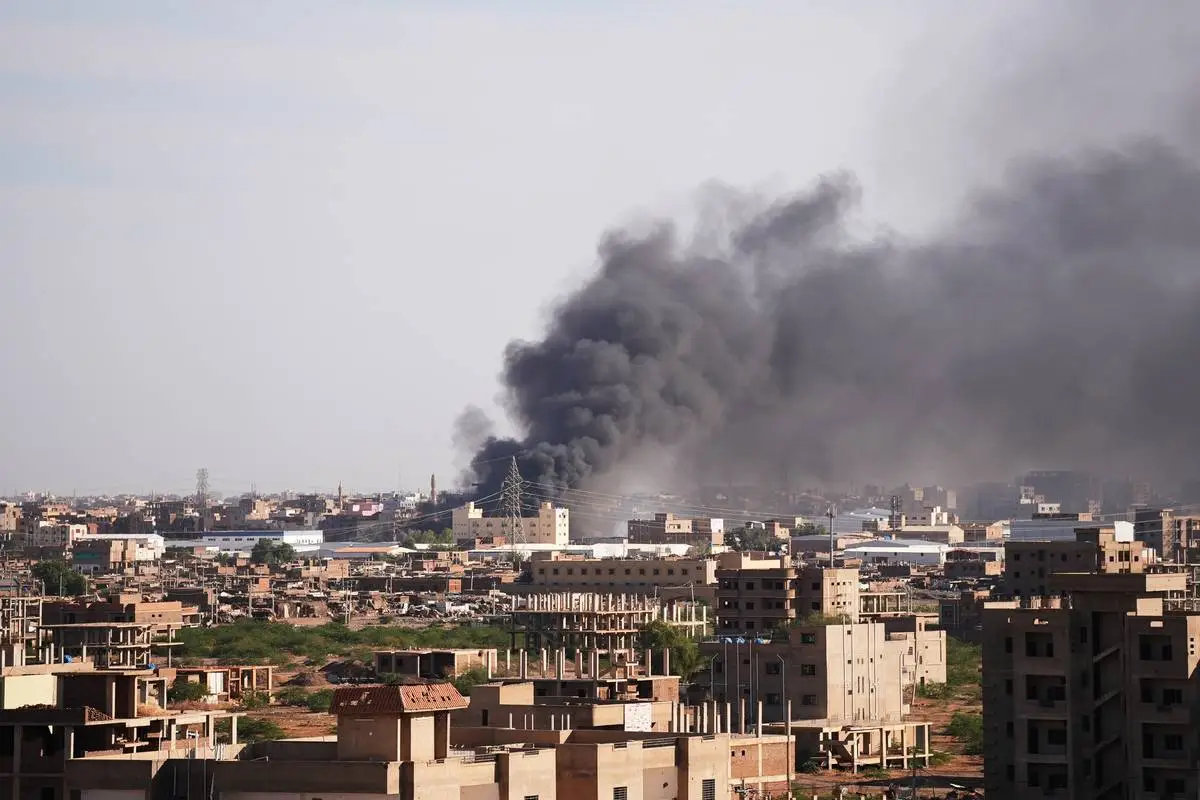
- —What is happening Sudan’s fuel shortage in October 2026 has pushed parallel-market petrol to about SDG60,000 per gallon, nearly double the official station price of roughly SDG37,000.
- —Why it matters Fuel scarcity raises transport, food and humanitarian costs across Sudan, deepening an already severe displacement and hunger emergency.
- —The numbers Diesel on the parallel market reached SDG65,000 to SDG70,000 per gallon in early October 2026, against about SDG45,000 at official stations, according to Sudan Times.
- —Who is who The army-aligned authorities under General Abdel Fattah al-Burhan control Port Sudan and formal imports.
- —What to watch Whether the Central Bank of Sudan eases its reported 200-kilogram gold collateral requirement for fuel importers, and whether Port Sudan can sustain faster distribution ordered by Prime Minister Kamil Idriss.
- —What it means for you For US readers, Sudan’s fuel crisis signals rising Red Sea shipping risk, tighter humanitarian funding needs and potential spillover into regional energy and security markets.
Sudan’s fuel shortage in 2026 is not a simple lack of oil. It is a foreign-exchange and logistics crisis that has made fuel unaffordable and unreliable for millions of civilians, with direct consequences for US interests in Red Sea shipping, humanitarian aid and regional stability.
Sudan sits on the African shore of the Red Sea, a corridor through which a significant share of global oil and container traffic passes. This analysis explains why the country is short of fuel, who controls supply, and what the crisis costs civilians and foreign partners. It draws on the Africa Intelligence Brief published by The Rio Times on 5 October 2026.
A Dollar Shortage, Not an Oil Shortage
The most important fact about Sudan’s fuel crisis is that the country can have tankers offshore while filling stations remain dry. Importers need foreign currency to pay for refined products, freight, insurance, port charges and inland transport. When dollars are scarce, cargoes wait or are discharged only partially.
A Sudanese analysis described the situation as a dollar shortage rather than an absolute shortage of supply. Vessels have reportedly unloaded only part of their cargo while waiting for further payment. This means the crisis is financial and administrative before it is physical.
The Sudanese pound has lost value sharply. Every imported litre of fuel therefore costs more in local currency, even if the international dollar price does not move.
The Numbers at the Pump
Prices vary by state, date and market. In early October 2026, Sudan Times reported the following levels:
- Petrol at official stations: about SDG37,000 per gallon.
- Petrol on the parallel market: about SDG60,000 per gallon.
- Diesel at official stations: about SDG45,000 per gallon.
- Diesel on the parallel market: SDG65,000 to SDG70,000 per gallon.
State-level official prices also diverged. Red Sea State set petrol at SDG7,748 per litre in October 2026, up from SDG7,064. Al Gezira State set petrol at SDG8,950 per litre from 1 October 2026.
These figures are not nationally uniform. They show a two-tier market in which official stations sell below market-clearing prices while informal sellers charge multiples of the regulated rate. The gap creates an incentive to divert officially supplied fuel into the black market.
Who Controls Supply
There is no single national fuel market in Sudan. Supply is divided among competing authorities, importers, security actors and informal traders.
The Army-Aligned Authorities
The Sudanese Armed Forces, commanded by General Abdel Fattah al-Burhan, control Port Sudan, much of eastern and northern Sudan, and the principal state institutions. Port Sudan is the main formal entry point for fuel imports into government-held territory. The army-aligned administration therefore controls customs, petroleum ministries, official pump prices and allocation of scarce fuel.
Prime Minister Kamil Idriss, who heads the civilian-facing government, ordered increased deliveries and faster distribution in late September and early October 2026. That may reduce queues temporarily, but it does not resolve the financing, refinery and transport constraints.
The Rapid Support Forces and Western Corridors
The Rapid Support Forces, commanded by General Mohamed Hamdan Dagalo, known as Hemedti, control or influence large areas of Darfur and western Sudan. Those areas include routes linked to Libya, Chad and other neighbouring markets.
The RSF does not control national fuel supply, but it controls alternative routes and local markets that compete with or evade the Port Sudan-centred system.
Private Importers and the Central Bank
Private companies remain essential because the state lacks the foreign currency and operational capacity to import and distribute all required fuel. But wartime restrictions and financing rules have narrowed the field. Reports state that the Central Bank of Sudan requires fuel importers to provide financial backing equivalent to 200 kilograms of gold before import approvals can be issued.
That requirement restricts participation to companies with substantial access to hard currency or gold-linked finance. Concentration can simplify oversight, but in a wartime economy it also creates a bottleneck. If a small number of importers cannot obtain dollars, arrange credit or clear cargoes, national supply falls quickly.
The War Economy and Regional Players
Sudan’s fuel market is priced in Sudanese pounds, but the underlying transaction is effectively dollar-based. The government receives limited hard currency from exports, while war has damaged production and disrupted trade. Gold has become a crucial source of foreign exchange and a mechanism for securing imports.
Egypt is Sudan’s principal northern neighbour and an important political and military partner of the army-aligned authorities. It provides a potential overland and maritime alternative for northern Sudan. But Egypt cannot easily replace Port Sudan. Long overland routes, border capacity, security risks and Egypt’s own foreign-exchange constraints limit the scale and reliability of any Egyptian supply channel.
Chad is both a neighbour and a transit territory. Its eastern border connects Sudan’s western regions to cross-border trade corridors. Fuel moving through Chad often bypasses formal Sudanese channels and feeds local markets in Darfur and Kordofan.
What It Costs Civilians
The direct cost is visible at the pump, but the larger impact is transmitted through transport, food and essential services. Fuel shortages raise bus and taxi fares, trucking costs, agricultural production expenses and the cost of moving food from farms and ports to cities.
Reporting from Sudan linked the shortage to disruptions in public transport, freight, industrial production and food supplies. For civilians, the practical effect is often not simply expensive petrol, but fewer buses, more expensive food and longer journeys to obtain basic goods.
Cooking gas is not the same product as petrol or diesel, but its price shows how energy costs ripple through household budgets.
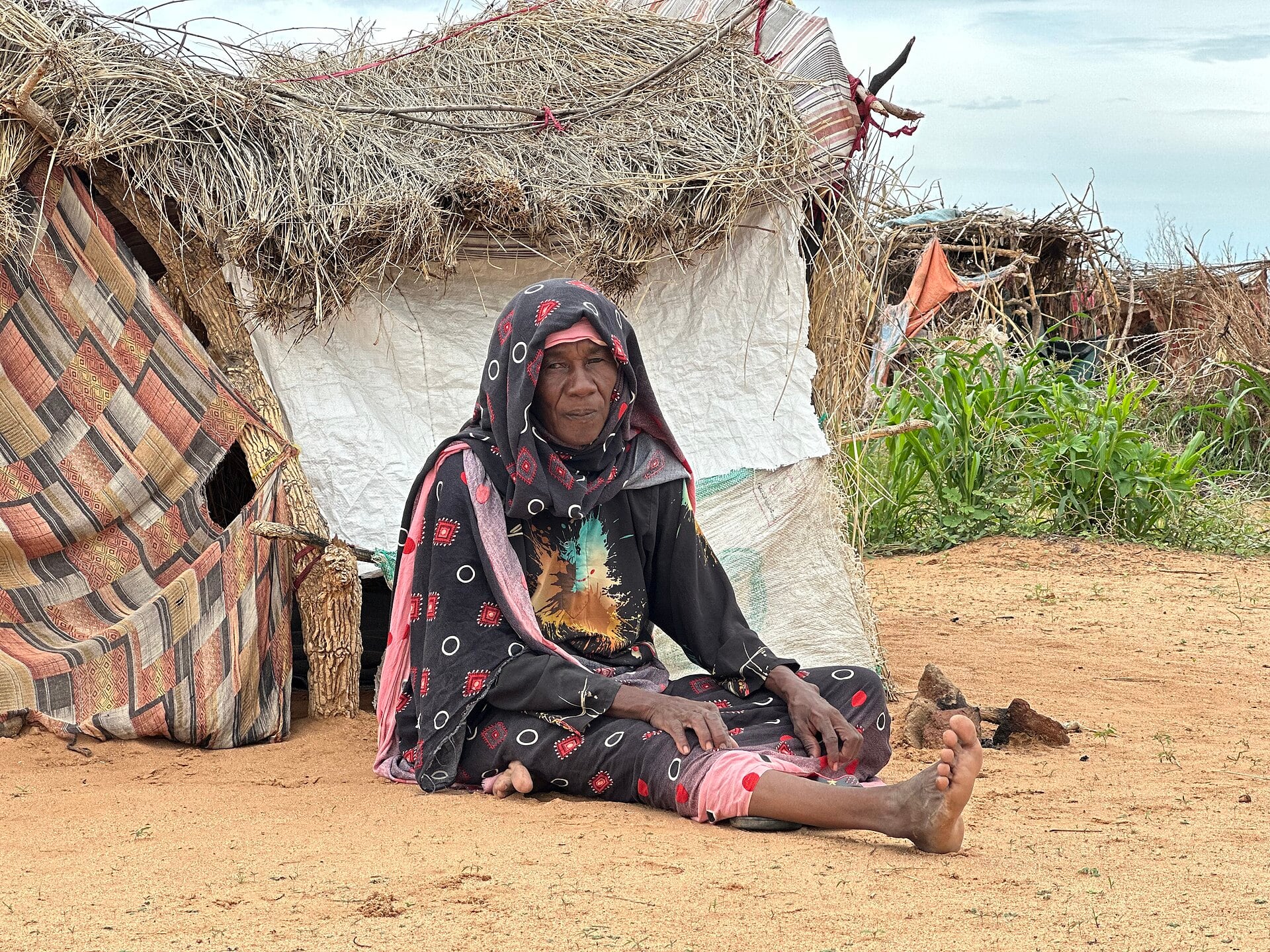
Humanitarian operations are also exposed. Aid organisations require diesel and petrol for trucks, water pumps, generators, cold chains and warehouses. When fuel becomes scarce or unaffordable, food distribution slows, water systems become harder to operate and health facilities face generator constraints.
What It Means for the United States
For US readers, Sudan’s fuel crisis matters in three ways. First, it raises Red Sea shipping risk. Disruption in Middle Eastern energy markets and elevated Red Sea security risks increase both the commodity price and the cost of transporting and insuring cargoes. US importers and shipping companies face higher freight and insurance costs even if their vessels do not call at Sudanese ports.
Second, it increases humanitarian exposure. Sudan already has one of the world’s largest displacement and hunger emergencies. Fuel scarcity magnifies those needs and makes aid delivery more expensive. US-funded humanitarian programmes will face higher operating costs and slower distribution.
Third, it complicates sanctions and financial oversight. The concentration of fuel imports among a small number of companies with gold-linked finance raises questions about who benefits from wartime trade. US policymakers and compliance officers will need to monitor whether fuel import channels intersect with sanctioned actors or illicit financial networks.
What It Means for Latin America
Latin America is not a direct fuel supplier to Sudan, but the crisis has indirect relevance. Brazil and other Latin American oil producers are sensitive to global freight and insurance costs. Rising Red Sea risk can shift shipping routes and raise costs for Latin American crude and refined product exports to Asia and Europe.
The crisis also reinforces a broader lesson for Latin American economies that depend on fuel imports. When a currency weakens and foreign exchange becomes scarce, fuel shortages can emerge even without a physical supply disruption. Countries with large informal fuel markets and weak distribution systems face similar risks if financing conditions tighten.
Scenarios: What Could Ease or Worsen the Shortage
The most stabilising scenario would be a relaxation of the reported gold-collateral requirement, combined with faster foreign-exchange allocation for fuel imports. If more importers can access dollars and clear cargoes, queues could shorten and parallel-market prices could fall. Prime Minister Kamil Idriss’s order for faster distribution points in this direction, but it does not address the underlying financing constraint.
A second stabilising factor would be the partial restoration of refining capacity. Even a modest increase in output from the al-Jaili refinery or other facilities would reduce dependence on imported refined products and lower the foreign-exchange burden.
The most dangerous scenario would be a further tightening of import financing while Red Sea security deteriorates. That would push more fuel into the black market, raise transport and food prices further, and deepen the humanitarian emergency. A prolonged standoff between the army-aligned authorities and the Rapid Support Forces over western supply corridors would also fragment the market further.
What It Means for You
If you are an investor, executive or policy reader in the United States, Sudan’s fuel crisis is a signal to watch Red Sea shipping costs, humanitarian funding needs and the financial networks behind wartime fuel imports. It is not a short-term supply disruption that will resolve itself. It is a structural foreign-exchange and logistics problem that will persist as long as the war continues and the Sudanese pound remains under pressure.
What Is Not Known
The available evidence does not establish that Sudan has literally exhausted all fuel stocks nationwide. Those figures are attributed to the Ministry of Energy and Petroleum but are not independently verifiable official inventory data.
It is also not known how much fuel is moving through western cross-border corridors controlled or influenced by the Rapid Support Forces. No comprehensive public data exists on volumes or prices in those areas.
Finally, the exact terms of the Central Bank’s gold-collateral requirement have not been independently confirmed. Reports state that fuel importers must provide backing equivalent to 200 kilograms of gold, but the Central Bank has not published a consolidated official fuel-balance table or a current national price schedule.
What to Watch
Watch whether the Central Bank of Sudan eases or clarifies its fuel-import financing rules before the end of October 2026. Any change in the reported 200-kilogram gold requirement would be a leading indicator of whether supply can expand.
Watch Port Sudan discharge and distribution data in November 2026. If vessels continue to unload partial cargoes while waiting for payment, the dollar shortage remains the binding constraint.
Watch state-level price announcements in Red Sea State, Al Gezira and other government-held areas. Further divergence in official prices would signal the erosion of a single national pricing system.
Watch humanitarian fuel coordination through the Logistics Cluster. If approval delays persist despite available capacity, aid operations will face rising costs and slower delivery into early 2027.
Related reading: Sudan Explained 2026, a Newcomer Guide to the Country; Sudan War 2026: What Is Happening, Who Is Fighting, and What Comes Next; Sudan War Spreads to Blue Nile as RSF Claims Army Bases and Nearly 20,000 Flee; more from Sudan.
Why is Sudan running out of fuel in 2026?
Sudan is short of fuel mainly because of a foreign-exchange shortage, the shutdown of the al-Jaili refinery and tighter import-financing rules. Importers need dollars to pay for refined products, freight and insurance, and the Sudanese pound’s collapse has made every cargo more expensive in local currency.
Who controls Sudan’s fuel supply?
The army-aligned authorities under General Abdel Fattah al-Burhan control Port Sudan and the main formal import route, while private importers and black-market distributors handle much of the actual distribution.
How much does fuel cost in Sudan in October 2026?
In early October 2026, petrol at official stations cost about SDG37,000 per gallon, while parallel-market petrol reached about SDG60,000 per gallon. Diesel ranged from about SDG45,000 at official stations to SDG65,000 to SDG70,000 on the parallel market, according to Sudan Times.
What role does the Central Bank of Sudan play in the fuel crisis?
The Central Bank of Sudan controls foreign-exchange allocation for fuel imports. Reports state that it requires fuel importers to provide financial backing equivalent to 200 kilograms of gold before import approvals can be issued.
How does Sudan’s fuel shortage affect the United States?
The crisis raises Red Sea shipping and insurance costs, increases humanitarian funding needs and complicates sanctions oversight. US importers, aid agencies and compliance officers all face higher costs or greater risk because of Sudan’s fuel market breakdown.
Could Sudan’s fuel shortage ease soon?
It could ease if the Central Bank relaxes its gold-collateral requirement and allocates more foreign exchange to fuel imports. It would worsen if Red Sea security deteriorates or if import financing tightens further, pushing more fuel into the black market.
Frequently Asked Questions
Sources: riotimesonline.com, thesudantimes.com, bastillepost.com, africanews.com, allafrica.com, sudantransparency.org. Retrieved 5 October 2026.
This article was produced by The Rio Times’ automated newsroom system. How we use AI · Report an error · Editorial responsibility: Matthias Camenzind, Editor-in-Chief
Part of our ongoing coverage
Africa: The New Scramble — the great-power contest over the continent.