Brent Tops US$92 as Two Saudi-Crude Tankers Are Hit in the Strait of Hormuz
ENERGY · MARKETS
Key Facts
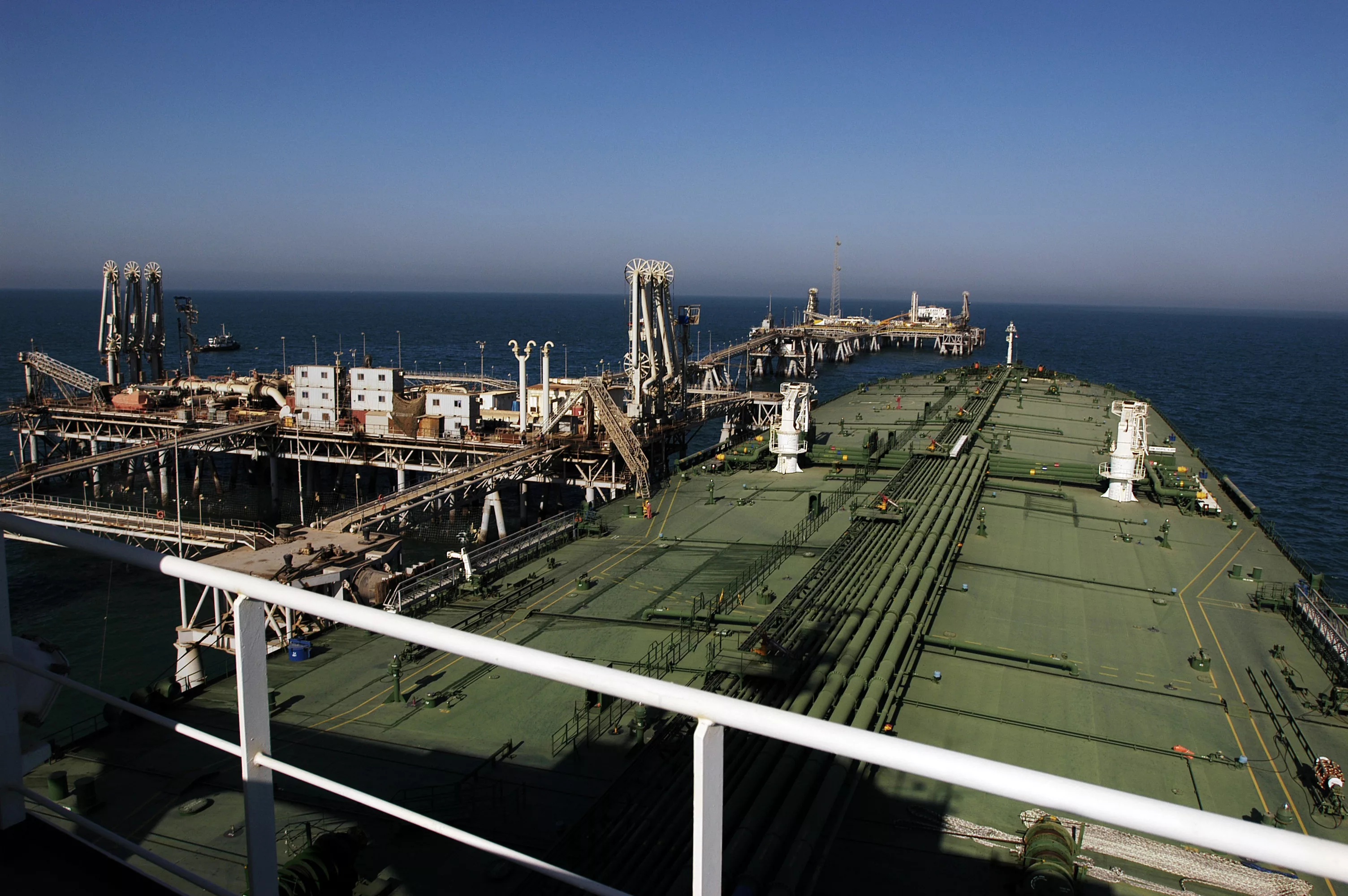
The attack: Two supertankers, each carrying about 2 million barrels of Saudi crude, were struck by unknown projectiles within minutes of each other while sailing out of the Strait of Hormuz late on Monday. All crew are reported safe.
The price: Brent traded above US$92 a barrel on Tuesday, up about 2 percent from Monday’s settlement of US$90.49, as the first direct US-Iran exchanges in a month turned into a second day of escalation.
The rhetoric: President Donald Trump threatened to “hit them hard” and said Washington may continue strikes; Tehran’s answer was diplomatic, with President Masoud Pezeshkian publicly defending a return to the June memorandum meant to end the war.
The bond rout: A global debt sell-off deepened. The 10-year US Treasury yield hit 4.79 percent, its highest since January 2025, and Japan’s 10-year yield touched 3 percent, a level not seen in decades.
The backdrop: Eurozone inflation accelerated to 3.3 percent in August, hardening expectations that the European Central Bank will keep tightening, while US stocks pointed to a weaker start to September.
Two supertankers loaded with Saudi crude were struck by unknown projectiles as they exited the Strait of Hormuz, pushing Brent above US$92 a barrel and deepening a global bond sell-off that is lifting borrowing costs from Washington to Tokyo. For Latin America, September opens with oil revenue up and financing costs up faster.
Two VLCCs, four million barrels, minutes apart
The Saudi Arabian-flagged very large crude carrier Sidr, operated by the kingdom’s national shipping company Bahri, was struck by unknown projectiles about 16.6 nautical miles northeast of Khasab, on Oman’s Musandam Peninsula, at about 19:52 UTC on Monday, according to shipping intelligence firm Marisks. Minutes later, the Liberian-flagged VLCC Senegal Prosperity, operated by South Korea’s Sinokor, was reportedly hit by three projectiles about 17 nautical miles east of Khasab.
The United Kingdom Maritime Trade Operations agency reported three projectiles striking a tanker in the same location as it sailed out of the strait, in what appeared to be the same incident. No casualties and no environmental impact were reported, and all crew aboard both vessels are safe. Data from Kpler showed each tanker had loaded about 2 million barrels of Saudi crude at the Juaymah terminal last week; Saudi Aramco only resumed loadings and sales from inside the strait in August. Both ships had deactivated their AIS transponders, the satellite signal that reveals a vessel’s position, Bloomberg reported.
“The near-simultaneous incidents represent a further escalation in the threat environment within the Omani corridor,” Marisks said. Earlier on Tuesday, Iranian media reported that a Saudi oil tanker had been stopped while transiting the strait’s southern corridor. The strikes land one day after The Rio Times reported Brent settling at US$90.49, up 2.7 percent, after US forces hit two Iranian rocket launchers on Larak Island and Iran answered with ballistic missiles aimed at US bases in Jordan.
Brent above US$92 as the risk premium returns
Oil extended Monday’s rally through Asian and European trading on Tuesday. Brent futures traded above US$92 a barrel, up roughly 2 percent on the day from the US$90.49 settlement, while West Texas Intermediate rose about 2.4 percent to around US$88. Both benchmarks had already posted their best session in weeks on Monday, when Brent gained 2.7 percent and WTI 2.8 percent to US$85.76.
The Strait of Hormuz carried about a fifth of the world’s oil before the United States and Israel launched strikes on Iran in late February. Traffic has never recovered: Kpler counted about five visible commodity-vessel transits a day over the weekend, against a pre-war baseline near 85. Mediation efforts by Qatar and Oman to broker a reopening have so far proved inconclusive, and each new strike on shipping pushes insurers and shipowners further from a return.
The war of words escalated in parallel. Trump, who on Monday vowed to “hit them hard,” said his awareness of Iran’s troubles “doesn’t mean we won’t smack them,” and Axios reported the administration is weighing limited strikes in the Hormuz region to stop Iran from rebuilding radar and missile sites that threaten shipping. Tehran’s countermove was diplomatic: over the weekend Pezeshkian publicly defended the June 18 memorandum of understanding with Washington — the Pakistani-brokered Islamabad Memorandum meant to end the war on all fronts — as being “in the interests of the country, West Asia and the world,” signaling a return to that framework rather than a military answer. The memorandum’s 60-day negotiating window expired in mid-August without a final agreement.
The bond sell-off goes global
The inflation math of dearer oil ricocheted through fixed income. The yield on the 10-year US Treasury rose to 4.79 percent on Tuesday from 4.73 percent, its highest since January 2025, and the 2-year yield — the maturity most sensitive to Federal Reserve expectations — reached 4.35 percent. The 30-year yield held near 5.3 percent, a zone not seen since 2007, after a sell-off that began in August on concerns over persistent inflation, heavy government borrowing and record corporate bond issuance.
The rout is global. Japan’s 10-year government bond yield touched 3 percent, a level it has not seen in decades, as the Bank of Japan’s tightening path — its policy rate is already at a three-decade high — removes a long-standing anchor on global borrowing costs. Long-term yields in Germany, France and Britain have also climbed to multi-year highs.
Fresh data gave the sellers another argument. Eurozone inflation accelerated to 3.3 percent in August from 2.9 percent in July, according to Eurostat’s flash estimate published Tuesday, with energy again the fastest-rising component. The reading hardens expectations that the European Central Bank, which raised its deposit rate to 2.25 percent in June, will keep policy tight — and it landed hours before the US open, where stock futures pointed lower: contracts on the Dow Jones and the S&P 500 fell about 0.5 percent and Nasdaq futures about 1.1 percent, putting Wall Street on course for a weak first session of September after five straight winning months for the Dow. Gold slipped about 1 percent to roughly US$4,430 an ounce as rate-hike bets firmed.
What it means for Latin America
The region faces the same two-sided ledger The Rio Times mapped on Monday, now with sharper numbers. Crude exporters — Brazil, Guyana, Argentina, Colombia and Ecuador — collect more per barrel at US$92 than at US$90. Fuel importers such as Chile, Central America and the Caribbean pay more, and governments that shield consumers through fuel-tax breaks or controlled pricing, from Mexico’s stimulus to Brazil’s Petrobras policy, watch the fiscal cost widen by the week.
The newer channel is debt. A global sell-off in bonds raises the yield floor under every emerging-market issuer, and Latin American sovereigns — Argentina above all, whose country risk is climbing again — refinance into that tide. Higher oil lifts export revenue; higher global yields tax it back through the bond market. For the region’s finance ministries, September has opened with both forces pulling at once.
Frequently Asked Questions
What happened in the Strait of Hormuz?
Two supertankers — the Saudi-flagged Sidr and the Liberian-flagged Senegal Prosperity, each carrying about 2 million barrels of Saudi crude — were struck by unknown projectiles minutes apart off Khasab, Oman, late on Monday. No injuries or pollution were reported.
How high did oil go?
Brent traded above US$92 a barrel on Tuesday, up about 2 percent from Monday’s US$90.49 settlement. WTI rose roughly 2.4 percent to around US$88.
What did Washington and Tehran say?
Trump threatened to hit Iran hard and said strikes may continue; Axios reported limited strikes in the Hormuz region are under consideration. Iran’s President Pezeshkian instead defended returning to the June Islamabad Memorandum meant to end the war.
Why are bonds selling off?
Dearer oil stokes inflation fears just as governments issue record debt. The US 10-year yield hit 4.79 percent, the highest since January 2025; Japan’s 10-year touched 3 percent, a multi-decade high; eurozone inflation accelerated to 3.3 percent in August.
Who wins and loses in Latin America?
Crude exporters such as Brazil and Guyana earn more; fuel importers such as Chile pay more. Meanwhile the global bond rout raises financing costs for the region’s governments, hitting high-risk borrowers such as Argentina hardest.
Sources: Reuters; Bloomberg; Marisks; Kpler; UK Maritime Trade Operations; TASS; Axios; Investopedia; Associated Press; Eurostat; Xinhua; HDFC Sky market data.
Connected Coverage
Follow developments across the region on our Latin America hub.
This article was produced by The Rio Times’ automated newsroom system. How we use AI · Report an error · Editorial responsibility: Matthias Camenzind, Editor-in-Chief