Scott Bessent Highlights Countries Not Negotiating in Good Faith, Signals Robust U.S. Economic Strategy
U.S. Treasury Secretary Scott Bessent, in a revealing May 2025 interview, fired a warning shot at 150 nations: negotiate fair trade deals within 90 days or face punishing tariffs.
Launched after April 2’s “Liberation Day,” this pause on steep tariff hikes pressures countries to dismantle unfair practices. Bessent’s strategy aims to restore America’s economic edge.
He noted most nations now propose slashing tariffs and curbing currency manipulation. Yet, Bessent sharply criticized past administrations for allowing decades of trade imbalances to erode American jobs.
By wielding “strategic uncertainty,” he keeps trading partners guessing, strengthening the U.S. hand in talks. Bessent dismissed Moody’s downgrade, pointing to over ten trillions in foreign investment flowing into the U.S. after Trump’s Mideast trip.
He argued markets, not rating agencies, signal true economic strength. This reflects his focus on tangible wins over bureaucratic metrics. Addressing a bill projected to add $3.3–$5.2 trillion to the debt, Bessent tackled the inherited 6.7% deficit-to-GDP ratio head-on.
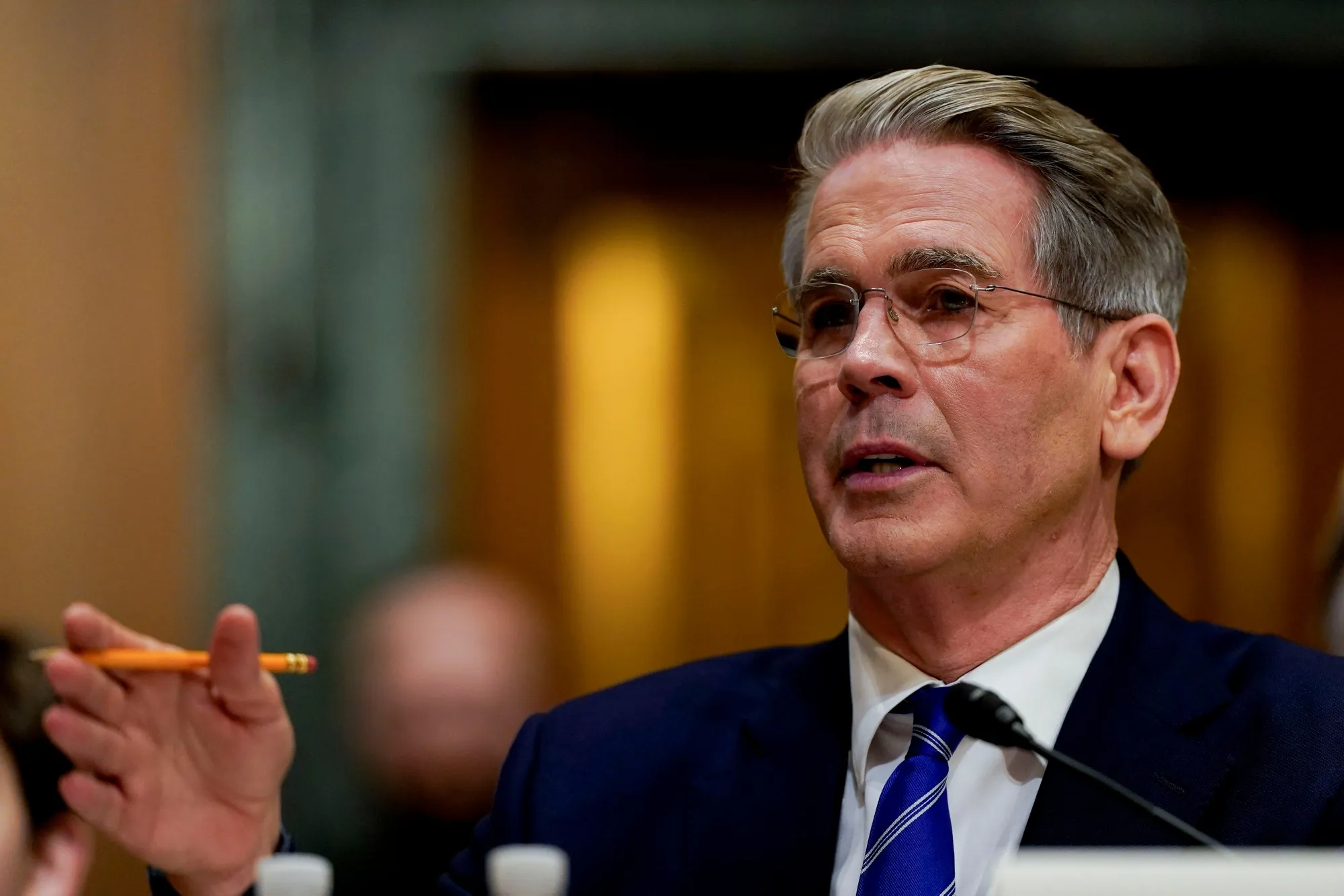
He champions faster GDP growth through tax and spending cuts to stabilize debt-to-GDP. This bold bet prioritizes economic expansion over fiscal caution. Reflecting on 2017’s $2.5 trillion debt-adding tax cuts, Bessent blamed COVID for stalling revenue gains.
Bessent’s High-Stakes Economic Gamble
He touted pre-COVID growth as proof of Trump’s formula, aiming to replicate it. This underscores his confidence in high-stakes economic gambles. On tariffs, Bessent rebuffed claims they spike consumer prices, noting Walmart absorbs some costs.
He highlighted falling inflation and gasoline prices under Trump. Still, small businesses, with 5–10% margins, grapple with uncertainty and reliance on Chinese goods.
Bessent admitted America’s manufacturing base—gutted for semiconductors and steel—needs years to rebuild. He plans to revive strategic industries while trading non-critical goods with China at lower tariffs.
This pragmatic approach balances urgency with long-term goals. He defended Trump’s $400 million Qatari jet gift, likening it to historic gestures. More crucially, he celebrated Qatar’s $100 billion Boeing order, a massive boost for U.S. jobs. This ties diplomacy to economic muscle.
Bessent’s tariff threat is a calculated power play to rewrite global trade rules. By pressuring nations and prioritizing American workers, he seeks to reverse years of lopsided deals.
Small businesses face immediate pain, and manufacturing revival lags, but Bessent bets on growth to outpace challenges. The 90-day clock ticks. If nations don’t deliver fair deals, tariffs could surge, hitting consumers and businesses hard.
Bessent’s mercantile vision—rooted in American dominance—demands results, but the high-stakes gamble carries risks for a fragile economy.
This article was produced by The Rio Times’ automated newsroom system. How we use AI · Report an error
Read More from The Rio Times