The International Labour Organization (ILO) recently highlighted a growing issue in Latin America and the Caribbean.
The “working poor” phenomenon, where employed individuals live in poverty, is on the rise.
This is largely due to the high inflation impacting the region, eroding the purchasing power of labor incomes.
The ILO’s “Labor Outlook 2023” report reveals that although employment rates are returning to pre-pandemic levels, real labor and family incomes remain lower than before.
This indicates a recovery in employment but not in earnings.
The report underscores that employment and unemployment rates have fully recovered four years after the COVID-19 pandemic.
However, the labor force participation rate, which measures the workforce as a percentage of the working-age population, is still insufficient.
It fell from 62.5% to 62.3% in the first three quarters of 2023, compared to last year’s period.
Despite complete employment recovery, the unemployment rate is significantly lower than in 2019.
Urban employment has bounced back to 2019 levels, but rural employment still lags, widening the gap that existed before the pandemic.
Sector-wise, except for agriculture and construction, all other sectors showed positive growth between 2022 and 2023.
Notable increases were seen in transportation, financial services, and healthcare. The ILO projects an average unemployment rate of around 6.3% for 2023 in the region.
This forecast lies between 6.2% and 6.4%, and is expected to range between 6.5% and 6.8% in 2024.
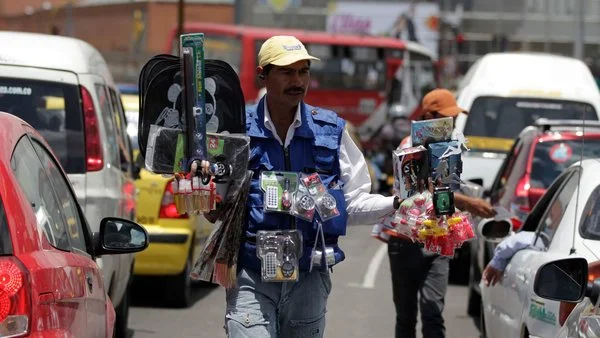
A significant challenge in the region is the high rate of labor informality. As of mid-2023, the average rate was 48%, marginally lower than the 49% in 2019.
Most of the job recovery has been through informal employment, which accounted for a significant portion of the net employment increase since mid-2020.
The persistence of informal employment is linked to the insufficient creation of formal jobs.
The ILO warns that without adequate formal job opportunities, the rate of labor informality could continue to rise.
This is especially crucial in the current context of economic uncertainty and slowdown.
Regional informality rate among young people stands at 58%
Among young people, while there has been a notable increase in employment, high levels of informality continue.
The regional informality rate among young people stands at 58%. This demographic faces more job instability, often linked to informal and precarious work.
The employment situation for women has improved, with their employment rate in the second quarter of 2023 exceeding pre-pandemic levels by 1.6%.
However, women’s labor market recovery is stronger than men’s, with a more significant increase in labor supply.
Yet, the employment rate gap between young women and men over 25 remains over 40 percentage points.
In response to these challenges, the ILO recommends policies that promote job creation and formalization of work.
Strengthening labor institutions, especially in setting minimum wages and enhancing collective bargaining, is considered crucial.
Social dialogue, considering the needs of both workers and employers, is crucial in a dynamic labor environment.
Closing these persistent gaps is key to maximizing the benefits of digital, demographic, and equitable transitions in the labor market.
More: Brazil news in English, every day from The Rio Times.
This article was produced by The Rio Times’ automated newsroom system. How we use AI · Report an error
Read More from The Rio Times