Petropar Fuel Price Hike Adds 300 Guaraníes per Liter Across All Fuels
Paraguay · ECONOMY
Key Facts
- —Increase a uniform 300 guaraníes per liter on every Petropar fuel from Monday, 17 August 2026
- —New prices Diesel Porã 8,290, Diesel Mbarete 10,300 and Kape88 gasoline 6,990 guaraníes per liter
- —In dollars Kape88 costs about US$1.17 per liter at roughly 6,000 guaraníes per dollar
- —Price gap Petropar says it stays below private brands, by at least 400 guaraníes per liter on diesel
- —Outlook the company estimates prices can hold at least until the first half of September
The first increase since May leaves Petropar’s prices below the private brands, the company insists, as a stronger guaraní softens the blow of imported fuel that still costs more than US$1,000 per cubic meter.
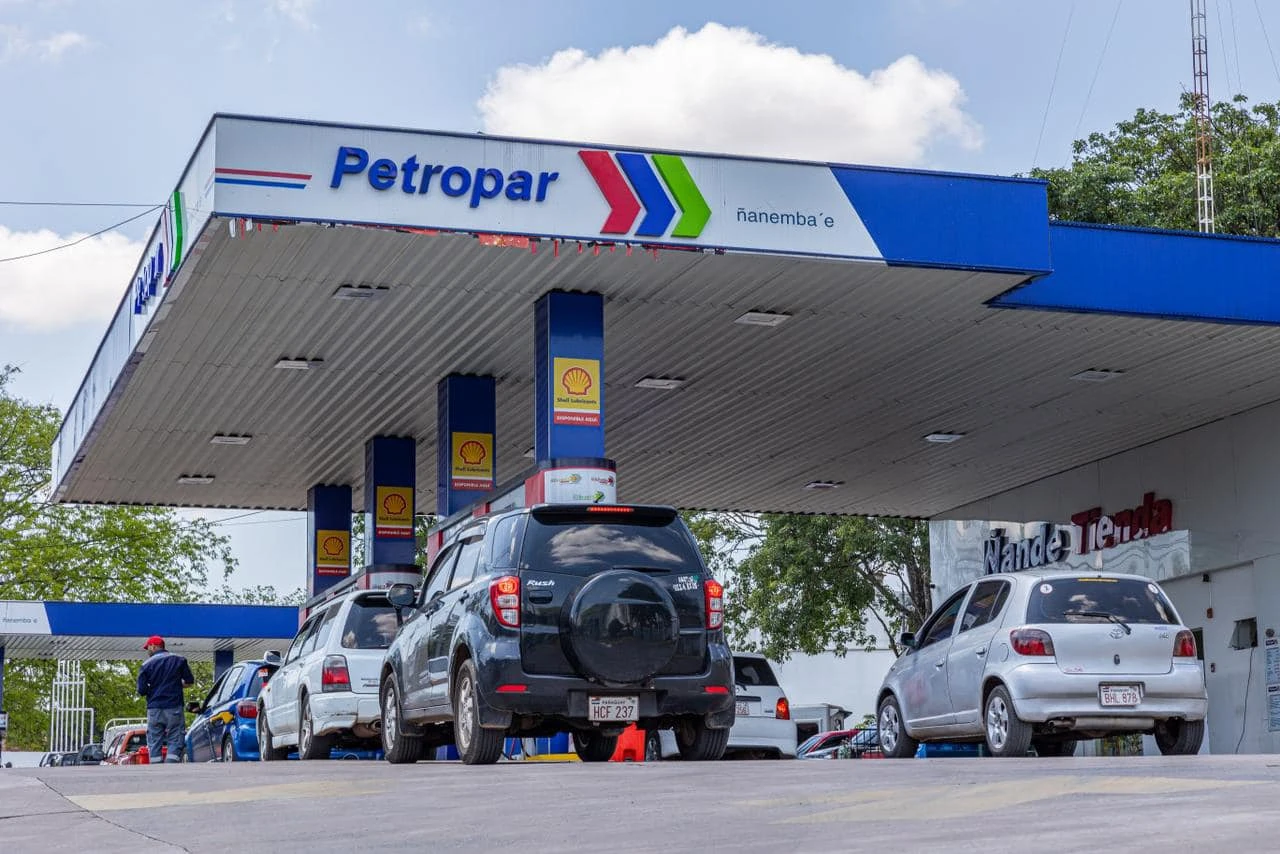
The Petropar fuel price hike took effect across Paraguay on Monday, 17 August 2026, adding 300 guaraníes per liter, about five US cents, to every product sold by the state oil company. Diesel Porã now costs 8,290 guaraníes per liter, Diesel Mbarete 10,300 and the Kape88 gasoline 6,990, about US$1.17 at roughly 6,000 guaraníes per dollar. Petropar president William Wilka said the Petropar fuel price hike was kept as small as possible after the company stretched its inventories as far as it could.
Why the state company moved prices now
Wilka explained the Petropar fuel price hike in a radio interview on La Tribu 650 AM, La Tribuna reported. ‘The adjustment comes after receiving the latest shipments, the latest replenishments. We stretched everything we could, we held on,’ he said, pointing to international fuel prices that remain elevated. Between 83 and 84 percent of Petropar’s import cost depends on the international quotation, plus about three percent in freight, he said: ‘There you already have 86 percent of the weight in the cost structure.’
Diesel remains above US$1,000 per cubic meter and gasoline near US$850, according to the company. Since February and the start of the war, diesel has risen the equivalent of about 1,700 guaraníes per liter and gasoline around 1,600, while the dollar’s slide of roughly eight percent against the guaraní was not enough to compensate. Wilka rejected the idea that biodiesel blending drove the increase, estimating its impact at about 85 guaraníes within the cost structure.
The president defended gradual adjustments over waiting. ‘If you hold on until the last round, then the adjustment, instead of 300 guaraníes, will have to be double or triple,’ he warned, adding that if external prices fall, Petropar ‘will be one of the first to lower immediately.’ The company is also watching tensions in the Strait of Hormuz, La Tribuna reported.
The new price board and the gap to private brands
After the Petropar fuel price hike, the company’s board reads as follows, according to Oviedo Press and La Nación: Diesel Porã at 8,290 guaraníes per liter, Diesel Mbarete at 10,300, Nafta Kape88 at 6,990, Nafta Oikoite 93 at 7,490 and Nafta Aratirí 97 at 8,840.
Wilka insists the state company remains the cheaper option. Before the adjustment, Petropar was 700 guaraníes below private brands on diesel and 500 on gasoline; the new board leaves a gap of at least 400 guaraníes on diesel and 200 to 400 on gasolines, he said. Regionally, he told La Nación, Paraguay is now slightly more expensive than Brazil across the border in Foz do Iguaçu for one diesel grade, but cheaper than the Argentine border zone. ‘With this we estimate we can hold prices easily until the first half of September, even longer,’ he said, crediting well-timed spot purchases.
A pivotal year in Paraguay’s fuel market
The Petropar fuel price hike lands in a year of unusual volatility. President Santiago Peña announced a 250-guaraní cut in late January, the thirteenth reduction of his administration, La Nación reported at the time. Then came the war-driven surge: increases of 450 guaraníes on 23 March, 750 on 10 April and a further 750 on diesel and 300 on gasoline on 4 May, before a rare 210-guaraní cut to Diesel Porã on 1 July.
Petropar operates 302 service stations, about 10 percent of the country’s outlets, and holds 23 percent of the fuel market, making it the top seller, Wilka told La Nación, projecting profitability for the year. Paraguayans bought 3,671 million liters of fuel in 2025, up 8.8 percent, with diesel accounting for 55 percent of sales and Shell, Petropar and Petrobras together holding 46.8 percent of the market, according to industry data reported by Mentu.
Because Paraguay imports all of its liquid fuels, the company’s pricing decisions ripple through agriculture, trucking and bus fares, and its board has become an instrument of government price policy as much as a commercial signal.
Beyond the pump: Petropar enters aviation fuel
One week after the price adjustment, the state company opened a new front: on 24 August 2026 it formally entered Paraguay’s aviation-fuel market, launching sales of Jet A-1 for jet aircraft and AVGAS for piston-engine planes, La Nación reported.
The plan calls for five fuel plants serving Asunción, Ciudad del Este, Mariscal Estigarribia and Concepción, the country’s main air gateways and strategic points in the Chaco. Notably, the expansion uses a public-private partnership in which a private operator finances all of the investment, so Petropar puts no state money at risk, the company confirmed; financial terms were not disclosed. The entry breaks a market long served only by private importers and gives airlines and airports a state-backed supplier for the first time.
More: Paraguay news in English, every day from The Rio Times.
Frequently Asked Questions
How much is the Petropar fuel price hike?
The Petropar fuel price hike is 300 guaraníes per liter, about five US cents, applied uniformly to all diesel and gasoline grades at Petropar stations nationwide from 17 August 2026.
What are the new prices after the Petropar fuel price hike?
After the Petropar fuel price hike, Diesel Porã costs 8,290 guaraníes per liter, Diesel Mbarete 10,300, Kape88 gasoline 6,990, Oikoite 93 at 7,490 and Aratirí 97 at 8,840 guaraníes per liter.
Will Petropar’s new fuel prices hold?
President William Wilka says the new prices can hold at least until the first half of September, helped by competitive spot purchases, and that Petropar will be among the first to cut if international costs fall.
Connected Coverage
Petropar Enters Paraguay’s Aviation Fuel Market With Five Plants
Guaraní surge pits Paraguay’s exporters against the central bank
Sources
- www.latribuna.com.py
- oviedopress.com
- www.lanacion.com.py
- www.lanacion.com.py
- www.hoy.com.py
- mentu.com.py
This article was produced by The Rio Times’ automated newsroom system. How we use AI · Report an error · Editorial responsibility: Matthias Camenzind, Editor-in-Chief