Peru’s New Leader José Jerí Seeks Broad-Based Cabinet To Tackle Crime
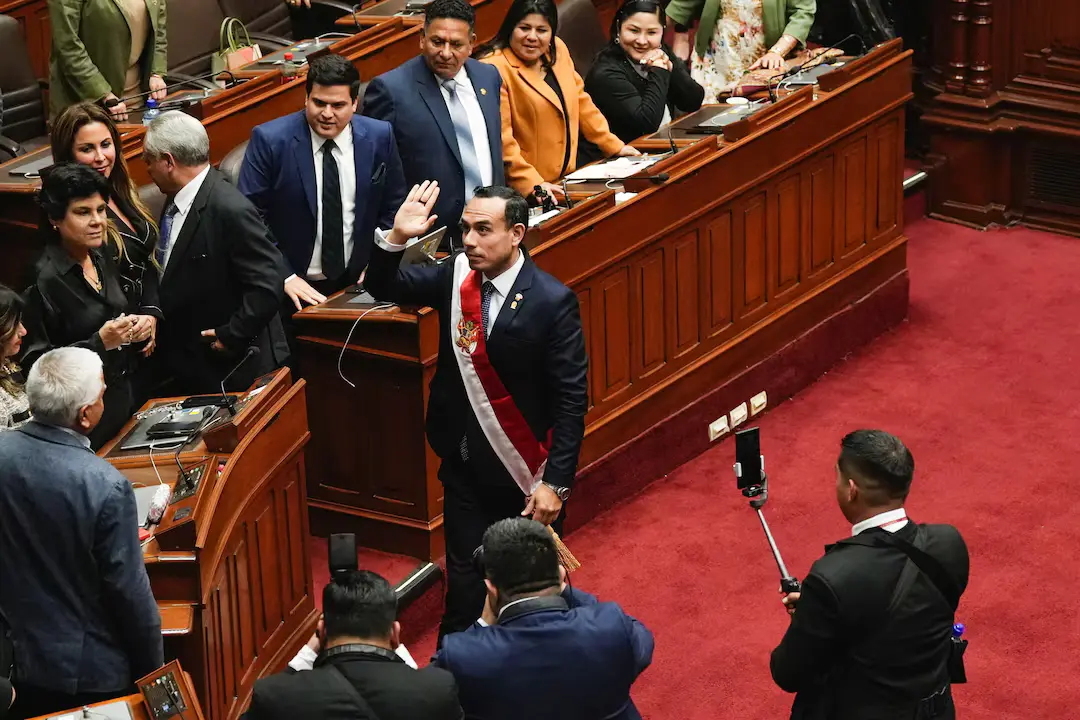
Peru’s new president, José Jerí, has begun forming a “broad-based” cabinet with a simple promise: calm a crime wave and steer the country to the 2026 elections without more political turmoil.
He took office after Congress removed Dina Boluarte and immediately paired outreach with action, launching coordinated night-time prison searches at Ancón I, Lurigancho, El Milagro, and Challapalca to disrupt gangs that direct extortion and violence from behind bars.
The story behind the story is a country stuck in a loop. Peru has cycled through multiple presidents in less than a decade as Congress-triggered transitions became the norm.
That churn collided with rising insecurity: police tallied more than 2,100 homicides last year, and extortion complaints have already topped 20,000 this year—numbers that translate into shopkeepers paying “protection,” bus owners receiving threats, and families altering daily routines.
Jerí’s answer is a cabinet that pulls in expertise across parties and institutions and a revived National Accord to set a short list of tasks: reduce street crime, protect a clean vote, and support a slowing economy.
Success will hinge on two tests. First, whether Jerí can name credible ministers—especially in the interior, justice, and economy portfolios—who can move quickly on policing and prisons while improving case-building by prosecutors.
Second, whether Congress gives those ministers the room to work. Peru’s recent history shows how fast political alliances can collapse; a “broad base” only matters if it lasts through tough choices like reorganizing prison management, targeting extortion rackets, and funding local policing.
Why this matters beyond Peru: the country is one of the world’s top copper producers and a regional trade hub. Persistent instability and rising criminal control of logistics corridors can ripple outward—into commodity markets, supply chains, and migration patterns.
If Jerí’s team stabilizes security and keeps the electoral calendar intact, Peru gains breathing room. If not, the cycle of short-lived governments and stronger criminal networks will continue, raising costs for ordinary Peruvians first and, eventually, for regional partners.
More: Latin America news in English, every day from The Rio Times.
This article was produced by The Rio Times’ automated newsroom system. How we use AI · Report an error · Editorial responsibility: Matthias Camenzind, Editor-in-Chief