Paraguay’s Economy Powers Ahead as Services and Energy Offset Farm Losses
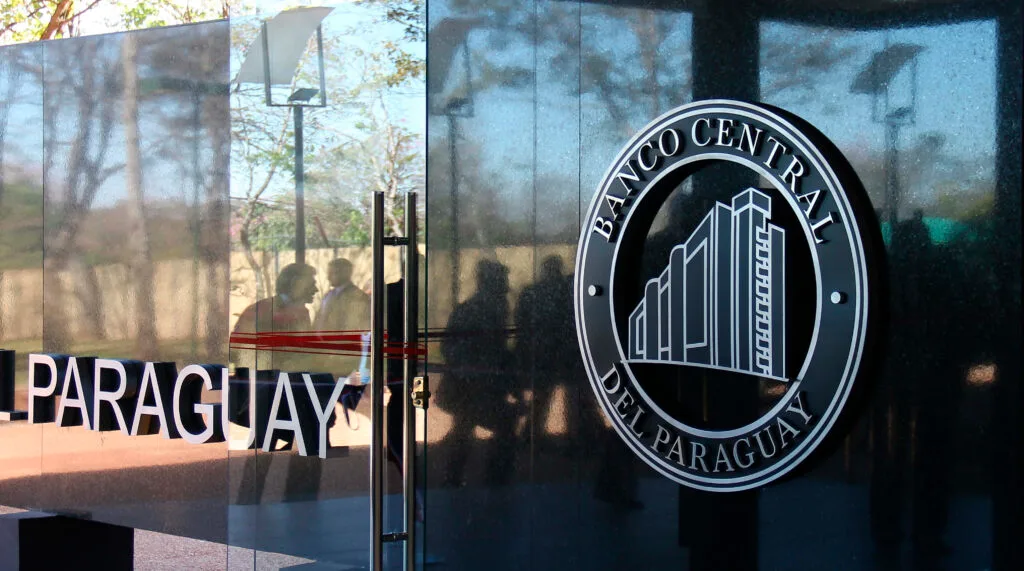
Paraguay’s economy grew 5.2% in the first half of 2025, according to the Central Bank of Paraguay, outpacing most of Latin America. This solid pace came despite a sharp drop in soybean harvests, traditionally the country’s main growth engine.
Instead, services, manufacturing, and hydroelectric exports now drive the expansion — signalling a shift in the country’s economic foundations.
Trade, banking, tourism, transport, and real estate all expanded. Retail sales were strong in Asunción and border cities such as Ciudad del Este, while hospitality improved with more visitors from Brazil and Argentina.
Mobile banking and wider internet coverage helped the financial and telecom sectors grow. The only notable service slowdown came from public administration, which faced budget delays.
Manufacturing added another boost. Meat processing, dairy, edible oils, beverages, textiles, metals, machinery, and paper production rose steadily.
Lower sugarcane yields hurt sugar mills, while wood products and animal feed plants saw falling output due to weaker demand and changing feed input prices.
The country’s hydropower sector remains its most strategic asset. The Itaipú and Yacyretá dams, operated jointly with Brazil and Argentina, generated over 37,000 GWh in six months — well beyond Paraguay’s domestic needs.
Export sales brought in vital foreign exchange and reinforced Paraguay’s role as a key clean power supplier in the region. Livestock results were mixed: pork and poultry production rose, along with milk and eggs, but beef output fell due to weaker global demand.
Agriculture was the main drag. Soybean production reached about 9.7 million tons, down from previous highs after poor weather and reduced planting. Exports of soy and by-products dropped to 6.5 million tons, hitting farm incomes and trade earnings.
Construction suffered in June as heavy rains delayed both public infrastructure works and private real estate projects. Excluding the volatile farm and hydropower sectors, Paraguay’s “core” economy — dominated by services and manufacturing — grew 6.1% in the first half.
This shows that Paraguay is no longer entirely at the mercy of crop cycles. The shift means the country now leans more on industries that are less weather-dependent.
Energy exports give Paraguay currency reserves and bargaining power with larger neighbours. But risks remain: climate shocks, global commodity price swings, and gaps in infrastructure could still slow progress.
Paraguay’s growth story in 2025 is not just about good numbers — it is about building a more balanced economy, able to keep moving even when the soybeans do not.
Key Facts
— Deep Dive
— For the complete picture, read our in-depth guide: Paraguay: Washington's Most Valued Ally in Latin America
More: Latin America news in English, every day from The Rio Times.
This article was produced by The Rio Times’ automated newsroom system. How we use AI · Report an error · Editorial responsibility: Matthias Camenzind, Editor-in-Chief