Ninety Percent of Brazilians Don’t Save for Retirement, Says Study
RIO DE JANEIRO, BRAZIL – In Brazil, approximately 90 percent of people over 25 do not save money for retirement, according to the Allianz Insurance Company’s 2020 Global Social Security Report, which examined the social welfare structure of 70 countries.
In places like New Zealand and the United States, this rate is about 30 and 40 percent, respectively. Even emerging countries such as India and Russia record better rates than Brazil, around 80 percent.

But there are also countries in even worse situations, such as Argentina and Egypt, where around 95 percent of the population in this age group does not save for the future.
Despite the discrepancy between developed and emerging-economy countries in long-term financial planning, the study shows that the difference is less obvious when the assessment focuses on the gross amounts of benefits paid by each country’s security systems.
According to International Labor Organization (ILO) standards, the retirement benefit should vary between 40 and 60 percent of the country’s average wage, considering that social security is often the only source of income for people in this stage of life.
In this regard, India has the highest gross benefit among the 70 countries analyzed in the study. The country’s retirement amount corresponds to 83 percent of the average per capita income. In Europe, in countries such as Italy and Luxembourg, the rate is close to 80 percent.
Among the ten countries with the most generous systems are Qatar and Vietnam, with benefits reaching 75 percent. However, these proportions seem less impressive considering that many emerging or undeveloped countries fail to effectively promote the distribution of benefits to these policies’ target audience.
In India, the pension system coverage rate only reaches 24 percent of the population aged 65 and over; in Qatar the figure drops to only 18 percent, while in most European countries, including those that excel in providing pensions that ensure not only survival but also the maintenance of the living standard, coverage is 100 percent.
For its part, Brazil has a retirement benefit that corresponds to about 60 percent of the average income of the population, with a coverage of just over 80 percent of the elderly receiving social security pensions, and with about 70 percent of the economically active population (between 15 and 64 years of age) paying the contribution to retire in the future.
The survey shows that Brazil ranks 43rd, an intermediate position when analyzing the overall quality of the systems.
Faced with this scenario, if we have significant coverage and benefit, why is the pension system not in a better position in the ranking, and why are Brazilians not planning for the future? Pension specialists and financial planners were approached to discuss the pension scenario in the country.
Brazil’s situation
Brazil’s score of 3.98 (the maximum score is one and the minimum seven) in the general ranking shows that the country still has much to evolve in terms of the overall quality of its pension system.
This final rating considers three other criteria:
a) the net interest income, which is based on the analysis of demographic change and the public financial situation of the country, a kind of system’s operating budget;
b) the pension system’s sustainability, which refers to the system’s execution capacity: are there built-in stabilizers, or will the system be destroyed when the number of employees decreases and the number of beneficiaries continues to rise?
c) quality of life in retirement (adequacy), which assesses whether the system in question provides an adequate standard of living in old age.

According to the study, Brazil’s net interest income (4.82) is relatively low (and was even before the pandemic). “And in no other South American country will the aging of the population be as rapid as in Brazil: the rate of economically inactive elderly people will nearly triple in the next three decades, to about 36 percent”.
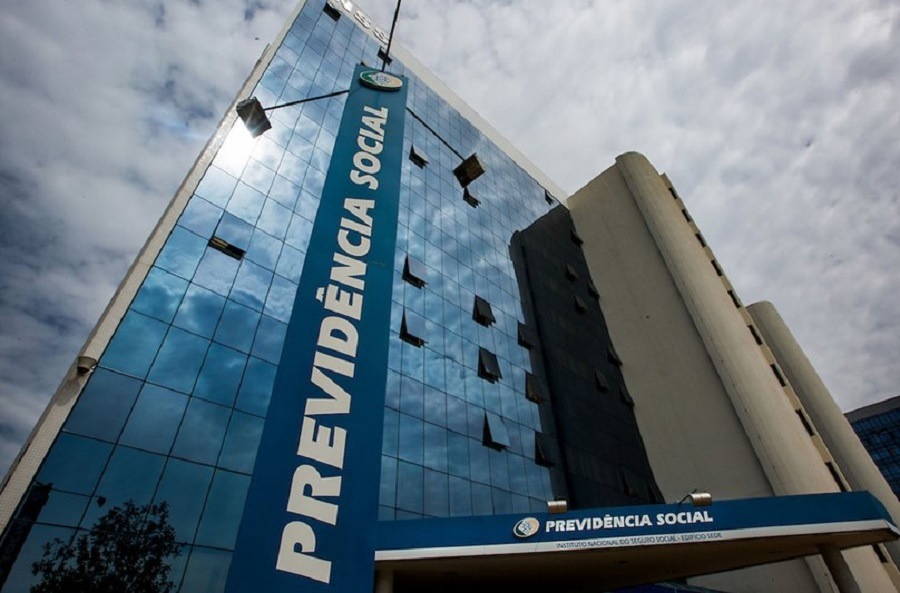
For Juliana Inhasz, an economist and teacher at INSPER (institute of higher education and research), people’s perception that they will live off the income the government provides when they get older is another factor that contributes to the country’s poor results in the study. The aging of the population – coupled with the low contribution to the INSS (social security system) and to a system that allowed citizens to retire earlier – has exacerbated the social security gap over the past few years.
The country’s historical and structural situation does not favor it either. Income inequality makes the benefits received by the most vulnerable classes sufficient only to cover living expenses. The inflationary scenario, which has been seen in Brazil for a long time, is another factor that has contributed to Brazilians failing to create savings, a problem that is exacerbated by the economic crisis that the country has been facing since 2014, and which has deepened with the pandemic.
“With all of this combined, those who would most need to have these savings to achieve a peaceful old age are the people who are unable to save. It’s a complex structural situation,” Juliana explains.
Even after the Welfare Reform, Brazil still has an unequal welfare system: while the ‘sustainability’ score (4.3) is below the global average, the ‘adequacy’ score (3.2) is much better, due to the good coverage and size of the benefits.
Although the country has already made great progress in improving the system, “we cannot afford ‘fatigue’ from the recently passed reform: the work is not yet finished,” says another piece of the study.
With the challenge of progressing in the design of continuous welfare public policies, Brazil may soon have “an army of elderly people in extreme economic and social fragility because they don’t have any kind of income,” says INSPER’s economist, who stresses that the projected scenario could lead to other public and social order issues.
“We will see older people subjecting themselves to working conditions which will not be what they were expecting, to have some guarantee of livelihood, because maybe up ahead the system won’t be able to afford it. We run the risk of losing a great deal of social well-being, not to mention all the social pressures that ultimately arise from this scenario”.
Financial planning
Roberto Teixeira, the partner in charge of XP Seguros, says that before the Welfare Reform, Brazilians relied heavily on public retirement because they were paid a benefit close to what they earned in their active years. “This did not feed the idea of saving for the future. Now things are going to start changing because, if there’s no long-term financial planning, people will retire with a lot less money than they had before,” he says.
Like Juliana, he points out that Brazil’s low average income reinforces this scenario. “If someone earned about R$4,000 (US$728.80) a month in their active stage, they would get something close to that in their retirement. But with the reform, that became distant. With the increase of the minimum (retirement) age and the reduction of the social welfare ceiling, it became much more difficult to uphold the standard, and it will become a natural incentive for people to start resorting to complementary welfare, planning and investing thinking about the future,” he says.
Michaela Grimm, economist, and author of the Allianz report says that “one of the legacies of the current crisis will surely be that we will have to double our efforts to reform our welfare systems. What was left of the net interest income is gone forever”.
The increase in life expectancy and the decrease in birth rates worldwide will cause the number of people aged 65 and over in the global population to increase from the current nine percent to 16 percent by 2050. According to Allianz’s survey, the increase will be more significant in Latin America, where this share should more than double, growing from nine to 19 percent.
The extremely unfavorable economic context, with the loss of income caused by the pandemic, which has paralyzed several economic activities to contain the advance of the virus, further distances the prospect of saving for most people.
“We are experiencing a complex time and, more than ever, it is important for people to look at their financial situation and reflect on it in the future – so that they can organize themselves in the post-Covid moment,” says financial planner Angela Nunes.
Source: Infomoney
More: Brazil news in English, every day from The Rio Times.
This article was produced by The Rio Times’ automated newsroom system. How we use AI · Report an error · Editorial responsibility: Matthias Camenzind, Editor-in-Chief