
Mexico · MARKETS
Key Facts
- —What happened Mexican stocks posted their best session in ten weeks on 21 August 2026.
- —How big The S&P/BMV IPC gained 2.14% to 65,729.18 points, its best since June.
- —The real story The rally was separate from the peso’s recent gains tied to Fed minutes.
- —The catch The gains were not a record, just the best since June.
- —Who it hits Both BMV and BIVA indices rose, with FTSE BIVA up 2.17%.
- —What comes next Investors will watch if the momentum can be sustained.
The benchmark index climbed back above the 10 per cent correction threshold, while the peso held firm near 16.90 to the dollar.
Mexican stocks rally marked their best session in ten weeks on Friday, 21 August 2026. Both of the country’s exchanges posted strong gains, pulling the benchmark index out of correction territory.
Mexican Stocks Rally in Strong Session
Mexican stocks rally delivered the best day since 11 June, according to El Economista. The S&P/BMV IPC, the benchmark index of the Bolsa Mexicana de Valores (BMV), gained 2.14 per cent to close at 65,729.18 points.
Mexican stocks rally also lifted the rival exchange, the Bolsa Institucional de Valores (BIVA), which shone. Its FTSE BIVA index rose 2.17 per cent to 1,325.62 points, as reported by El Financiero.
The S&P/BMV IPC is designed to reflect the broader Mexican equity market. This index’s gain of 1,379.38 points was its strongest since June.
However, the S&P/BMV IPC gain of 1,379.38 points was its largest since June. Meanwhile, both indices posted their best session in about ten weeks.
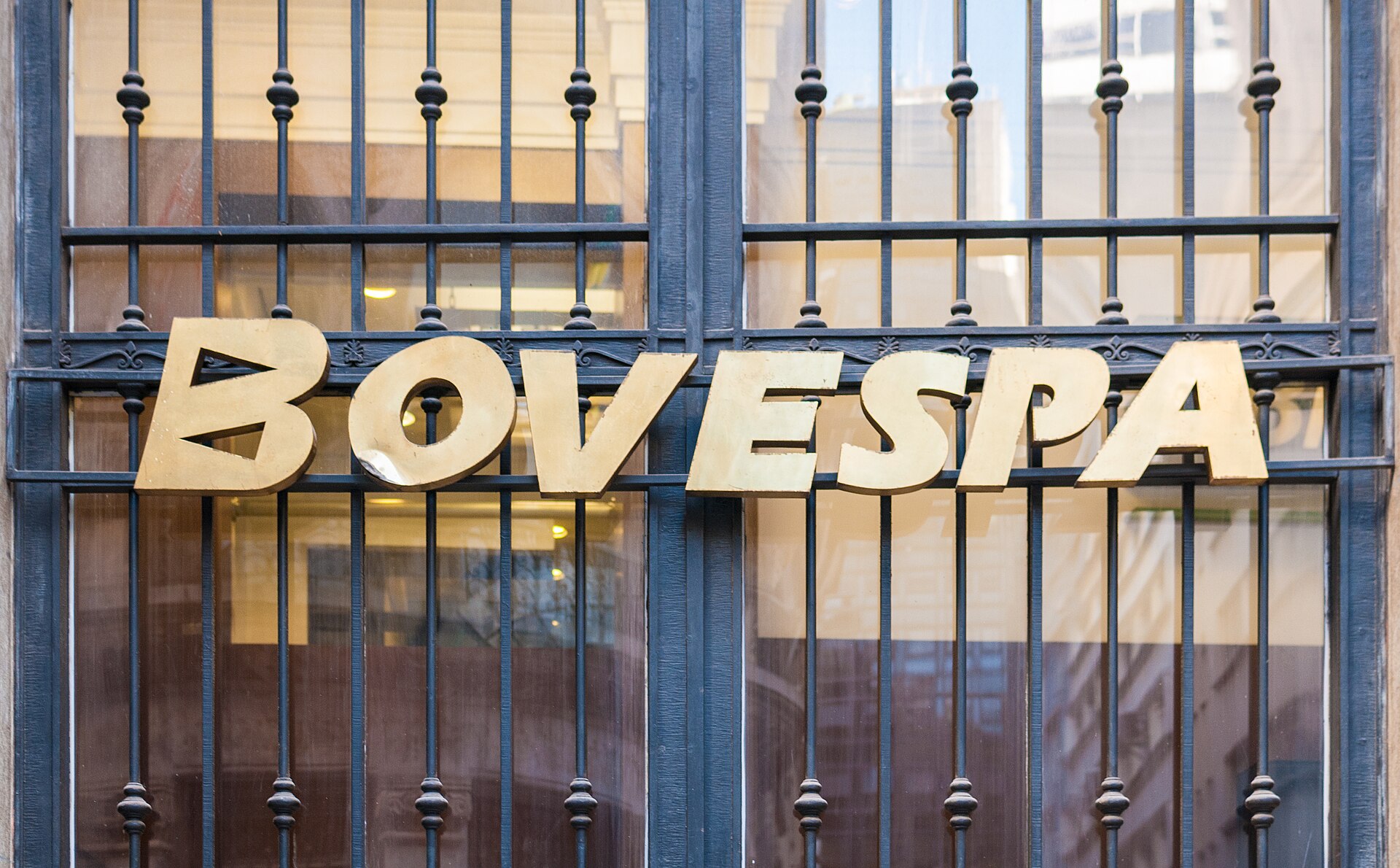
Benchmark Index Leaves Correction Zone
The move was worth 1,379.38 index points, according to Grupo BMV’s own data. As a result, this gain pulled the IPC out of the correction zone, a 10% or more fall from a recent peak.
As a result, the index returned to a rising 2026, El Economista noted. Leaving the correction zone means the index has climbed back above that threshold.
A correction is defined as a 10 per cent fall from a recent peak. Leaving that zone means the index has climbed back above that threshold.
In addition, the index’s return to a rising 2026 is significant. However, the move was not a record, just the best since June.
Live Market IntelligenceMexico — Live Market Board
Rio Times · Live Market Intelligence
Mexico — Live Market Board
+0.52%
206,220.24
+0.94%
64,986.91
+0.52%
11,024.22
+0.22%
2,832,472
+0.00%
2,525.90
-0.36%
60,766.81
-1.71%
| Instrument | Last | Change | YoY | Prev. | High | Low | Volume |
|---|---|---|---|---|---|---|---|
| IPC MEX | 64,986.91 | +0.52% | +12.17% | 64,653.33 | 66,121 | 65,405 | 108,886,187 |
| USD/MXN | 17.06 | -0.24% | -8.58% | 17.10 | 17.08 | 17.01 | — |
| WALMEX | 48.07 | -0.62% | -14.38% | 48.37 | 48.65 | 48.02 | 10,781,446 |
| GMEXICO | 223.28 | +0.35% | +73.59% | 222.50 | 226.18 | 222.17 | 1,325,556 |
| FEMSA | 201.19 | -0.24% | +25.67% | 201.67 | 206.71 | 199.56 | 750,706 |
| CEMEX | 19.32 | +0.89% | +19.10% | 19.15 | 19.35 | 19.04 | 14,327,054 |
| GFNORTE | 193.98 | +1.18% | +14.36% | 191.71 | 195.79 | 191.83 | 1,579,115 |
| BIMBO | 60.98 | -0.96% | +11.89% | 61.57 | 61.46 | 60.29 | 1,048,115 |
| TELEVISA | 9.71 | +0.21% | +12.78% | 9.69 | 9.75 | 9.60 | 577,851 |
| AMX | 19.80 | -0.95% | +12.53% | 19.99 | 20.05 | 19.70 | 58,058,525 |
| GAP | 366.23 | +0.43% | -21.21% | 364.68 | 370.85 | 362.82 | 226,946 |
| ASUR | 275.04 | +1.25% | -15.28% | 271.64 | 275.08 | 271.31 | 15,451 |
| OMA | 233.50 | +0.62% | -6.48% | 232.06 | 235.00 | 230.62 | 555,693 |
| KOF | 188.04 | +0.86% | +18.94% | 186.44 | 188.56 | 185.52 | 425,273 |
| GRUMA | 252.90 | +0.11% | -21.85% | 252.61 | 254.74 | 250.36 | 90,048 |
| KIMBER | 39.74 | +0.43% | +8.85% | 39.57 | 40.09 | 39.33 | 490,551 |
| AMX ADR | 23.38 | -0.23% | +22.25% | 23.43 | 23.49 | 23.06 | 1,347,445 |
Two Exchanges, Two Strong Gains
The BMV is Mexico’s main organised stock market, part of Grupo BMV. The BIVA is the country’s second stock exchange, and its index is the FTSE BIVA.
Both indices strung together three gains for the first time in August, according to El Economista. This marked their best session since 11 June, which is about ten weeks earlier.
The BMV is Mexico’s main stock market, while BIVA is the second. Both indices posted their best session since 11 June, about ten weeks earlier.
Still, both indices marked their strongest session since 11 June. Meanwhile, the gains were not a record, but a notable rebound.
Peso Firms Against the Dollar
Meanwhile, the peso strengthened. The Banco de México FIX rate stood at 16.9018 pesos per dollar on 21 August 2026.
That is firmer than the 17.9750 pesos per dollar recorded on 31 December 2025. For context, 100 pesos is about US$5.92 at the current rate.
The FIX rate is the central bank’s published rate for settling dollar obligations. At 16.9018, the peso is stronger than its year-end level of 17.9750.
In addition, the peso is stronger than at the end of 2025. However, no forecast exists for further moves.
Currency Gains Through August
The peso firmed steadily through August. On 13 August, the exchange rate stood at 17.04 pesos per dollar, according to El Financiero.
By 19 August, it had settled at 16.94 pesos per dollar, an appreciation of 0.70 per cent. That day’s move was tied to United States monetary policy, specifically the Federal Reserve minutes.
The peso appreciated from 17.04 on 13 August to 16.94 on 19 August. However, this move was tied to Fed minutes, not the equity rally.
Meanwhile, the peso appreciated from 17.04 to 16.94 in a week. However, this move was tied to Fed minutes, not the equity rally.
Fed Minutes and Emerging Markets
The Federal Reserve is the United States central bank; its meeting minutes are published records investors read for hints about interest rates. Higher US rates usually pull money out of emerging markets such as Mexico; softer expectations do the opposite.
Therefore, the Fed minutes on 19 August tempered expectations of further US rate rises, favouring emerging-market currencies. However, that specific move was for the currency, not the equity rally on 21 August.
The Fed minutes tempered expectations of US rate rises, favouring emerging-market currencies. Therefore, the peso benefited, but the stock gains were separate.
Therefore, the Fed minutes favored emerging-market currencies. However, the stock gains on 21 August were separate from that move.
Mexico’s Policy Rate Steady
Mexico’s own policy rate, or tasa de referencia, stood at 6.50 per cent. The Banco de México’s economic information system shows the overnight interbank target rate at 6.50 on both 21 and 24 August 2026.
This rate anchors borrowing costs across the economy. It did not change during this period.
The policy rate anchors borrowing costs across the economy. It remained at 6.50 per cent on 21 and 24 August, unchanged.
In addition, the rate anchors borrowing costs across the economy. However, it did not change during this period.
A Positive Week for Mexican Markets
In short, the Mexican stocks rally capped a positive week for the country’s markets. The benchmark index left correction territory, and the peso remained strong.
By contrast, the gains were not a record, but the best session since June. Both exchanges performed well, reflecting broader confidence in Mexican equities.
The gains were not a record, but the best since June. Both exchanges reflected confidence, and the peso stayed firm.
Meanwhile, the peso remained strong, and the index left correction territory. However, the gains were not a record, just the best since June.
Looking Ahead
Overall, the data from the Banco de México and exchange reports paint a picture of resilience. The peso’s strength is notable.
For example, the FIX rate improved from 17.9750 at the end of 2025 to 16.9018 in August 2026. Still, investors will watch for further developments.
The next sessions will show whether this momentum can be sustained. The peso’s strength is notable, improving from 17.9750 to 16.9018.
However, no forecasts exist for further moves, so investors watch closely. Still, investors will watch for further developments.
However, no forecasts exist for the peso, so the focus remains on data.
More: Mexico news in English, every day from The Rio Times.
Frequently Asked Questions
What is the S&P/BMV IPC?
The S&P/BMV IPC is the benchmark index of the Bolsa Mexicana de Valores (BMV), Mexico’s main stock exchange. It reflects the behaviour of the Mexican equity market as a whole, according to the BMV.
What does it mean to leave correction territory?
A correction is a fall of 10 per cent or more from a recent peak. Leaving correction territory means the index has climbed back above that threshold, which the S&P/BMV IPC did on 21 August 2026.
How did the peso perform against the dollar?
The peso firmed through August. The FIX rate, set by the Banco de México, stood at 16.9018 pesos per dollar on 21 August 2026.
What is the FIX rate?
The FIX is the exchange rate the Banco de México publishes to settle dollar obligations payable inside Mexico. It is an average of market quotes and has been calculated in this form since 1991.
Connected Coverage
Sources: El Economista; El Financiero; Grupo BMV; Banco de México.
This article was produced by The Rio Times’ automated newsroom system. How we use AI · Report an error · Editorial responsibility: Matthias Camenzind, Editor-in-Chief
In depth