Mercury Smuggling Fuels Billions in Illicit Gold—and Crime—from Mexican Mines
The Environmental Investigation Agency (EIA) recently revealed that the Jalisco New Generation Cartel (CJNG) has transformed Mexico into one of the primary sources of mercury for illegal gold mining across South America.
Using official data and agency findings, this story uncovers how the cartel’s business acumen and the lure of gold profits created a hidden billion-dollar business that fuels environmental harm, public health crises, and global crime.
Between April 2019 and June 2025, traffickers moved an estimated 200 metric tons of mercury from the mineral-rich state of Querétaro, according to the EIA.
This flow earned more than $8 billion in illicit gains. Reports from Mexican authorities and international trade data confirm the CJNG exploited Mexico’s large reserves at a time when the United States and Europe banned mercury exports.
This ban left a global supply gap that cartels quickly filled by expanding their operations beyond drugs into mining and raw materials. Artisanal gold miners in countries like Peru, Colombia, and Bolivia use mercury to separate gold from soil.
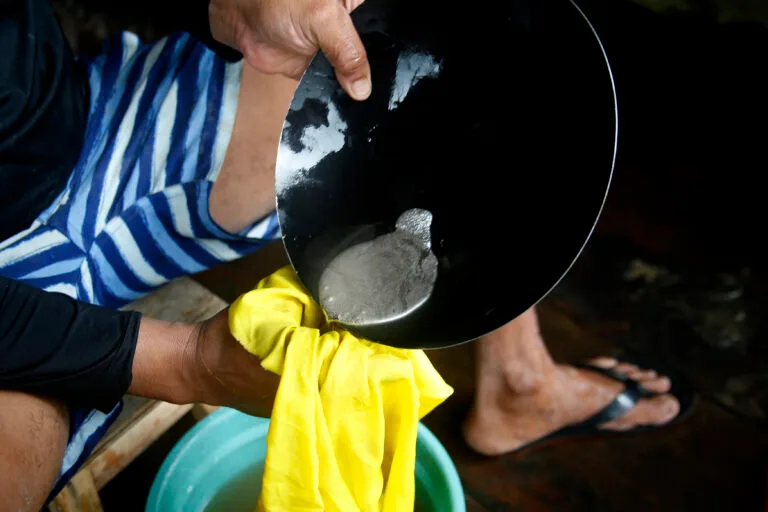
However, this practice releases toxins into rivers and fish stocks. The United Nations identifies mercury as one of the ten most dangerous chemicals for people and the environment.
It causes brain and nerve damage, especially in children. Scientists and health authorities confirm widespread contamination in many mining regions that depend on rivers for food and water.
The cartel fortifies mercury mining sites with fences, watchtowers, and armed guards. Smuggling networks ship mercury disguised as gravel or construction material.
Customs seizures offers hard evidence: in June 2025, Peruvian officials seized four tons of mercury hidden in crushed stone, the largest such shipment ever found in South America.
A Toxic Supply Chain from Mexico to South America
According to Peruvian customs and the EIA, these shipments usually pass through Manzanillo and Veracruz ports, and then travel onto Panama or directly into South America.
Criminals profit not only by supplying mercury for illegal mining, but also by laundering money through the sale of gold. Gold’s high value and ease of smuggling make it a favorite for criminal finances.
Scarce regulation and tracking let traffickers move billions through gold that enters legal markets as jewelry or decorative items. Mexico’s commitment to international mercury controls—such as the Minamata Convention—has so far failed to stem the flow.
Mexican government reports indicate legal production continues at high levels, far above what official controls should allow. Oversight gaps, corruption, and high prices for both mercury and gold sustain the business.
This case exposes how a criminal organization leveraged market opportunity, weak oversight, and rising gold prices to build a toxic supply chain stretching from Mexican mines to South American rivers.
The hard facts reveal that criminal profit seeks any opportunity—especially when gaps in law and high commodity prices line up.
Understanding the mechanics of this trade shows how dangerous economics, crime, and environmental damage intertwine in one of the darkest corners of global business.
More: Latin America news in English, every day from The Rio Times.
This article was produced by The Rio Times’ automated newsroom system. How we use AI · Report an error
Read More from The Rio Times