Haiti: A country trapped between two presidents, kidnapping gangs and chronic poverty
RIO DE JANEIRO, BRAZIL – Haiti’s chronic hardship and hunger have always been linked to a long string of corrupt, autocratic and brutal politicians who have compounded the country’s instability. The current president, Jovenel Moïse, has now joined the list.
He is involved in a dispute over when he should leave office, and to remain in power he is resorting to criminal gangs that attack opponents while profiting from the kidnapping of people.

After taking office four years ago, Moïse’s term was marked by a deterioration of democratic institutions and extreme violence that turned the Haitian capital, Port-au-Prince, into a city of fear and despair.
Armed gangs operate with impunity and are seen driving through the streets in motorcycles or armored trucks. Each group controls at least one neighborhood where they wreak terror and charge tolls to local residents. Neighborhoods known for their opposition vote are permanently under attack.
The majority of Haitian opposition parties and organizations appointed last Monday Judge Joseph Mécène Jean-Louis as “transitional president”, considering that on Sunday, February 7th, Moïse’s term of office came to an end. Jean-Louis, a 72-year-old magistrate and member of the country’s constitutional court since 2011, posted a video on social networks in which he accepted “his election by the opposition and civil society to be able to serve the country.”
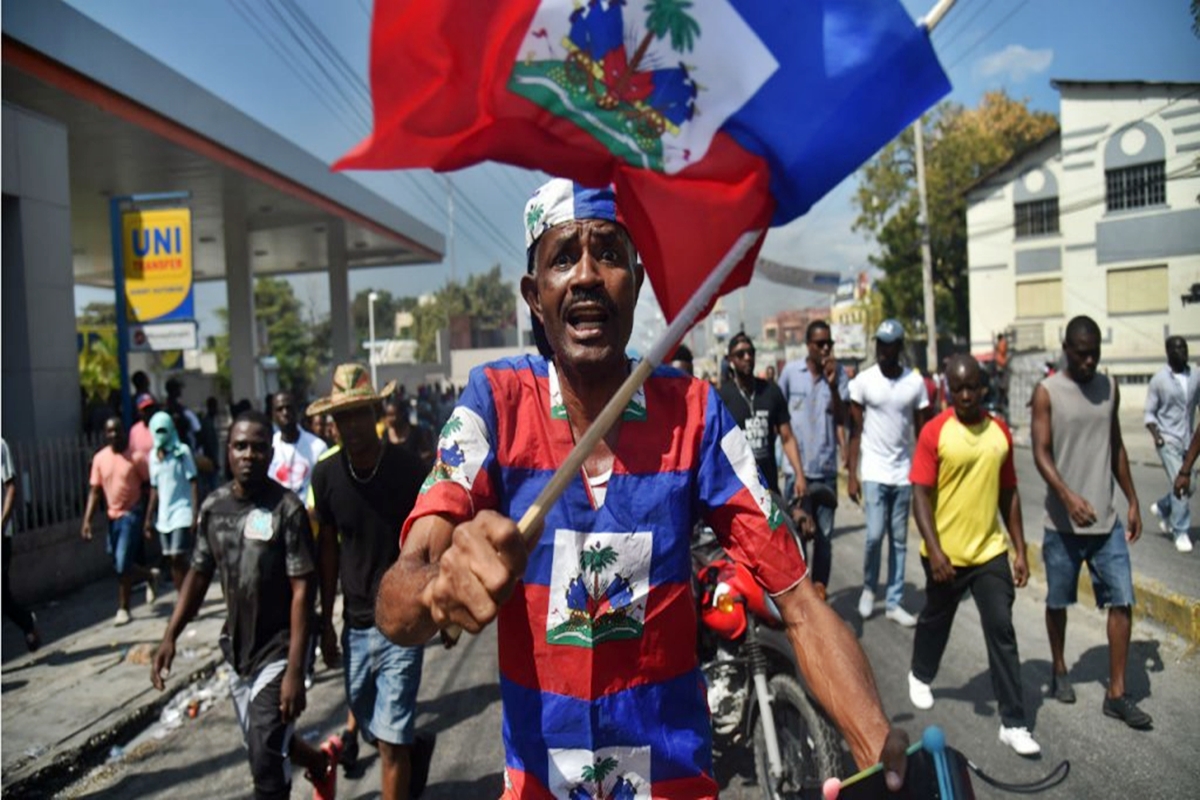
President Moïse, on the other hand, argues that his mandate as head of Haiti extends until February 7th, 2022. The disagreement over the date arose from the fact that Moïse was elected in a vote that was annulled due to fraud, but was re-elected a year later. In a TV message, he assured this week, “I am not a dictator.”
Yet his actions suggest otherwise. Justice Minister Rockefeller Vincent announced that the appointed president would be immediately arrested. Twenty-three people were detained, including judges and political leaders. Thousands of people took to the streets to challenge the police and the gangs. There were many victims, but no one knows the exact numbers.
Moïse had already dissolved the democratically elected parliament and stripped mayors across the country of their posts.
He also began to rely on the armed gangs to which he granted more power and which are valued by the government because they “impose order”. As a result, since early 2020 these criminal organizations have been kidnapping people and demanding ransoms that very few can pay.
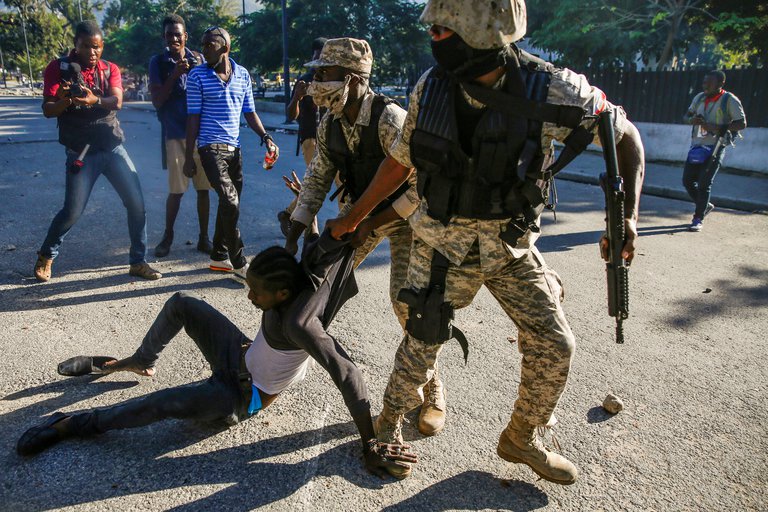
Informal street vendors, students, traders and even police officers have fallen victims. According to a report by the United Nations Integrated Office in Haiti (BINUH), between January and May last year, kidnappings increased by 200%. The vast majority of kidnappings are settled directly with the victims’ families. However, the police received 92 reported cases over the period, 50 of which in February alone.
The Haitian human rights organization Défenseurs Plus claims that more than 1,000 kidnappings were recorded in the whole of 2020; a disproportionate figure for a country the size of Haiti with eleven million inhabitants. In Mexico, with 128 million people and comparable degrees of violence, for instance, 1,387 cases were recorded last year, according to the NGO Alto al Secuestro.
Jameson Francisque wrote in AyiboPost – in a project sponsored by CONNECTAS within the framework of the Investigative Journalism Initiative of the Americas – that “thanks to this profitable business, armed gangs have experienced an unprecedented growth.”
According to figures provided by the National Commission for Disarmament, Dismantling and Reintegration (CNDDR), there are more than 76 gangs in the country. Currently, 500,000 illegal weapons are circulating in Haiti.
An unusual event linking power with these gangs occurred last April when, during a press conference on Covid-19, Prime Minister Joseph Jouthe assured that he was “in constant contact with gang members” and that they knew his telephone number, having called him at least once.
Izo, a gang leader, had complained to the Prime Minister about police roadblocks outside the neighborhood his group controlled. Live, Jouthe promised the criminal that he would call him in the evening.
In a subsequent interview with Ayibopost, Jouthe said, “The gangs see themselves as agents of development because they are the law in these neighborhoods. They called me for help and I seized the opportunity to invite them to lay down their weapons and resume normal life. Unfortunately, they did not accept it and now the police are proceeding directly to dismantling them. I don’t see why people are upset about this, they called me and I answered like I do with everyone else.”
Two months later, an alliance was formed between nine of Port-au-Prince’s main gangs. They baptized it “G9 an fanmi e an alye” (family and allies, in Creole) and it is led by Jimmy Cherizier, aka “Barbecue”, a former police officer who was expelled from the force in December 2018 for serious human rights violations.
According to the Je Klere Foundation, an NGO highly critical of the government, the G9 was created to ensure the victory of Moïse’s party, the PHTK, in the event of elections. The National Network for the Defense of Human Rights (RNDDHR) claims likewise. The organization believes that it would be “impossible” to have a clean election under the conditions established by the criminals who control the neighborhoods and, consequently, the voters and the polling stations.
As a result, the steady flow of migrants to the United States and Latin America has increased. Many first pass through Mexico to seek refuge along its northern borderm but they are not succeeding. Many have been stranded on the Mexican side and some 600 were deported on six special flights for crossing undocumented, according to the Haitian Bridge Alliance, a migrant tracking defense group.
A Washington Post editorial this week called on President Biden to halt deportations and pressure Moïse to step down and call for new elections. Chronic Haitian instability, however, can thwart any good intentions.
Source: Infobae
More: Latin America news in English, every day from The Rio Times.
This article was produced by The Rio Times’ automated newsroom system. How we use AI · Report an error · Editorial responsibility: Matthias Camenzind, Editor-in-Chief