Guatemala’s Prison Revolt Turned Into A Street War And A Political Stress Test
Key Points
- A coordinated prison uprising was followed by attacks that killed 10 police officers.
- A 30-day state of siege expanded police powers, but prosecutions remain the weak link.
- With key appointments near, violence is also leverage against the state’s institutions.
Guatemala’s latest security shock began in places most people never see. Over January 17–18, unrest erupted in three prisons.
They included Renovación 1, the Preventivo facility in Zone 18, and Fraijanes II. Authorities said 43 to 46 guards and staff were taken hostage. At least one area was set on fire during the takeover.
The violence then moved where everyone could feel it. By Sunday, gun attacks killed 10 police officers and wounded others. The strikes hit in and around Guatemala City and nearby zones.
President Bernardo Arévalo announced a 30-day nationwide state of siege. Congress later ratified the measure. The decree expands detentions without a judge’s warrant and limits some rights, including assembly.
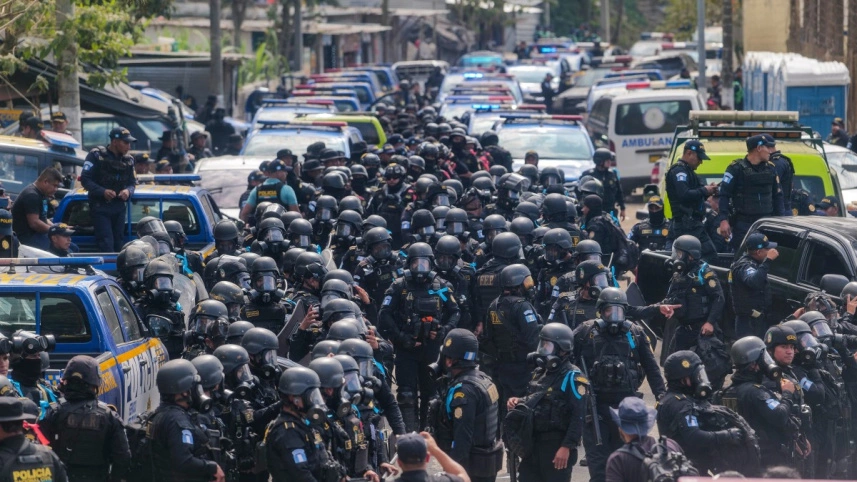
The country’s surface stayed calmer than its headlines. Many streets kept their normal rhythm and routines. But the threat changed behavior fast.
Schools were closed nationwide on Monday, January 19, due to fear of new attacks. The U.S. Embassy temporarily told staff to shelter in place at the peak.
Prison unrest exposes power gaps
The government tried to show control with early figures. Authorities reported 293 detentions in the first 48 hours. They said 23 suspects were linked to Barrio 18 and MS-13.
They also reported 37 firearms seized, plus vehicles and motorcycles recovered. Images of the prison retaking spread widely online. Reporting tied some footage to Aldo Duppie, “El Lobo,” a reputed leader.
He was described as serving sentences totaling about 2,000 years. The story behind the story is about power, not patrols. Officials said the riots followed cuts to prison privileges and luxury demands.
That detail matters because prisons can operate like command posts. It also exposes a second bottleneck: cases that do not survive court. International pressure is rising too.
In September 2025, the U.S. designated Barrio 18 a Foreign Terrorist Organization. Now the crisis intersects with a tense political calendar. Guatemala is nearing major selections for justice and electoral authorities.
That makes institutional resilience the real target. A decree can widen powers overnight. Restoring control in prisons and courtrooms takes longer.
Related coverage: Brazil’s Morning Call | U.S. Courts Argentina’s Copper And Lithium As Critical Miner This is part of The Rio Times’ daily coverage of Latin American news and financial markets.
This article was produced by The Rio Times’ automated newsroom system. How we use AI · Report an error · Editorial responsibility: Matthias Camenzind, Editor-in-Chief
Read More from The Rio Times