Soybeans Hold Steady as China Buys Ahead of the Trump-Xi Meeting
Key Facts
- The soybean fund closed unchanged at US$27.97, holding near the top of its recent range for a second session.
- The corn fund fell 0.70% to US$19.83 and the wheat fund 1.17% to US$26.24, leaving the grain complex mixed rather than uniformly weaker.
- Chinese state buyers took about a million tonnes of American soybeans in the week, passing the halfway point of a twenty-five-million-tonne commitment that runs to 2028.
- A meeting between the American and Chinese presidents is set for 24 September in Washington, with agriculture expected on the agenda according to the United States trade representative.
- Chicago futures settled at 1,319.75 cents for November soybeans, with December corn at 530.50 cents and December wheat at 727.00 cents.
- Brazil is between harvests in September, with its next soybean crop not gathered until early 2027, which is what opens the window for American beans.
Today’s Focus
Soybeans held their ground on Thursday while corn and wheat slipped. The soybean fund closed unchanged at US$27.97 for a second session.
The corn fund fell 0.70% to US$19.83 and the wheat fund 1.17% to US$26.24. In Chicago, November soybeans settled at 1,319.75 cents a bushel.
What is holding soybeans up is Chinese buying of American, not South American, supply. State buyers took roughly a million tonnes in the week to 17 September.
That takes China past the halfway mark of a twenty-five-million-tonne commitment running to 2028. Private Chinese crushers have stayed out because of a standing ten percent tariff.
The timing is not accidental. The American and Chinese presidents meet in Washington on 24 September, and agriculture is expected on the agenda.
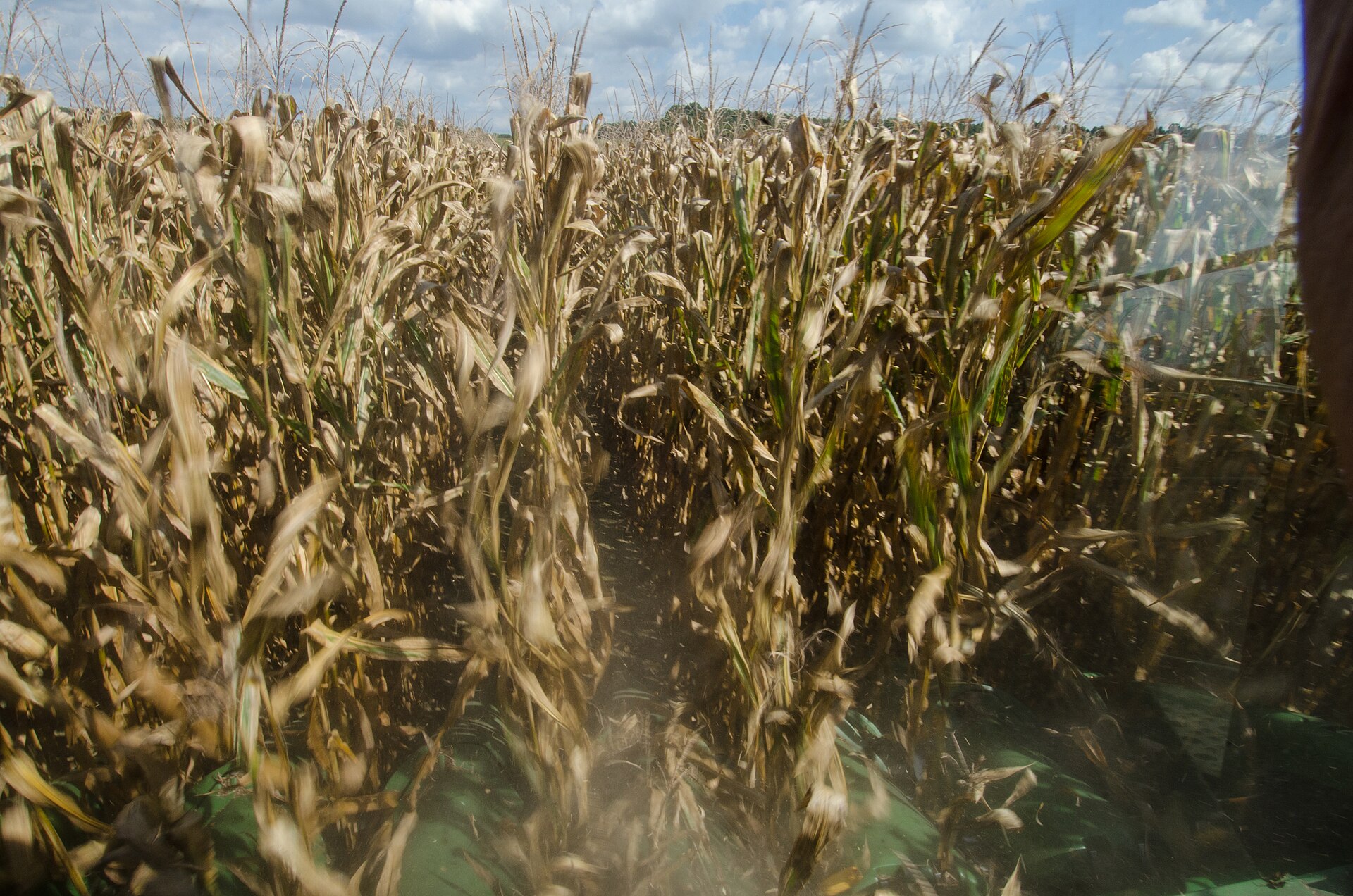
Corn and wheat had no equivalent support. Both fell as American harvest progress ran ahead of its five-year average.
What matters today. Brazil is between harvests, so this window belongs to American exporters. The South American campaign only begins to matter from January.
01 The session in one read
The grain complex split three ways on Thursday and soybeans took the better half. A flat session for beans against falls in corn and wheat is a demand signal.
The demand in question is Chinese and political. Purchases ahead of a presidential meeting are as much diplomacy as commerce.
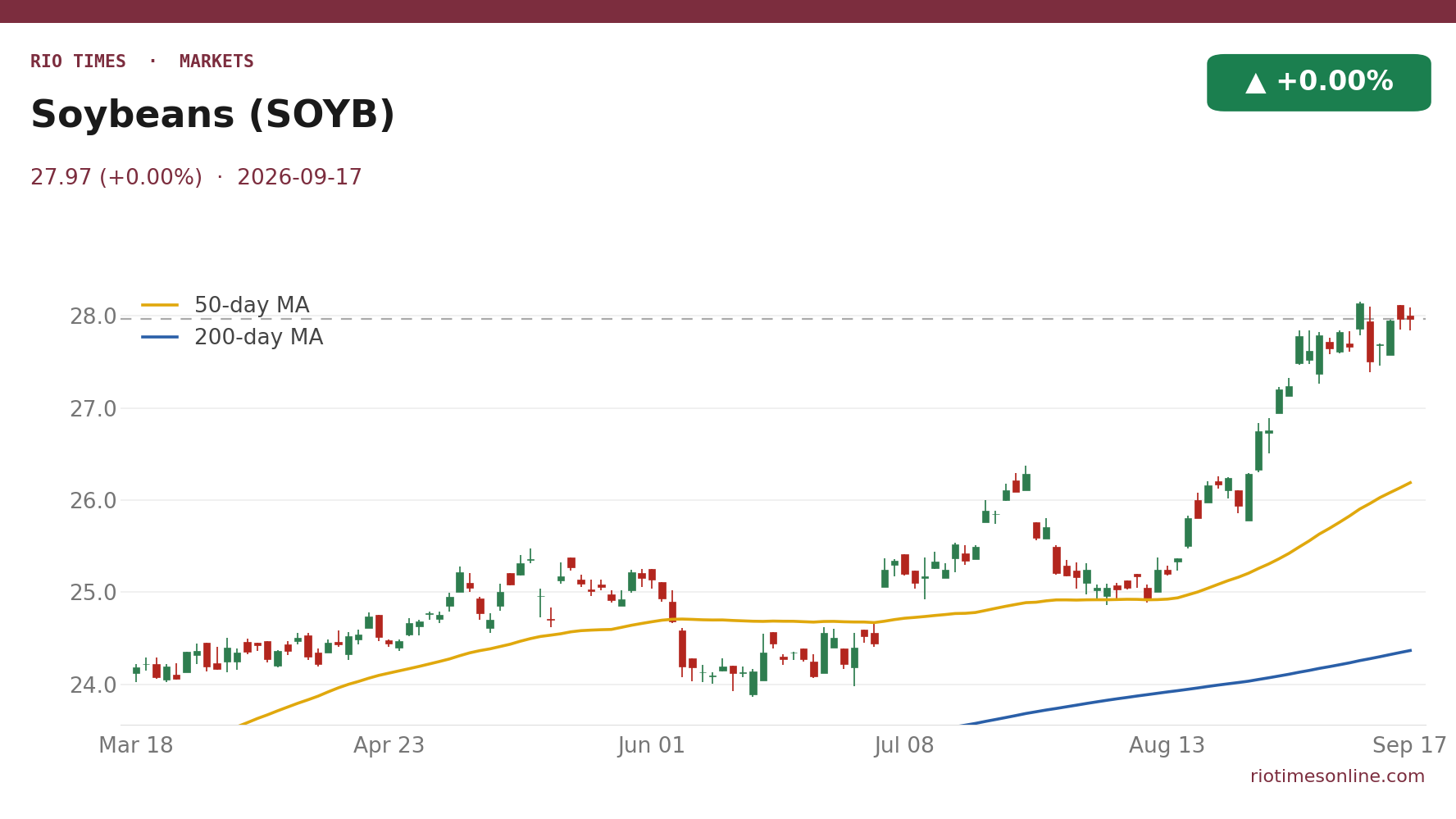
The soybean fund has traded in a tight band near the top of its recent range. It has not broken out, but it has stopped giving ground.
Corn and wheat have drifted lower over the same stretch. American harvest progress is running ahead of the five-year average for both.
02 The board
| Instrument | Level | Session | Read |
|---|---|---|---|
| Soybean fund (SOYB) | US$27.97 | 0.00% | Unchanged for a second session |
| Corn fund (CORN) | US$19.83 | -0.70% | Weighed by American harvest progress |
| Wheat fund (WEAT) | US$26.24 | -1.17% | Largest fall in the complex |
| November soybeans (Chicago) | 1,319.75c | -0.06% | Settled three-quarters of a cent lower |
| December corn (Chicago) | 530.50c | -0.70% | Down three and three-quarter cents |
| December wheat (Chicago) | 727.00c | -0.51% | Also down three and three-quarter cents |
The funds and the futures agree on direction in every line. That consistency is worth noting because the two series often diverge over longer periods.
These fund prices are share prices rather than bushel prices. A soybean fund at US$27.97 does not mean beans cost twenty-eight dollars.
03 What moved it
Chinese state-owned buyers took about a million tonnes of American soybeans in the week to 17 September. That is a large single-week figure by any standard.
It advances a commitment to buy twenty-five million tonnes through 2028, which is now past its halfway point. The buying is concentrated in state hands.
Private Chinese crushers have stayed out of the market. China maintains a ten percent tariff on American agricultural goods, which makes commercial purchases uneconomic.
The chief executive of the United States Soybean Export Council described agricultural trade as a long-standing ballast in the relationship. The trade representative said agriculture would be on the table on 24 September.
04 The Latin American read
September is Brazil’s quiet month in the soybean calendar. Planting is only beginning and the crop will not be harvested until early 2027.
That seasonal gap is precisely what gives American exporters their window. Chinese buyers who want beans now have limited alternatives.
Brazilian production forecasts remain large. The corn crop is put at 148 million tonnes, up 2.8%, and soybeans at 181.64 million tonnes, up 0.7%.
Argentina’s position is similar and smaller. Its export taxes were cut again in June 2026, which improves grower margins without changing the seasonal calendar.
05 The names to watch
The American harvest is running early. Corn was 8% gathered against a five-year average of 6%, and soybeans 6% against 3%.
Rain slowed fieldwork this week across Minnesota, Wisconsin, eastern Iowa and northern Illinois. Forecasts point to a warm and mostly dry late September.
The latest supply estimates raised American soybean production to 4.535 billion bushels and cut ending stocks to 310 million. Corn production was put at 15.8 billion bushels.
For Brazilian and Argentine growers the currency matters as much as the price. A weaker real or peso improves export competitiveness against American supply.
06 The outlook
The 24 September meeting is the event the market is trading. Agriculture is one of the few areas where both sides have something straightforward to offer.
A tariff reduction would bring private Chinese crushers back into the American market. That would be a larger change than any state purchase.
For South America the calendar does the work. From January, Brazilian supply arrives and the competitive balance shifts back.
Between now and then, currencies are the main regional variable. Neither the real nor the peso moved enough this week to change anyone’s export arithmetic.
Wheat is the part of the complex with the least Latin American exposure. Argentina is the region’s only significant exporter, and its crop reaches the market later in the year.
07 What to watch
- The 24 September meeting: Agriculture is expected on the agenda and a tariff change would matter more than any purchase.
- Chinese private crushers: They remain out of the market because of a ten percent tariff on American farm goods.
- American harvest progress: Corn and soybeans are both ahead of their five-year averages, which weighs on prices.
- Brazilian planting: The crop that will compete with American beans goes into the ground over the next six weeks.
- The real and the peso: Currency moves reach South American grower margins faster than price moves do.
Frequently Asked Questions
How did grain markets close on 17 September 2026?
The soybean fund was unchanged at US$27.97, the corn fund fell 0.70% to US$19.83 and the wheat fund 1.17% to US$26.24.
Why are soybeans holding up?
Chinese state buyers took about a million tonnes of American soybeans in the week, ahead of a presidential meeting in Washington on 24 September.
Is Brazil exporting soybeans right now?
No. September is between harvests in Brazil and the next crop is not gathered until early 2027, which is what gives American exporters their window.
What are the Chicago settlement prices?
November soybeans settled at 1,319.75 cents a bushel, December corn at 530.50 cents and December wheat at 727.00 cents.
Why are Chinese private buyers absent?
China maintains a ten percent tariff on American agricultural goods, which makes commercial purchases uneconomic. Only state-owned buyers are active.
How large are the Brazilian crops?
Brazilian corn production is forecast at 148 million tonnes, up 2.8%, and soybeans at 181.64 million tonnes, up 0.7%.
Sources: RT end-of-day series for SOYB, CORN and WEAT; Brownfield Ag News for Chicago settlements; UPI and Bloomberg on Chinese soybean purchases and the 24 September meeting; Farm Progress for weather and Brazilian crop estimates; United States Department of Agriculture crop progress and supply estimates; USDA Foreign Agricultural Service on Argentine export taxes.
This article was produced by The Rio Times’ automated newsroom system. How we use AI · Report an error
LatAm Markets: Live Signals → — real-time movers, turnover leaders and FX across Latin America.
Read More from The Rio Times