‘Giro 2020’ Project Prepares Underrepresented Political Candidates for Rio Elections

by Natalia Galicza in partnership with RioOnWatch
RIO DE JANEIRO, BRAZIL – As election season rolls through Rio de Janeiro, residents have signaled that more is at stake than during a normal contest. A deep recession that has only grown deeper, due to a global pandemic with severe local impacts, along with growing outcries for racial justice, government obstruction of the media and other factors, have compounded concerns about the state of democracy.
In this context, several initiatives are attempting to bring greater balance to the ballot. Though the majority of Brazilians identify as black or brown, the nation has a predominantly white congress. That lack of representation is echoed at the municipal level.

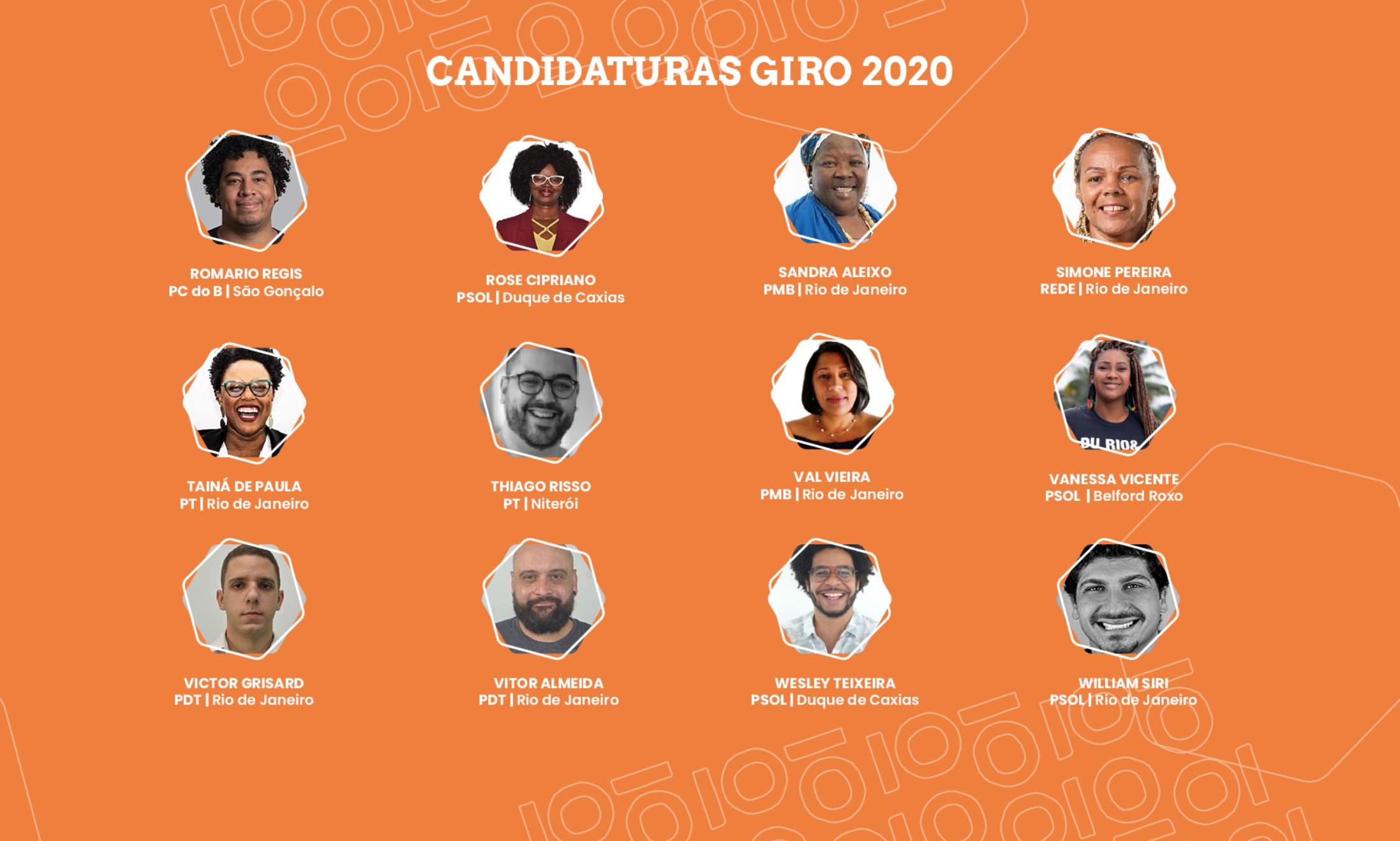
Giro 2020, a joint initiative between NGOs Fundação Cidadania Inteligente and Casa Fluminense, is one of several projects seeking to tackle this lack of diversity. In this election, it has offered special training to 74 candidates for city council and one candidate for vice-mayor in municipalities of Greater Rio de Janeiro—chosen from 289 applicants—with the aim of strengthening underrepresented candidates and those committed to anti-racism. The candidates are from a diverse assortment of political parties. Giro in Portuguese means “rotation,” and the project’s official goal is a “rotation of issues and bodies in the spaces of government decision-making.”
The demographic breakdown of the candidates supported by Giro reflects their mission. In total, 76 percent are black or brown, 45 percent are women and 19 percent are LGBTQ+. Those numbers are in stark contrast to the current makeup of city councils nationwide, where only 42 percent are black or brown, according to the Brazilian Institute of Geography and Statistics (IBGE). Only 5 percent are black or brown women, according to Brazil’s Superior Electoral Court (TSE). This remains true despite 56 percent of Brazilians self-identifying as black or brown, as of 2019.
“Democracy, government by everyone, right? But what is this government by everyone like if only one political group, which is the group of white men, have power?” asks Emerson Caetano, a Giro 2020 coordinator.
“People don’t identify with their representatives,” says Douglas Almeida, an advocacy coordinator at Casa Fluminense.
Both the formation of initiatives like Giro and the changing profiles of recently elected officials signal that a shift is underway in Brazilian politics.
In 2018, 50 percent more women were voted into Brazil’s federal Chamber of Deputies than in the previous election in 2014. The number of black or brown congresswomen rose from 10 to 13, the number of white congresswomen rose from 41 to 63, and the first indigenous congresswoman was also elected.
A May survey of black women activists across Brazil conducted by the Marielle Franco Institute and the Black Women Decide (Mulheres Negras Decidem) initiative found that 25 percent of those activists considered running for office in the current elections. Black women “demonstrate maturity in considering and participating in electoral disputes as a way of accessing institutional politics and decision-making spaces,” the organizers of the survey wrote.
For Caetano, it is important to strengthen candidacies from less-represented groups “so that they can shape the political ideal that will resolve the problems they experience.”
The two NGOs behind the Giro 2020 initiative, Fundação Cidadania Inteligente and Casa Fluminense, facilitate collaboration between activists, researchers, and other professionals based on a similar vision of inclusive politics.
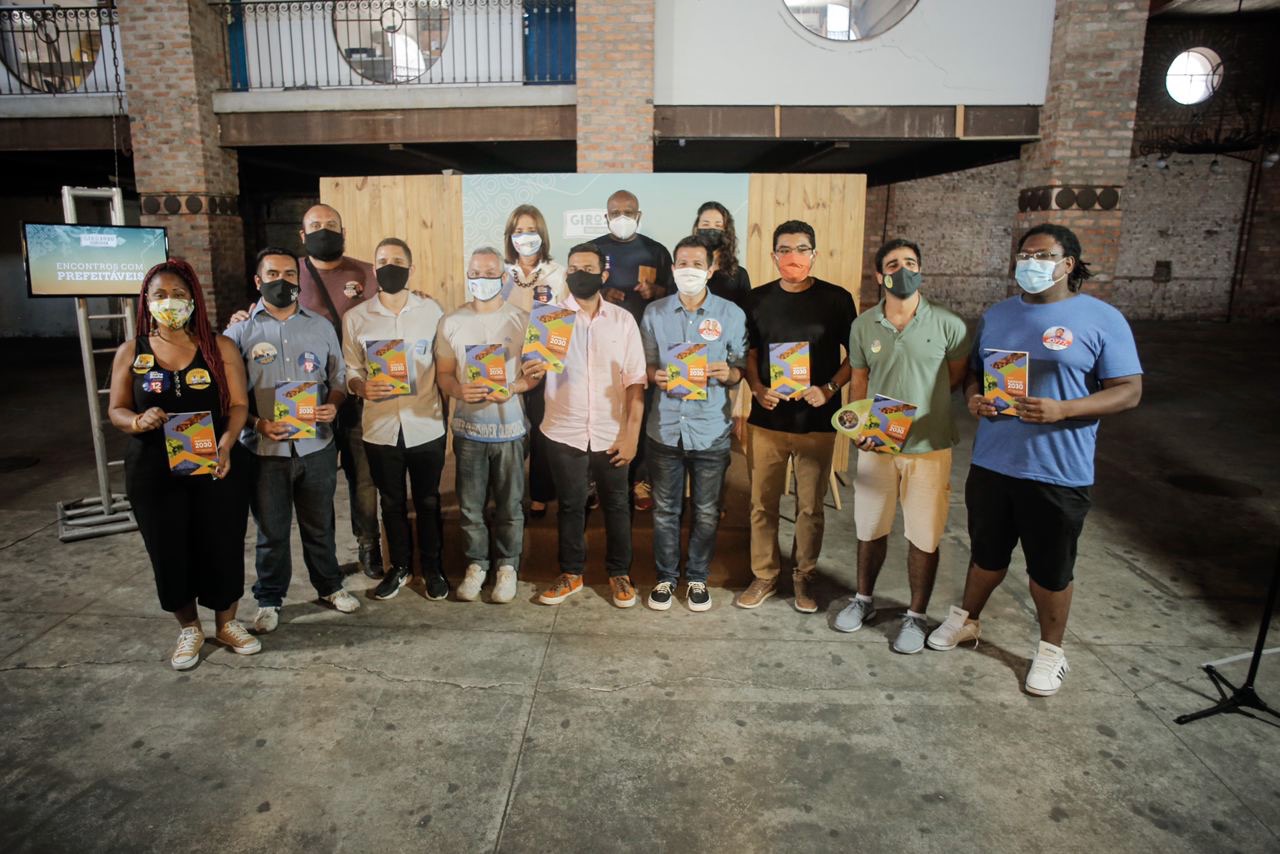
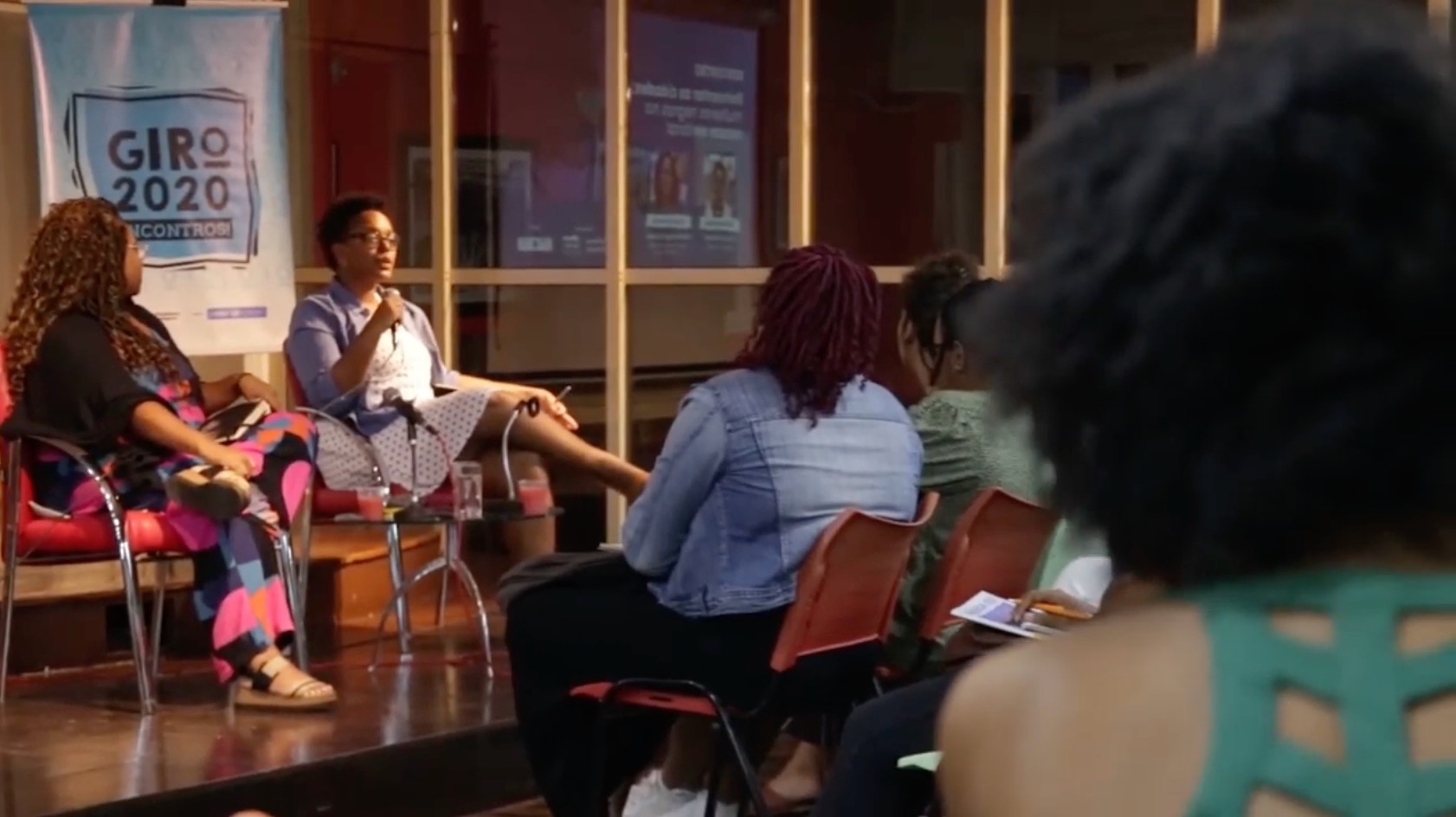
Giro 2020’s actions are based on three steps: meetings, training, and leadership labs. Meetings occur monthly, are open to the public, and hold policy discussions with social leaders and people planning to run for office. In trainings, the 75 selected individuals study public policy and discuss electoral trends, communication strategies, and campaign financing. Leadership labs are spaces for exchange among social leaders across the Rio de Janeiro Metropolitan Region.
Giro’s organizers say that although Rio residents have long called for more representative public officials, more is at stake in this election than in past years.
“Different [civil society] groups are being attacked,” said Almeida. “In the past two years, especially since the election of Bolsonaro, [civil society] is being criminalized.”
Latin American polling firm Latinobarómetro conducted an analysis in 2018 to gauge citizen satisfaction with democracy in different countries in the region. In Brazil, satisfaction with democracy fell from 54% in 2010 to just 34% in 2018. Pollsters warn that these conditions are ripe for the rise of authoritarianism.
This makes it all the more important to push for more diverse elected officials, said Giro’s organizers. They view the 2020 election as a possible turning point, especially after the the Covid-19 crisis has exposed the dangers of poor political leadership. In addition to Giro, other initiatives such as Ocupa Politica are grooming non-traditional candidates to run for office.
These underrepresented candidates allow the possibility for legislatures that not only appear different in gender and skin color, but that promote policies more in line with experienced needs and realities on the ground.
For one, they may focus more on reducing inequality, said Almeida. “There is a very serious problem in Brazil of always considering inequality a problem that can be solved later. It’s never posed as a central problem.” Brazil is currently the 9th most unequal country on Earth.
At the polls this November 15, groups that feel under- or unrepresented in politics hope to shake up the current situation.
This article is part of RioOnWatch’s 2020 reporting partnership with The Rio Times now focused on the impacts of coronavirus on Rio’s favelas.
Editorial responsibility: Matthias Camenzind, Editor-in-Chief · Editorial standards · Report an error
Living in or visiting Rio de Janeiro? See this month's events and our Rio de Janeiro city guide with rents, safety and upcoming concerts.