Ghana Has Counted 8,578 Fibre Cuts This Year, and Paid US$20m to Mend Them
GHANA · BUSINESS
Key Facts
The count: Ghana has recorded 8,578 fibre-optic cable cuts so far in 2026, according to the communications minister, Samuel Nartey George.
The bill: More than US$20m spent by operators on repairs, money the minister said cannot go into new coverage.
Who is digging: Roads built under the government’s Big Push programme account for about 49% of the cuts.
The mining share: Illegal gold mining, known locally as galamsey, accounts for about 25%.
Where it ends: On the current trend Ghana would finish the year close to 9,000 incidents.
What follows: The National Communications Authority has been asked to prepare a framework for compensating customers hit by network failures.
Ghana fibre cuts have reached 8,578 so far in 2026 and cost telecommunications operators more than US$20m in repairs, the communications minister said on 7 September. Road building accounts for about half of them, and illegal gold mining for about a quarter.
What the Ghana fibre cuts figure actually measures
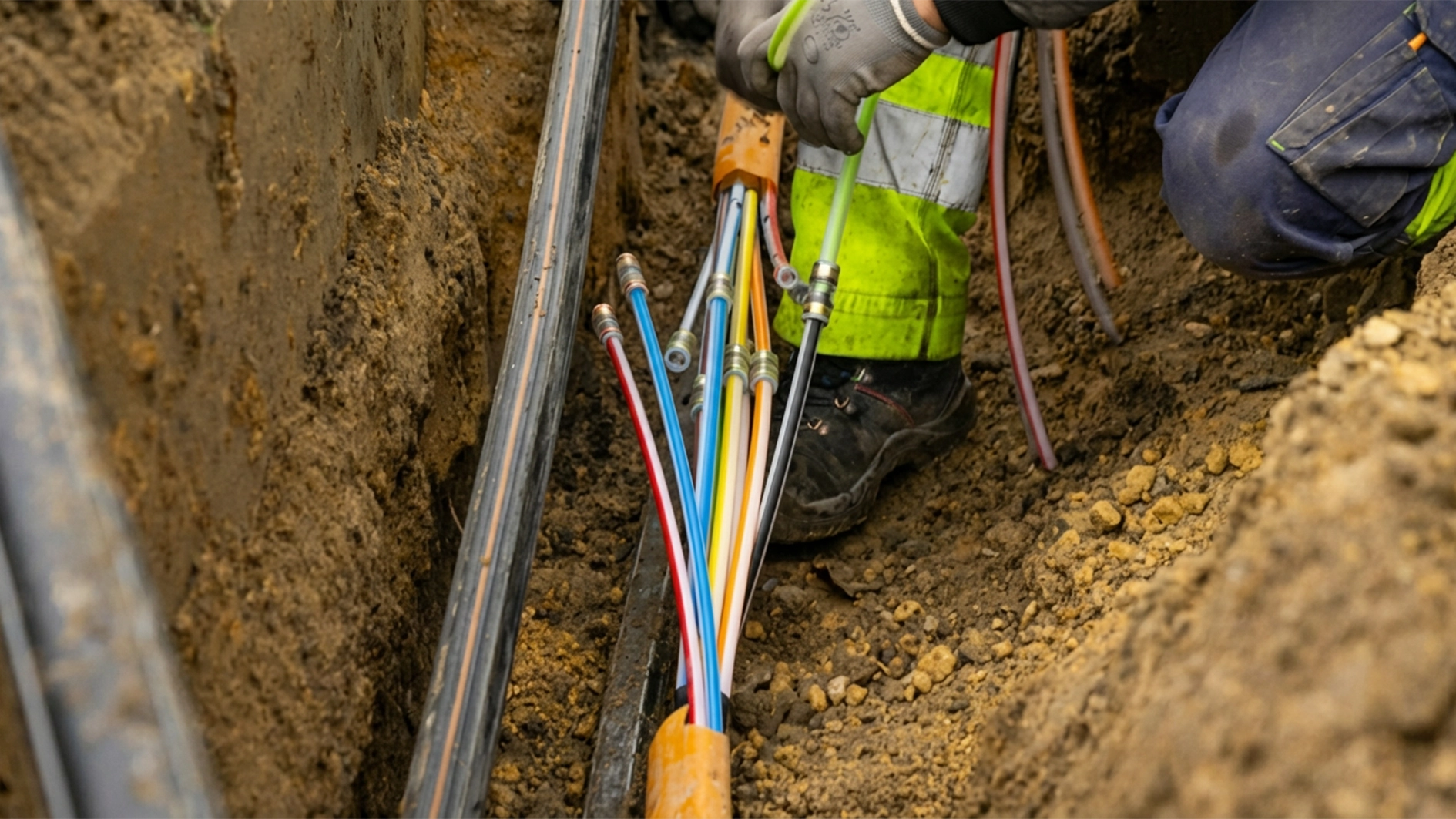
The number counts physical breaks in buried fibre-optic cable, the strands that carry mobile data, bank transactions and government services between Ghanaian cities. Each break is a repair crew, a trench and hours of degraded service for whoever sits behind it.
Samuel Nartey George gave the figure at the Government Accountability Series, the platform on which Ghanaian ministers report to the public, on Monday 7 September. He put the repair cost at more than US$20m for the year to date.
That is money the operators have already spent, not a projection. It is also money that does not become a new mast in a district that has none.
Roads and mining are doing most of the damage
About 49% of the cuts trace back to construction under the Big Push, the government’s flagship road programme, according to the minister. The state, in other words, is the largest single source of damage to its own digital backbone.
Illegal gold mining accounts for roughly a quarter more. Galamsey pits follow the same river valleys and roadsides that the cables do, and excavators working without permits do not consult utility maps.
The remainder is the ordinary mixture of accidental strikes, cable theft and weather. Together they push the country towards about 9,000 incidents by December if nothing changes.
Why an outside investor should care about a trench
Ghana has spent two years rebuilding its credibility with creditors, and the domestic bond market only reopened at the medium end this month. A digital economy is one of the few growth stories the country can tell that does not depend on gold, cocoa or oil.
That story rests on the cable. Mobile money, remittance corridors and the outsourcing jobs Accra is courting all sit on top of a network that is being cut roughly thirty times a week.
Repair spending is also a hidden tax on coverage. Every dollar mended is a dollar not laid, which slows the rollout in exactly the rural districts the government wants connected.
The galamsey problem keeps arriving in new places
Illegal mining has already been counted against Ghana’s forests, rivers and cocoa farms. The fibre figure adds a fourth ledger, and one that is easy to price.
It also complicates enforcement. A pit that damages a cable is a crime against a private operator as well as a breach of mining law, and the two cases rarely travel together.
What the regulator has been asked to do
The minister said the National Communications Authority will prepare a framework for customer remediation, meaning a route to compensation when service fails. That would move some of the cost of a cut from the subscriber back towards whoever caused it.
No timetable was given for the framework. Nor has the government said whether contractors on the Big Push will be made to carry the repair bill for cables they sever.
How the damage is repaired, and who waits
A cut cable is not a software fault that clears itself. A crew has to locate the break, expose the duct, splice the strands and test the span, and in the rainy season that work slows further.
Most subscribers experience it as a slow afternoon rather than an outage, because operators reroute traffic. The cost appears instead as capacity that was paid for twice.
Banks, mobile-money agents and government offices sit at the sharp end. A district office that cannot reach a national database stops issuing documents until the splice is done.
The regional comparison is not flattering
Nigeria has spent two years addressing the same problem, and its regulator designated telecommunications infrastructure as critical national infrastructure in an attempt to raise the penalties for damaging it. Broadband speeds there rose sharply once the fibre network stopped being cut so often.
Ghana has no equivalent designation in force. The remedy currently on the table is a compensation framework for customers, which addresses the symptom rather than the excavator.
That difference matters for anyone comparing the two markets. Network reliability is now a competitive variable between West African economies, not a technical footnote.
What to watch next
The first test is whether the year closes below 9,000 incidents or above them. The second is whether road contractors start paying for what they break.
A third measure matters more to investors: whether operator capital spending on new sites rises once the repair bill stops growing.
More: Ghana news in English, every day from The Rio Times.
Frequently Asked Questions
How many fibre cuts has Ghana recorded in 2026?
Ghana recorded 8,578 fibre-optic cable cuts in 2026 up to early September, according to Communications Minister Samuel Nartey George. On the current trend the year would end close to 9,000.
How much have the Ghana fibre cuts cost?
Telecommunications operators have spent more than US$20m repairing the damage so far this year. The minister said that money cannot then be used to expand coverage.
What causes most of the damage?
Road construction under the government’s Big Push programme accounts for about 49% of the cuts. Illegal gold mining, known as galamsey, accounts for about 25%.
Will customers be compensated?
The National Communications Authority has been asked to prepare a framework for customer remediation over network failures. No timetable for it has been announced.
Why does this matter beyond Ghana?
Fibre is the base layer for mobile money, banking and outsourcing work across West Africa. Repeated cuts raise the cost of every digital service built on top of them.
Connected Coverage
Ghana’s return to the medium-term debt market is covered in Ghana Returns to the Medium-Term Curve, and the wider contest over the continent’s minerals and infrastructure is tracked in our pillar Africa: The New Scramble. For the regional picture on connectivity and payments, see M-Pesa and Wave push deeper into African payments.
This article was produced by The Rio Times’ automated newsroom system. How we use AI · Report an error · Editorial responsibility: Matthias Camenzind, Editor-in-Chief