Noboa Locks Ecuador Into the Dollar as Argentina Weighs Currency Competition in Latin America
Economy · Latin America
—The stakes. Dollarization Latin America now spans an official bloc of Ecuador, El Salvador and Panama plus creeping de facto adoption in Venezuela and Cuba.
—The date. Ecuador’s President Daniel Noboa issued Decree 565 on March 18, 2025, ratifying the US dollar as sole legal tender.
—The policy fight. Argentina, under President Javier Milei, is debating whether currency competition can deliver what full dollarization promised elsewhere.
—The trade-off. Giving up a national currency has tamed inflation but left countries without a lender of last resort or an independent exchange rate.
—The investor read. Foreign capital treats the dollarized bloc as low-inflation but growth-volatile, while informal dollarization in Venezuela and Cuba signals state failure.
Latin America is now the world’s clearest laboratory for dollarization, but the results are split. Ecuador has just entrenched the dollar by decree, Argentina is only flirting with currency competition, and Venezuela and Cuba are dollarizing by collapse rather than choice.
Ecuador’s Decree 565 Makes the Dollar Permanent
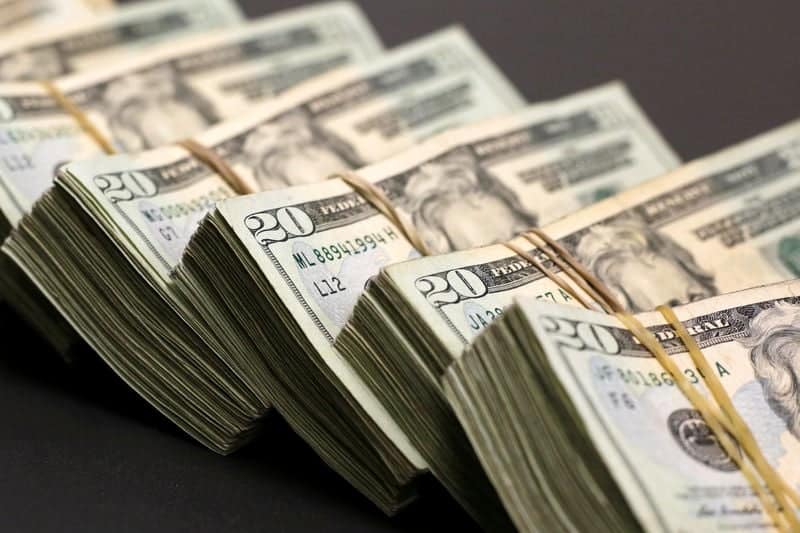
On March 18, 2025, President Daniel Noboa issued Decree 565 in Cuenca, ratifying the US dollar as Ecuador’s official currency and sole means of payment. The decree targets Article 303 of the constitution, proposing reforms to ban the Central Bank of Ecuador from issuing any currency other than the dollar.
Ecuador first replaced the sucre with the US dollar in January 2000 after a banking crisis sent annual inflation to around 96 percent. Inflation had already reached roughly 52 percent in 1999, and the move crushed it to as low as 0.4 percent by 2017.
The country operates with US banknotes in standard denominations and locally minted centavo coins at par with US coins. UNHCR guidance for 2026 still states that the US dollar is the only currency used in Ecuador.
The trade-off is visible in growth data. 8 percent before adoption to 4.5 percent afterward, but with higher volatility.
For investors, Decree 565 removes the near-term risk of an exit from dollarization. That makes Ecuador monetarily predictable but leaves it fully exposed to US interest-rate cycles and its own fiscal choices.
El Salvador’s Dollar Anchor and the Bitcoin Layer
El Salvador adopted the US dollar as legal tender in 2001, replacing the colón without any formal monetary agreement with the United States. Economists classify this as unilateral hard dollarization.
The stated goals were to attract foreign direct investment, cut interest rates, and spur productivity growth. Inflation did stabilize sharply post-2001, sitting around 3 percent in 2021.
Yet the growth dividend has been ambiguous. Studies find no clear significant long-term boost to GDP per capita or foreign direct investment, with any growth impulse fading after the first years.
Bitcoin was legal tender from 2021 until the law was amended in early 2025 and acceptance became voluntary; dollarization remains the core monetary anchor. The dollar still anchors wages, trade, banking and pricing across the economy.
For foreign investors, El Salvador offers a dollar balance sheet with a Bitcoin overlay, which complicates risk assessment. The monetary base remains credible, but the country’s broader fiscal and political choices dictate sovereign risk.
Panama’s Balboa Is Dollarization Under Another Name
Panama runs a dual currency system with the balboa and the US dollar fixed at 1:1 since 1904. Only balboa coins exist, while US dollar banknotes serve as paper money for all daily transactions.
Salaries, trade, banking and pricing operate in dollars, making Panama the region’s oldest fully dollarized economy. Balboa coins circulate interchangeably with US coins, effectively eliminating exchange-rate risk.
Apart from a short-lived 1941 issue withdrawn within weeks, Panama has never put paper balboas into circulation, locking the economy into the US monetary system by design rather than accident. That choice has given the country its long-standing status as a regional financial and trade hub.
The balboa survives as a unit of account and a source of national symbolism, but it has no monetary policy function. Panama has no central bank at all, so no institution can print money or act as a lender of last resort in any meaningful way.
For foreign capital, Panama represents the deep end of dollarization with more than a century of precedent. Its stability is institutional rather than recent, which is precisely what Ecuador and El Salvador are trying to replicate.
Argentina’s Currency Competition Debate Under Milei
Argentina is not dollarized, but it is running the most consequential monetary debate in the region. President Javier Milei has floated currency competition rather than immediate full dollarization, allowing the peso to coexist with the dollar for many private transactions.
The rationale is to force fiscal discipline without scrapping the peso outright, preserving some monetary sovereignty while attacking inflation. Milei’s experiment is being watched across Latin America as a possible middle path.
Argentina’s economy remains heavily dollarized in practice through real estate, savings and corporate pricing, even though the peso remains legal tender. Analysts call this de facto bi-monetary behaviour rather than official dollarization.
Investors should distinguish between dollarization as fact and dollarization as law. Argentina has the former in large parts of the economy but not the latter, leaving more policy uncertainty than in Ecuador or El Salvador.
The core test is whether Milei can deliver low inflation without surrendering the central bank’s ability to respond to crises. That is the unresolved question separating Argentina from the hardened currency regimes to its north.
Venezuela’s Collapse-Driven Dollarization
Venezuela has dollarized informally through hyperinflation and the collapse of the bolívar. Inflation averaged 252 percent in 2025, and the IMF projects 387 percent for 2026, and daily commerce increasingly runs on US cash or dollar-linked pricing.
This is not a policy choice. The bolívar has lost its functions as store of value and medium of exchange, leaving dollars circulating without legal sanction in many parts of the economy.
The state retains the bolívar as legal tender, but wages, prices and private contracts often reference the dollar. That split between de jure and de facto regimes makes Venezuela a warning about dollarization without fiscal reform.
For foreign investors, Venezuelan dollarization is a symptom of institutional failure rather than a stabilisation programme. It lowers exchange-rate risk in transactions but does not address sanctions, property rights or state capacity.
Venezuela’s case shows that dollarization alone cannot create credibility. Without a functioning state and fiscal anchor, adopting the dollar informally leaves the economy fragmented and vulnerable.
Cuba’s Partial Opening to US Dollar Stores
Cuba has expanded the network of state-run stores accepting US dollars while wages continue to be paid in Cuban pesos.
This creates a two-track monetary reality. Cubans with access to remittances or foreign currency can buy imported goods in dollar stores, while peso earners face shortages and rationing.
The Cuban government has not adopted the dollar as legal tender, but its retail expansion amounts to informal, state-managed dollarization. Havana Times reported the shifts alongside citizen complaints about the new measures.
For foreign actors, the risk is dual-currency arbitrage and social tension. Investors face a market where the dollar operates inside enclaves but property rights and repatriation remain constrained.
Cuba’s partial dollarisation shows the same logic as Venezuela, though arranged by the state. It is a coping mechanism for external imbalance, not a credible monetary regime.
Why Countries Give Up a National Currency
The standard motive is inflation stabilisation. Ecuador’s 52 percent inflation in 1999, which reached 96 percent over 2000, and El Salvador’s repeated episodes of currency instability pushed both to adopt the dollar as an external anchor.
Dollarization also removes exchange-rate risk for trade and investment with the United States. Panama’s century of 1:1 stability is the clearest proof of that benefit.
The cost is monetary sovereignty. A dollarized country cannot devalue its currency to absorb external shocks, and its central bank cannot buy government debt during a crisis.
Empirical studies across Ecuador and El Salvador find inflation falls and stabilises, while growth outcomes are mixed and volatility can rise. Dollarization is effective against nominal chaos but not a guarantee of prosperity.
That asymmetry is the core lesson for Argentina. Adopting the dollar would crush inflation expectations but hand monetary policy to the Federal Reserve, whatever the domestic unemployment or demand situation requires.
The Bind of Having No Lender of Last Resort
A central bank in a dollarized economy cannot create dollars to rescue banks or pay depositors. That constraint is the single largest vulnerability of Ecuador, El Salvador and Panama.
Ecuador has no capacity to act as a lender of last resort, which forces it to rely on fiscal buffers, international credit lines and remittances. The same binding constraint applies to El Salvador’s banking system.
Panama has built an offshore banking sector that mitigates the weakness by attracting international dollar deposits. Even so, Panama has no central bank with the power to inject liquidity in a systemic panic.
The trade-off frames the decision facing Argentina’s Milei. Currency competition preserves some central bank tools, but full dollarization would eliminate them completely.
For foreign creditors, the absence of a lender of last resort raises bank-run risk and sovereign rollover sensitivity. The dollar anchor cuts inflation but leaves liquidity policy to Washington and to fiscal discipline at home.
Remittances, Trade and the Dollar’s Magnetic Pull
Remittance inflows act as a stabilising force across the dollarized bloc, especially in El Salvador and Ecuador. Dollar-denominated transfers flow into economies that already price everything in dollars, reducing exchange-rate friction.
Trade integration with the United States reinforces the dollar’s pull. Panama’s canal economy and El Salvador’s maquila sector depend on dollar pricing and dollar contracts.
That magnet extends to countries without official dollarization. Venezuela and Cuba are pulled toward the dollar by trade, remittances and the search for a stable unit of account.
The dollar’s regional dominance means even non-dollarized economies cannot easily detach. Argentina’s peso survives legally, but dollar pricing in property and corporate finance persists.
Investors should read the rise of dollarization Latin America as part of a broader structural shift. The dollar is becoming the region’s implicit monetary standard even where national currencies remain in circulation.
Fiscal Discipline Is the Real Variable
Dollarization removes the printing press but not the risk of fiscal collapse. Ecuador has struggled with deficits and oil-price dependence despite its dollar anchor.
El Salvador’s dollarization did not guarantee fiscal discipline, and its Bitcoin adoption added another layer of sovereign balance-sheet risk. The currency regime is only as strong as the budget behind it.
Panama’s long dollarized history is often cited as proof of the regime’s success, but its fiscal credibility matters more than the balboa’s existence. Dollarization works where institutions enforce budget constraints.
Venezuela’s informal dollarization shows the limit of adopting the dollar without fiscal reform. Using dollars in daily life did not stop the state from collapsing or inflation from returning in dollarised sectors.
The lesson for Milei’s Argentina is direct. Currency competition cannot substitute for credible fiscal rules, and full dollarization without them would merely rename the problem.
The Investment Map of 2026
For foreign investors, the dollarized bloc offers currency predictability but varying sovereign risk. Ecuador has entrenched the dollar but faces political and fiscal challenges; El Salvador layers Bitcoin on top of a dollar base.
Panama remains the benchmark case, with more than a century of dollar circulation and deep financial integration with the United States. It carries the least currency risk in the region.
Argentina presents the highest policy uncertainty despite Milei’s market-friendly signals. The peso still exists, and the debate between currency competition and full dollarization is unresolved as of September 2026.
Venezuela and Cuba are dollarizing through distress. They offer selective dollar-based commerce but severe institutional, sanction and property-rights constraints.
The central question for any foreign investor is whether the dollar anchor is backed by fiscal and institutional credibility. Without it, dollarization is a veneer, not a strategy.
Connected Coverage
LatAm Pre-Open — Monday, September 7, 2026
Brazil’s Financial Morning Call for Monday, September 7, 2026
The Big Picture
Latest developments
- Marrakech International Film Festival 2026: Dates, Tickets and Guide — 24 September 2026
- Festival Internacional del Globo León 2026: Dates, Tickets and Guide — 24 September 2026
- Internet and SIM Cards in Brazil 2026: Providers, Prices, Coverage — 24 September 2026
- Costa Rica Pet Import Rules in 2026: Two Veterinary Deadlines, No Rabies Blood Test, and a Permit Most Owners Never Need — 23 September 2026
This article was produced by The Rio Times’ automated newsroom system. How we use AI · Report an error · Editorial responsibility: Matthias Camenzind, Editor-in-Chief
In depth