Fed Rate Hold Hits Brazil’s Ibovespa Stock Index After Revolt
Markets · Global Economy
Key Facts
—Fed Funds Target Held at 3.50%-3.75% by a 9-3 vote on July 29, 2026, the fifth consecutive hold.
—Dissenting Votes Cleveland Fed President Beth Hammack, Minneapolis Fed President Neel Kashkari, and Dallas Fed President Lorie Logan favored a 25-basis-point hike.
—Historic Dissent First time since September 2016 that three officials dissented in the same hawkish direction.
—Brazil Equities The Ibovespa fell about 1.5%, tracking declines on Wall Street.
—Brazilian Real The US dollar eased to about R$5.10 (~US$1.00), with the real firming intraday.
The Fed rate decision to hold interest rates steady on July 29, 2026, masked a dramatic revolt within the central bank, as three regional Fed presidents dissented in favor of a hike for the first time in nearly a decade. For foreigners with capital in Latin America, the rare 9-3 split vote signals prolonged uncertainty, with Brazil’s benchmark Ibovespa index falling about 1.5% while currency markets showed a mixed reaction.
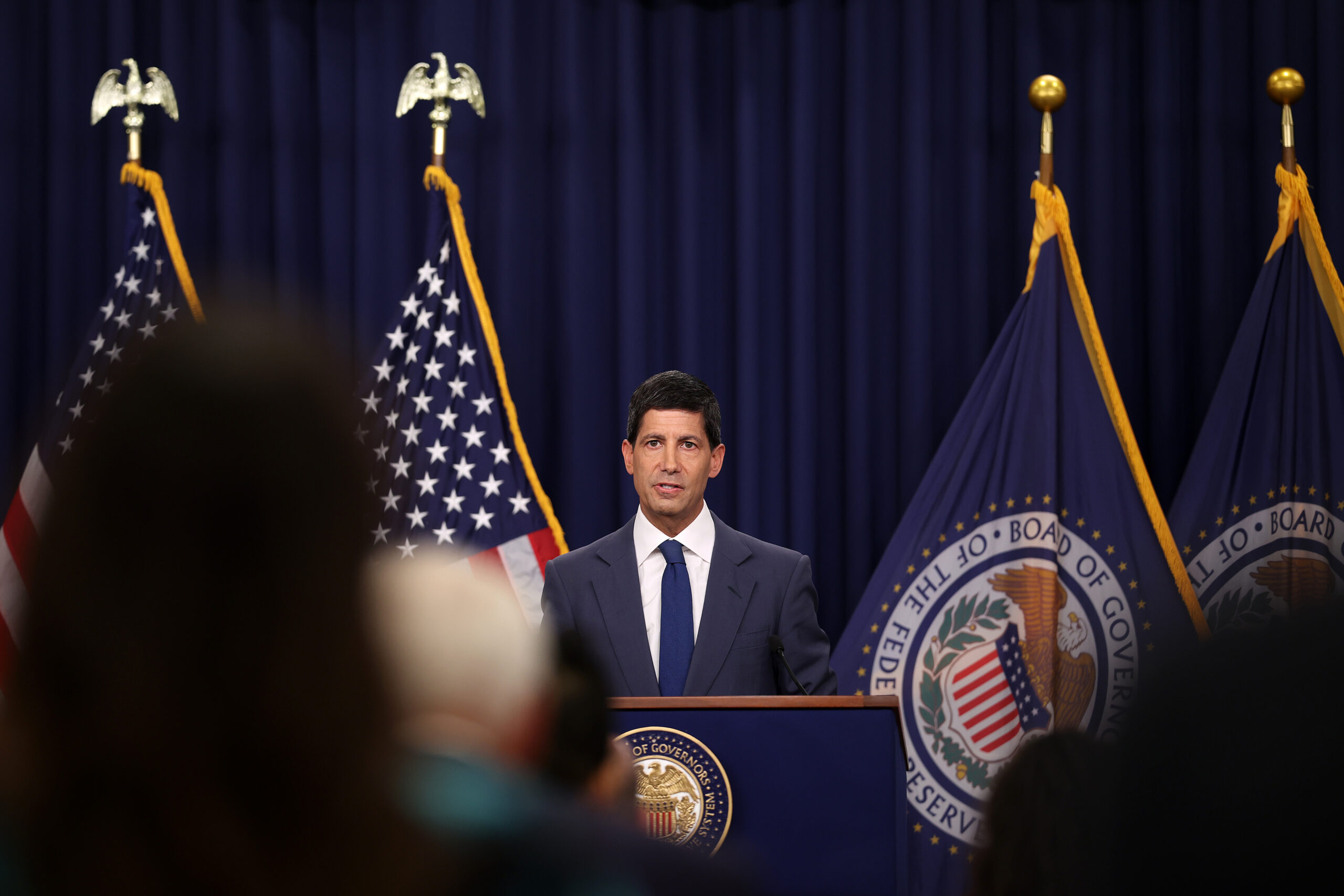
A Fractured Federal Reserve
The Federal Open Market Committee (FOMC) kept the benchmark federal funds rate locked at 3.50%-3.75%, marking the fifth consecutive hold and suggesting stability on the surface. But the vote count shattered any illusion of consensus. Three regional Fed presidents – Beth Hammack of Cleveland, Neel Kashkari of Minneapolis, and Lorie Logan of Dallas – formally dissented, preferring to raise the target range by a quarter percentage point immediately.
It marks the first time since September 2016 that three officials dissented in the same hawkish direction. The official statement noted the hold was “in support of the Federal Reserve’s dual mandate,” yet the dissenters made clear they believe that mandate is threatened by prices, not jobs.
For global investors, a fractured Fed is an unpredictable Fed, and markets hate uncertainty.
Warsh Leads a Divided Committee
Fed Chair Kevin Warsh used the post-meeting window to flag persistent inflation risks, reinforcing the hawkish tone that rattled markets. While Warsh did not formally join the dissenters, his public commentary reinforced the view that the central bank’s inflation fight remains incomplete.
His stance suggests that the bar for future rate cuts is far higher than markets had priced in.
For Latin American portfolio managers, the Warsh signal translates directly into a “higher-for-longer” reality. If the Fed chair is openly worried about price pressures, the interest rate differential that has made Brazilian real-denominated bonds or Mexican peso carry trades attractive begins to shrink in risk-adjusted terms.
Live Market IntelligenceBrazil — Live Market Board
Rio Times · Live Market Intelligence
Brazil — Live Market Board
-0.51%
185,547.66
-0.51%
63,507.11
-1.11%
11,235.54
-0.77%
3,051,683
-0.91%
2,523.40
-1.71%
58,496.57
+1.11%
| Instrument | Last | Change | YoY | Prev. | High | Low | Volume |
|---|---|---|---|---|---|---|---|
| IBOV | 185,547.66 | -0.51% | +21.85% | 186,502.64 | 168,310 | 167,142 | — |
| USD/BRL | 5.16 | +0.01% | -5.13% | 5.16 | 5.18 | 5.14 | — |
| SELIC | 14.00% | — | — | — | — | — | |
| PETR4 | 41.64 | -0.05% | +35.19% | 41.66 | 41.97 | 41.15 | 41,499,400 |
| VALE3 | 72.97 | +0.83% | +30.75% | 72.37 | 73.54 | 72.66 | 17,658,000 |
| ITUB4 | 38.60 | -1.03% | +4.57% | 39.00 | 39.34 | 38.39 | 29,487,800 |
| BBDC4 | 16.85 | +0.36% | +3.50% | 16.79 | 16.90 | 16.67 | 19,416,900 |
| BBAS3 | 19.37 | +0.47% | +0.73% | 19.28 | 19.44 | 19.16 | 11,069,200 |
| B3SA3 | 14.26 | -0.21% | +12.73% | 14.29 | 14.47 | 14.11 | 33,037,800 |
| ABEV3 | 14.89 | -0.80% | +21.91% | 15.01 | 15.07 | 14.81 | 16,453,100 |
| WEGE3 | 47.59 | +0.49% | +29.99% | 47.36 | 48.08 | 47.36 | 3,364,600 |
| PRIO3 | 59.14 | -0.19% | +50.67% | 59.25 | 59.81 | 58.74 | 3,325,600 |
| SUZB3 | 41.33 | +2.35% | -23.55% | 40.38 | 41.48 | 40.35 | 3,914,900 |
| RENT3 | 34.68 | -0.09% | +0.84% | 34.71 | 34.96 | 34.35 | 7,979,100 |
| AZZA3 | 15.89 | -2.63% | -53.76% | 16.32 | 16.42 | 15.82 | 1,330,300 |
| CSNA3 | 4.30 | +0.47% | -42.65% | 4.28 | 4.41 | 4.26 | 10,076,100 |
| GGBR4 | 24.69 | +2.19% | +51.38% | 24.16 | 24.85 | 24.18 | 7,047,600 |
| ENEV3 | 24.21 | -1.38% | +70.49% | 24.55 | 24.64 | 23.99 | 9,297,000 |
Risk-Off Spillover Hits Brazilian Equities
The immediate market reaction to the hawkish hold was a risk-off move that spilled directly into Latin American equities. Brazil’s benchmark Ibovespa index fell about 1.5% on July 29, tracking a broader decline on Wall Street as traders slashed bets on imminent easing.
The drop was concentrated in the heavyweight mining and oil stocks that dominate the B3 exchange in São Paulo, which are sensitive to global growth fears.
The hawkish Fed also limits the Brazilian central bank’s room to continue cutting the Selic rate aggressively. If the Selic remains elevated to keep inflation in check, domestic Brazilian stocks – particularly retailers and homebuilders sensitive to credit costs – lose their valuation appeal.
The “Fed rate decision” thus acts as a ceiling on Ibovespa multiples. Foreign investors, who account for a large chunk of B3 volume, are likely to reassess their overweight positions in Brazil until the FOMC’s direction becomes unanimous again.
Currencies Show a Mixed Picture
Contrary to expectations of broad dollar strength, currency markets delivered a more nuanced response. In Brazil, the US dollar actually eased to about R$5.10 (~US$1.00), with the real firming intraday against the greenback.
The move surprised traders who had positioned for a sell-off in emerging-market currencies following the hawkish Fed hold.
The mixed currency reaction highlights the complexity of the current environment. While a hawkish Fed typically tightens global financial conditions and strengthens the dollar, local factors – including carry trade appeal and central bank intervention – can offset the pressure.
The Colombian peso, trading around 3,200 per dollar (~US$0.00031), and the Chilean peso, near 930 per dollar (~US$0.0011), remain vulnerable to shifts in risk appetite. The Peruvian sol, steadier at roughly 3.40 per dollar (~US$0.29), may hold up better due to aggressive central bank intervention, but it cannot decouple entirely.
The Carry Trade Calculus
Latin American currencies had rallied earlier in 2026 on the promise of a Fed pivot that now looks delayed. The interest rate spread between local bonds and US Treasuries, which drives the carry trade, becomes less attractive when the Fed signals rates will stay higher for longer.
Investors who borrow in dollars to buy higher-yielding Brazilian or Mexican assets face shrinking margins.
The Argentine peso, officially pegged at 1,320 per dollar (~US$0.00076) but trading at a steep parallel gap, faces renewed pressure as dollar scarcity intensifies. When the Fed stays hawkish, the dollar drain from riskier markets accelerates, forcing local policymakers from São Paulo to Buenos Aires to defend their currencies with limited reserves.
The Road Ahead for Foreign Investors
The split vote rewrites the playbook for the rest of 2026. A September rate cut is no longer a base case.
For expats and international investors allocating to Latin America, the strategy must shift from aggressive carry trades to hedging dollar exposure. Instruments like dollar-settled Brazilian futures or Mexican dollar bonds look more prudent than outright local-currency longs.
The key date is the next FOMC meeting. If the three dissenters manage to sway the committee toward a hike, the repricing of LatAm assets will be swift and sharp.
For now, the message from Washington is unmistakable: the Fed is not ready to rescue emerging markets with cheaper dollars, and the burden of adjustment falls squarely on local policymakers across the region.
Frequently Asked Questions
Why did three Fed officials dissent at the July 2026 meeting?
Cleveland Fed President Beth Hammack, Minneapolis Fed President Neel Kashkari, and Dallas Fed President Lorie Logan voted for a 25-basis-point hike, believing inflation remained too high to hold rates steady at 3.50%-3.75%. It was the first time since September 2016 that three officials dissented in the same hawkish direction.
How did the Fed rate decision affect Brazil’s Ibovespa?
The Ibovespa fell about 1.5% on July 29, 2026, tracking a decline on Wall Street as the hawkish Fed hold triggered a risk-off move. Heavyweight commodity stocks on the B3 exchange were particularly hit, and the prospect of limited domestic rate cuts added pressure on Brazilian equities.
What happened to the Brazilian real after the Fed decision?
Contrary to expectations of broad dollar strength, the US dollar eased to about R$5.10 (~US$1.00) in Brazil, with the real firming intraday. The currency reaction was mixed across Latin America, showing that local factors can offset the typical hawkish Fed pressure.
Connected Coverage
Angola Launches Studies for West-East Highway Megaproject
Mozambique Caps Foreign Card Payments at 6 Million Meticais a Year
Sources: Federal Open Market Committee (FOMC); Beth Hammack; Neel Kashkari.
This article was produced by The Rio Times’ automated newsroom system. How we use AI · Report an error
Read More from The Rio Times