Mozambique Caps Foreign Card Payments at US$94,000 a Year
Africa · Southern
Key Facts
—New annual cap. Banco de Moçambique set a 6 million metical (US$94,000) yearly limit on overseas card payments per holder.
—Hard enforcement. Banks must block cards once the limit is reached and notify clients at the halfway mark.
—FX scarcity. The move aims to defend dwindling foreign-exchange reserves amid acute dollar shortages.
—Debt distress. Mozambique’s sovereign debt was reclassified as unsustainable by the IMF in February 2025.
—Geopolitical pressure. The Middle East conflict and Cabo Delgado insurgency compound the country’s external vulnerabilities.
Banco de Moçambique has introduced a sweeping new Mozambique card payment limit, capping overseas transactions at 6 million meticais per year in a defensive move to protect vanishing foreign reserves and steady a financial system battered by debt distress, conflict, and global energy shocks.
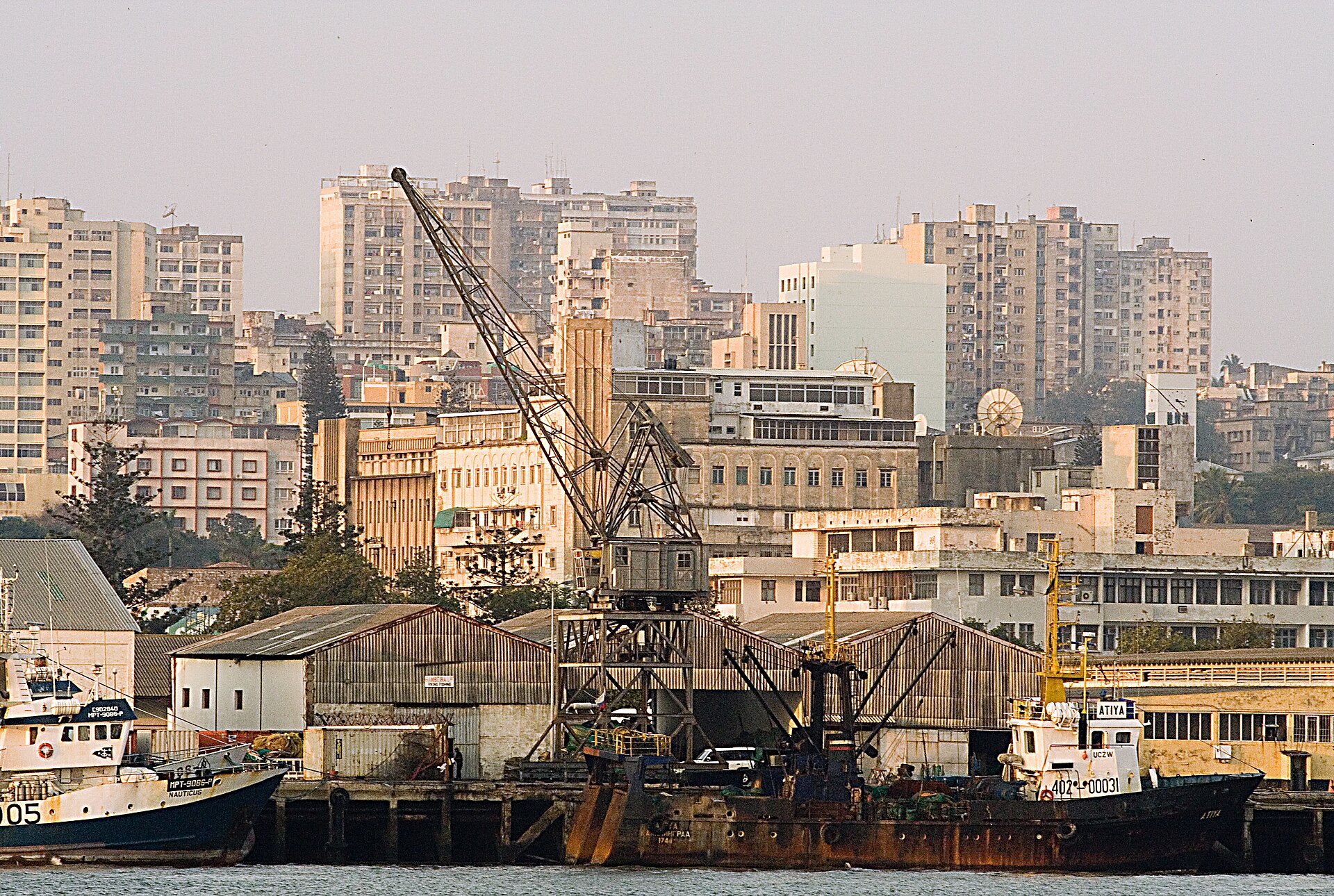
What the new Mozambique card payment limit actually means
The central bank published Aviso n.º 9/GBM/2025 in the official gazette in December 2025, establishing a single annual ceiling of 6,000,000 meticais — roughly 94,000 US dollars — for all payments abroad made with bank cards issued in Mozambique. The cap applies to individuals and companies alike, regardless of how many cards they hold or how many banks they use.
Once a cardholder reaches the limit, commercial banks must block the card after notifying the client. Banks are also required to send an alert when half the annual allowance — 3 million meticais — has been consumed.
The regulation breaks the annual figure into practical sub-limits of 500,000 meticais per month, 125,000 per week, and roughly 16,400 per day. Non-compliance is classified as a serious foreign-exchange contravention, carrying fines that range from 10 to 500 minimum wages for individuals and 20 to 1,500 for companies.
A sharp reversal from years of bank-by-bank improvisation
The new Mozambique card payment limit marks the central bank’s return to direct, nationwide control after nearly a decade of letting commercial lenders set their own rules. A previous cap of 700,000 meticais per year was introduced in 2015 but revoked in 2017, leaving banks to impose ad hoc restrictions during periods of foreign-exchange stress.
In recent years, institutions like BCI and BIM unilaterally slashed quarterly and monthly limits, sometimes cutting daily prepaid-card allowances from 250,000 meticais to just 20,000. Governor Rogério Zandamela has now made clear that banks may still set their own operational ceilings, but they must stay below the central bank’s 6-million-metical threshold.
The shift formalises what had become a fragmented and unpredictable landscape. For businesses and consumers, it means a single, enforceable number now governs all card-based cross-border spending, with the state reasserting its role as the ultimate gatekeeper of foreign currency.
Why reserves are under siege
Mozambique is grappling with acute dollar shortages that have constrained fuel imports, disrupted transport, and raised fears of social unrest. The central bank’s own financial stability report for 2025 points to post-election tensions, the Islamist insurgency in Cabo Delgado, and back-to-back cyclones as domestic shocks that have eroded economic activity and credit quality.
On the external front, the picture is equally stark. Public debt reached around 90 percent of GDP by the end of 2024, and in February 2025 the International Monetary Fund reclassified that debt as unsustainable.
Fitch Ratings subsequently downgraded Mozambique’s sovereign rating from CCC to CC, while the spread on the country’s sole international bond ballooned to roughly 1,185 basis points over US Treasuries.
With debt-service arrears estimated at 1.3 percent of GDP and a new IMF support programme under negotiation, Maputo has few levers left. Curtailing outward card payments is one of the few unilateral tools available to slow the drain on reserves while talks with multilateral lenders proceed.
Geopolitics, gas, and the great-power contest
The central bank’s monetary policy committee has explicitly linked its tightening stance to elevated uncertainty over the Middle East conflict and its knock-on effects on fuel, fertiliser, and logistics costs. Mozambique imports both inflation and volatility through these channels, making every dollar spent abroad more expensive in economic terms.
The country’s vast offshore gas deposits in Cabo Delgado were supposed to transform its fiscal fortunes, attracting major energy companies and generating a steady stream of foreign exchange. An Islamist insurgency that has displaced more than a million people since 2017 stalled those projects for years.
But TotalEnergies lifted its force majeure on the roughly US$20 billion Mozambique LNG project in November 2025 and, in January 2026, announced a full restart. With first gas not expected until around 2029, that stream of dollars remains years away.
This dynamic places Mozambique squarely inside the logic of Africa: The New Scramble. With Western capital access constrained by distressed debt ratings and security risks, the space for alternative partnerships — including with BRICS members and Gulf states — widens, even as the authorities tighten internal controls to buy time.
What the Mozambique card payment limit means for business and daily life
For companies, the 6-million-metical cap constrains the use of local cards for paying foreign suppliers, settling software subscriptions, and covering business travel. Firms with larger foreign-currency needs must now submit reasoned requests to the central bank and wait up to 15 business days for a decision, with no guarantee of approval beyond the standard ceiling.
Individuals face a parallel squeeze. Access to global e-commerce, streaming platforms, online education, and international travel becomes quantitatively limited and subject to centralised monitoring.
Reports that some banks have already begun blocking specific payment platforms suggest a broader decoupling from global digital payment ecosystems is under way.
The World Bank has revised Mozambique’s 2026 growth forecast down to just 0.9 percent, with inflation hovering around 7.5 percent. In that environment, the new card limit is both a symptom of deep structural strain and a signal that authorities are prioritising reserve preservation over consumption, even at the cost of further isolating the economy.
What to watch next
The immediate test is whether the central bank’s case-by-case exemption process functions smoothly or becomes a bottleneck that drives businesses toward informal currency markets. Any sign that the 15-day review window is routinely missed would undermine confidence in the entire framework.
The broader trajectory hinges on the IMF programme negotiations. A staff-level agreement that unlocks fresh multilateral financing could ease reserve pressure and potentially soften the urgency behind capital controls.
Conversely, a prolonged standoff would likely entrench the new restrictions and invite further tightening.
Finally, the security situation in Cabo Delgado remains the wild card. Now that Mozambique LNG is restarting, steady progress toward first gas would alter Mozambique’s medium-term foreign-exchange outlook overnight, rendering the current defensive posture less necessary.
Until then, the Mozambique card payment limit stands as a clear marker of a frontier economy fighting to keep its financial house standing.
Connected Coverage
Background: our pix boletos and how payments actually work in brazil a guide for expats guide.
Frequently Asked Questions
What is the new Mozambique card payment limit for overseas transactions?
Banco de Moçambique has set an annual ceiling of 6 million meticais (approximately 94,000 US dollars) per cardholder for all payments abroad using bank cards issued in Mozambique. The limit applies across the entire banking system, regardless of how many cards or accounts a person or company holds.
Can individuals or businesses exceed the 6-million-metical cap?
The central bank may grant case-by-case approvals for additional limits, but the total cannot exceed 6 million meticais per year. Applicants must submit a reasoned request specifying the purpose, amount, time period, and destination country, and the bank undertakes to respond within 15 business days.
Why did Mozambique tighten foreign card payments now?
The central bank is defending scarce foreign-exchange reserves amid acute dollar shortages, unsustainable public debt, and external shocks from the Middle East conflict. The measure is part of a broader effort to stabilise the financial system while the government negotiates a new IMF support programme.
Sources
Sources: Banco de Moçambique; IMF.
This article was produced by The Rio Times’ automated newsroom system. How we use AI · Report an error
LatAm Markets: Live Signals → — real-time movers, turnover leaders and FX across Latin America.
Read More from The Rio Times