DR Congo Begins Ebola Vaccinations in Kisangani as Outbreak Passes 5,600 Cases
Key Facts
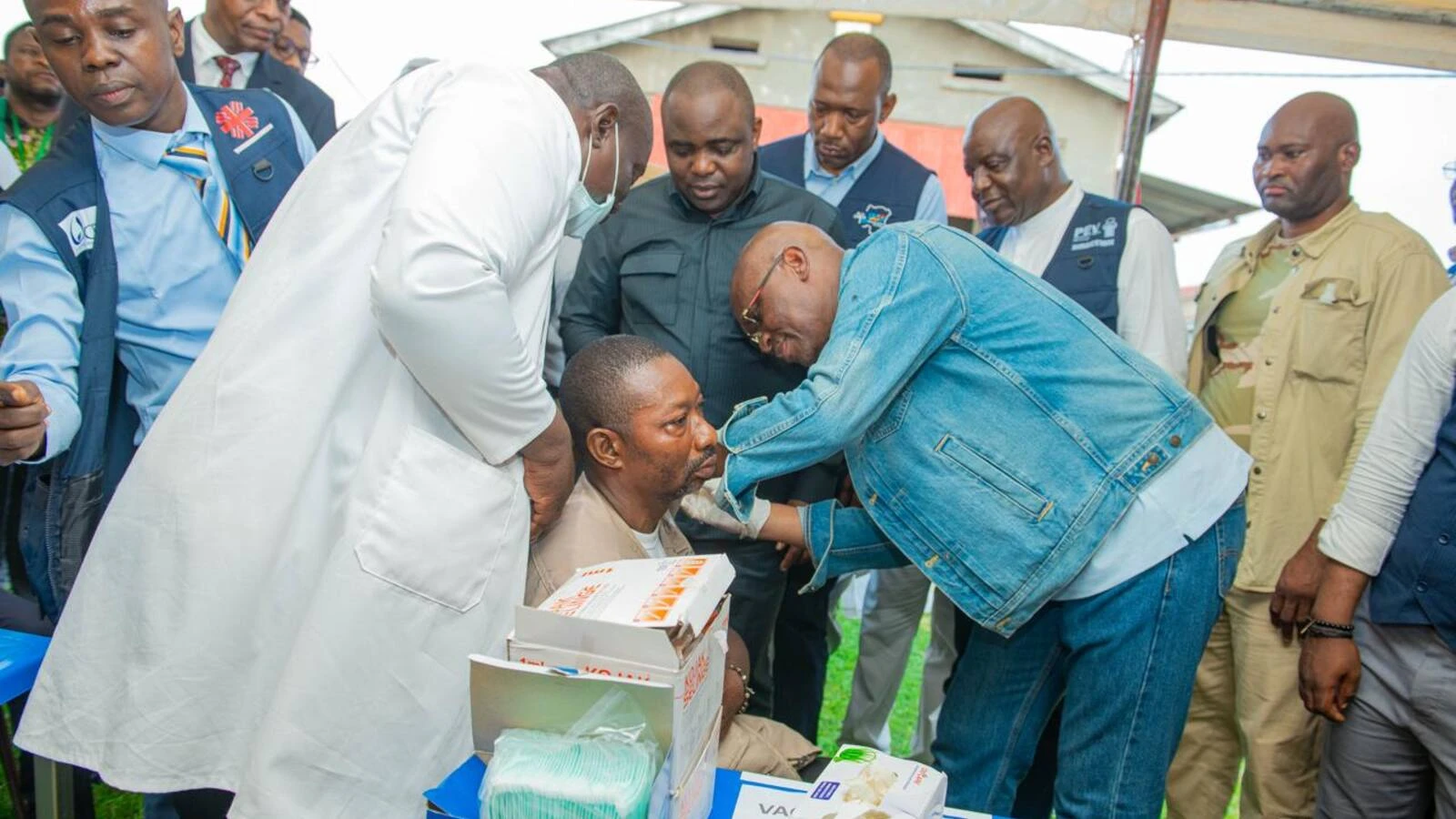
- DR Congo began vaccinating against Ebola on Thursday in the city of Kisangani, with health workers first in line. Health Minister Roger Kamba administered some of the first doses himself.
- The outbreak has passed 5,600 confirmed cases and 2,700 deaths since it began in mid-May, Congolese health authorities say. The World Health Organization’s tally stood at 5,815 cases and 2,788 deaths as of August 26.
- The vaccine being used was made for a different Ebola strain. Ervebo is licensed against the Zaire strain; whether it protects against the Bundibugyo strain behind this outbreak is unknown, and part of the supply will be used in a clinical trial to find out.
- Congo expects 70,000 doses in total from the global vaccine stockpile: 50,000 for frontline and health workers and 20,000 for the trial.
- It is the same Bundibugyo outbreak The Rio Times has covered since May — already Congo’s largest Ebola outbreak on record and still a declared global health emergency.
The Democratic Republic of Congo has started vaccinating against Ebola as its worst-ever outbreak of the virus continues to spread. The campaign began on Thursday in Kisangani, the capital of Tshopo province, where residents lined up for shots and Health Minister Roger Kamba personally administered doses to health care workers, the Associated Press reported.
Health and other frontline workers were the first to receive the vaccine. “By getting this vaccine, I am building antibodies in my body and creating a reserve of protection,” said Jérôme Bonui Boliaka, head of the Kisangani Nurses’ Association, in comments carried by Africanews. “It is our duty to care for patients, so I must get vaccinated against Ebola virus disease to help save lives,” said doctor Jean-Louis Etukumalo.
01 A vaccine built for a different virus
The outbreak is driven by the Bundibugyo strain of Ebola, a rarer species of the virus seen only twice before, in Uganda in 2007 and in Congo in 2012. No vaccine or treatment is approved for it.
The shot now being deployed, Ervebo, is licensed against the more common Zaire strain. The World Health Organization (WHO) says it is not known whether Ervebo protects people against Bundibugyo, though early laboratory and animal studies suggest it may offer at least partial protection, particularly against death.
That uncertainty shapes the campaign. Of the 70,000 doses Congo is receiving from the global Ebola vaccine stockpile, 50,000 will go to frontline and health workers and 20,000 will be used in a late-stage clinical trial to measure whether the vaccine actually works against this strain, the WHO and the Africa Centres for Disease Control and Prevention said in a joint statement. The vaccine alliance Gavi is providing US$7 million to ship the doses and a further US$6 million for vaccination work in high-risk areas.
02 The outbreak in numbers
The outbreak was declared on May 15 in Mongbwalu, a gold-mining town in Ituri province, and has since spread to dozens of health zones across six provinces, including Tshopo, where Kisangani is the capital. It is Congo’s seventeenth Ebola outbreak and already its largest.
Congolese health authorities put the toll at more than 5,600 confirmed cases and over 2,700 deaths, Africanews reported. The WHO’s own count is slightly higher: 5,815 confirmed cases and 2,788 deaths as of August 26, a figure that includes 20 cases and two deaths in Uganda and single cases treated in France and Germany. The WHO believes the true number of infections could be two to four times the confirmed count.
The WHO’s emergency committee met this month and kept the outbreak classified as a Public Health Emergency of International Concern, the agency’s highest alert level. Uganda has since completed its 42-day monitoring period without new cases.
03 Mistrust and attacks on responders
The response is unfolding in a conflict-affected region where misinformation has turned violent. The Associated Press has reported at least a dozen attacks on health facilities and health workers during this outbreak, citing the response’s incident manager, Pierre Akilimali.
In one July incident in Nyankunde, Ituri, a crowd attacked a hospital and its Ebola treatment center after a patient died. Safe-burial teams have been threatened, and health workers have at times been held captive, pushing responders to pull back from remote communities just as undetected transmission chains are suspected there.
Response workers have also gone on strike over unpaid bonuses, at one point bringing Bunia’s main Ebola treatment center to a standstill. Congo’s army is simultaneously fighting several rebel groups in the affected provinces, which disrupts contact tracing; fewer than a third of known contacts are being tracked, well below the level needed to interrupt transmission.
04 What comes next
Two tools built specifically for Bundibugyo are in early testing. The University of Oxford gave the first human dose of a Bundibugyo-specific vaccine, ChAdOx1 BDBV, in a small safety trial in July, and the Serum Institute of India has already produced hundreds of thousands of doses in case later trials succeed. A separate WHO-sponsored trial called PARTNERS is testing two drug candidates against the disease in patients in Bunia.
For now, though, the response rests on the same basics as every Ebola outbreak: finding cases early, tracing contacts, isolating the sick and burying the dead safely — plus, as of this week, a vaccine whose usefulness against this particular virus remains to be proven.
Sources: Africanews – DRC launches Ebola vaccination campaign as outbreak continues to spread, 30 August 2026, WHO – Disease Outbreak News: Ebola disease caused by Bundibugyo virus, DRC, Reuters/CNBC Africa – Congo set to receive 70,000 Ervebo vaccines, 20 August 2026, Premium Times – DRC gets 70,000 Ervebo vaccine doses, 21 August 2026
More: DR Congo news in English, every day from The Rio Times.
This article was produced by The Rio Times’ automated newsroom system. How we use AI · Report an error · Editorial responsibility: Matthias Camenzind, Editor-in-Chief