Dollar Drops to R$5.78 Amid Easing Concerns Over Trump Tariff Threats
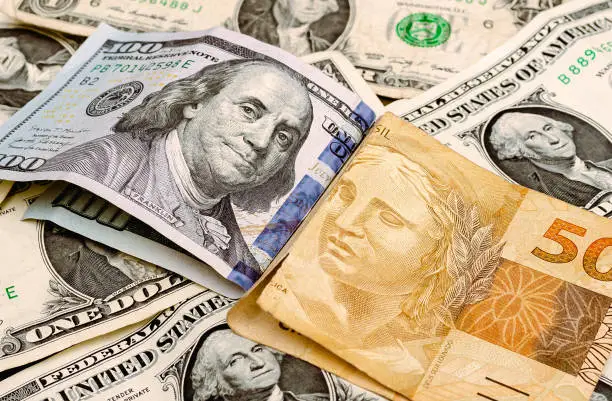
The Brazilian real strengthened against the US dollar on Monday, closing at R$5.7860, a 0.13% decline in the dollar’s value. This marked a reversal after two consecutive sessions of gains for the US currency.
The movement contrasted with global trends, where the Dollar Index (DXY), which measures the dollar against six major currencies, rose 0.27% to 108.311 points by 5 p.m. Brasília time.
The real’s recovery stemmed from a combination of domestic and international factors. Domestically, reduced fiscal concerns supported the currency after Brazil’s Casa Civil denied rumors of a potential increase in Bolsa Família payments.
Economists had warned that such a measure could exacerbate public debt and complicate efforts by Brazil’s central bank to control inflation. Meanwhile, investors continued to digest worsening inflation expectations, with the Central Bank’s Focus Report raising projections for 2024 inflation from 5.51% to 5.58%.
Markets now await the January consumer price index (IPCA) data, expected to show a slight increase from December. Globally, emerging market currencies, including the real, benefited from rising commodity prices, particularly iron ore and oil.
This came despite renewed uncertainty over US trade policies after former President Donald Trump announced a potential 25% tariff on steel and aluminum imports.
The proposed measure could impact key US trading partners such as Brazil, Mexico, Canada, Japan, and the European Union. Brazilian officials responded cautiously to Trump’s announcement.
Brazil’s Economic Outlook
Finance Minister Fernando Haddad stated that Brazil would wait for formal decisions before commenting further, emphasizing the need to avoid reacting to preliminary statements.
While external risks loomed large, markets appeared to discount Trump’s tariff threats. This was due to his recent pause on similar measures against Mexico and Canada.
This shift in sentiment allowed emerging market currencies to rally despite broader global dollar strength. The interplay between domestic fiscal stability and external trade dynamics will likely remain pivotal.
It will play a key role in Brazil’s currency performance in the coming weeks. Investors will closely monitor inflation data and developments in US trade policy for further guidance.
This article was produced by The Rio Times’ automated newsroom system. How we use AI · Report an error
LatAm Markets: Live Signals → — real-time movers, turnover leaders and FX across Latin America.
Read More from The Rio Times