Focus: Brazil’s Inflation Forecasts Surge as Economic Growth Slows and Currency Weakens
Brazil’s inflation forecasts for 2025 have surged, reflecting persistent economic challenges despite aggressive monetary tightening.
According to the Central Bank of Brazil’s latest Focus Bulletin, inflation expectations now stand at 5.58%, up from 5.51% last week. This marks the 17th consecutive upward revision.
For 2026, inflation projections rose slightly to 4.30%, both figures well above the central bank’s target of 3%, which allows a tolerance range of 1.5 percentage points above or below.
The Central Bank has responded with a series of interest rate hikes, raising the benchmark Selic rate to 13.25% in January and signaling further increases. Economists anticipate the Selic rate will peak at 15% by the end of 2025 before easing to 12.50% in 2026.
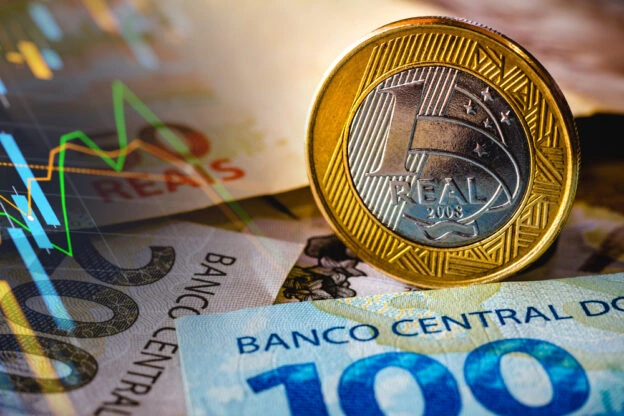
However, these measures have yet to anchor inflation expectations, as external pressures like a weakened Brazilian real exacerbate price instability. The real has depreciated significantly, crossing R$6 per U.S. dollar, which increases import costs and adds to inflationary pressures.
Economic growth forecasts have also dimmed amid these challenges. Analysts now expect Brazil’s GDP to grow by just 2.03% in 2025, down from earlier projections of 2.06%. For 2026, growth is forecasted at a modest 1.70%.
High borrowing costs and reduced fiscal stimulus are expected to weigh heavily on cyclical sectors like durable goods and services. In contrast, agriculture remains a rare bright spot.
Brazil’s Economic Outlook
Despite these headwinds, Brazil’s trade balance continues to show resilience, with projected surpluses of $76.8 billion in 2025 and $78 billion in 2026. Foreign direct investment inflows are expected to remain stable at $70 billion in 2025 and $75 billion in 2026.
This reflects investor confidence in certain sectors of the economy. The inflationary surge stems from a mix of global and domestic factors, including rising food prices driven by supply chain disruptions and climate-related events.
Additionally, skepticism about President Luiz Inácio Lula da Silva’s fiscal policies has shaken investor confidence. There are concerns that government spending could further fuel inflation.
The Central Bank faces a delicate balancing act as it seeks to stabilize prices without stifling economic growth. Its ability to navigate these challenges will be critical for Brazil’s economic trajectory as businesses and consumers brace for tighter financial conditions ahead.
This article was produced by The Rio Times’ automated newsroom system. How we use AI · Report an error · Editorial responsibility: Matthias Camenzind, Editor-in-Chief
LatAm Markets: Live Signals → — real-time movers, turnover leaders and FX across Latin America.