Dollar at R$4.40 Reflects New Exchange Rate Paradigm in Brazil
RIO DE JANEIRO, BRAZIL – The rise of the dollar has become a topic of discussion and concern for Brazilians in recent days. The US currency renewed record highs and this Friday morning stood at R$4.40, the highest rate ever reached during trading.
Carnaval, profit-taking before the holiday and the rise of emerging currencies abroad are factors behind the dollar’s rise from R$4.02 on January 2nd to this Friday’s result. But on Wednesday last week, it was Economy Minister Paulo Guedes who legitimized the trend with an unfortunate statement that had an adverse impact not only from a social perspective but also on the exchange rates.

Guedes said that a higher exchange rate was “good for everyone” and criticized previous governments for having kept the Brazilian currency artificially valued at high-interest rates.
“There is no exchange deal at R$1.80 […] Everybody going to Disneyland, housemaids going to Disneyland. Go travel to Foz do Iguaçu,” he said. Guedes’ speech had a negative impact and led the US currency to open the trading session at R$4.38 the next day. On Thursday, February 20th, he revisited the topic during an event in Brasília. He apologized to those who felt insulted by the comment in which he mentioned housemaids but reiterated what he had already said about the exchange rate. “It could be R$3.80, R$4.00, or R$4.20. The exchange rate is floating, the Central Bank operates that way. But the level is unquestionably higher,” he warned.
The cause and effect are often immediate in the financial market, so the dollar reached R$4.40, although it retreated to R$4.38 by the end of trading. The rise since the beginning of the year caused the Central Bank to react with a sale of dollars in the futures market to hold the price. The operation, which had not been employed for a year and a half, brought the value of the currency down. The last time the Central Bank intervened through currency swap auctions was in August 2018, when the Argentine economic crisis and the pre-election period pushed the value of the dollar to nearly R$4.20.
According to Eduardo Correia, an economist and Macroeconomics Professor at INSPER, in a country where the exchange rate is fluctuating – which varies according to demand and supply in the market – the authorities’ statements about exchange rate or monetary policy are a mistake: “If you look at most of the countries where economic policy is conducted seriously, you don’t have a treasury secretary or a finance minister hinting at exchange rates or interest rates like Guedes did this week,” Correia said.
Despite the uncertainty caused by the minister’s remarks, the professor explains that the US currency has shown an upward trend against the Brazilian real for about a year, mainly due to two factors: the continuous decrease in the Brazilian basic interest rate, the SELIC, and the good performance of the US economy.
“We are not having an exchange rate crisis, but rather a gradual reduction in interest rates that has made our bonds less attractive. We have reached a situation where the real rate, the difference between the SELIC, which is 4.25 percent per year, and inflation, which should be 3.6 percent in 2020, is less than one percent. A few years ago, it reached seven percent, it was a bargain for those wanting to invest money here in Brazil,” he says. According to Correia, many investors who invested so-called speculative money are leaving the country and are interested in US bonds, which are safer.
Emerson Marçal, the coordinator of the FGV’s Applied Macroeconomics Center, points out that the poor performance of Brazilian exports, due to the Chinese economic slowdown, the trade war and the economic crisis in Argentina, generate more dollar shortages, which also helps the appreciation of the US currency. Brazil’s agribusiness exports, for one, fell 9.4 percent in January compared to the same period last year. “The exchange rate has depreciated, but it is not by far the worst depreciation of the real. The highest recent peak was in 2002, in Lula’s government, when the dollar reached a hypothetical R$7.60 if we correct for accumulated inflation from then on,” he says.
The middle class loses
In contrast to Guedes’ speech, Correia argues that the depreciation of the Real is bad for virtually everyone, since it affects the pockets of most consumers. “Everything goes up, from the bread roll on, as we import the wheat, to gasoline,” he explains. The pharmaceutical sector, highly dependent on imports, may also report an increase if the devaluation of the real persists.
According to Marçal, the goods and services tied to the dollar are those of the middle and upper-middle classes. “Those feeling the impact of prices the most are the people who buy electronics and cars, and who are thinking of traveling abroad, since the exchange rate influences both the spending in dollars and the price of tickets. Even the prices of domestic travel and hotel services in Brazil may increase since Brazilians may begin to travel less abroad,” he says.
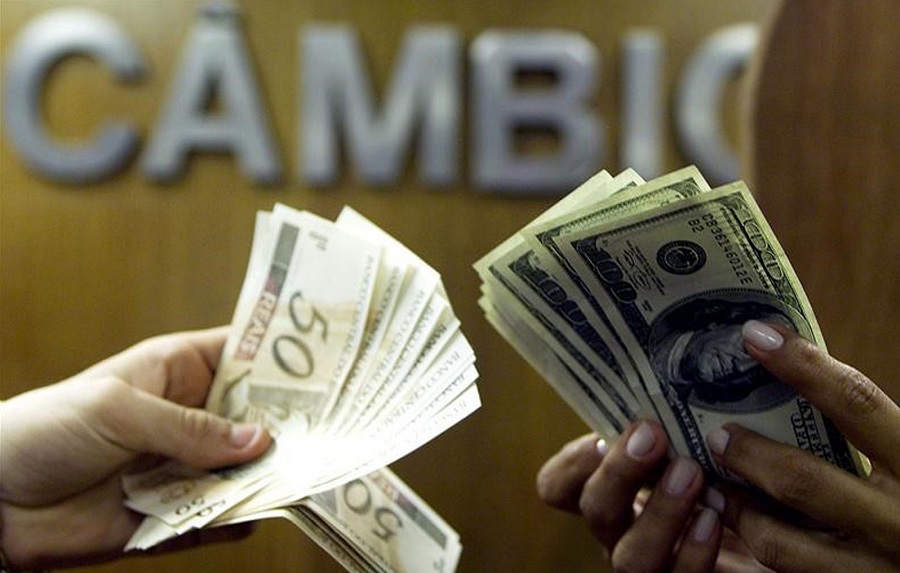
The two professors agree that the greatest beneficiaries of a higher value dollar are the people who get paid in dollars, such as exporters.
“The agribusiness exporters are one of the groups that profits and cheers for the appreciation of the American currency. The price of meat abroad is in dollars, but when they convert it into Brazilian currency, they earn more,” Correia says. The higher dollar also improves the competitiveness of Brazilian companies. “Even inefficient industries gain some competitiveness, as the exchange rate makes them artificially competitive,” he adds.
The experts do not risk estimating a future dollar exchange rate, but the currency should remain high until the end of the year. The Focus Market Report, released last Monday, showed that the scenario for the US currency in 2020 remains unchanged. The median expectations for the currency at the end of the year remained at R$4.10, compared to R$4.04 a month ago.
Source: El Pais
More: Brazil news in English, every day from The Rio Times.
This article was produced by The Rio Times’ automated newsroom system. How we use AI · Report an error · Editorial responsibility: Matthias Camenzind, Editor-in-Chief