Conservative Leaders Top the List as South America’s Favorite Presidents
In May, Ecuadorian President Daniel Noboa topped the list as the most popular leader in South America.
A survey by CB Consultora, which specializes in social climate and political scenarios, revealed these findings.
Noboa’s approval rating rose from 57.8% in April to 58.1% in May. His disapproval rating held steady at 39.5%. This makes him the region’s favorite.
Argentinian President Javier Milei came second with a 54.8% approval rating in May.
Uruguayan President Luis Lacalle Pou secured third place with a popularity rating of 54.7%. Paraguayan President Santiago Peña ranked fourth with 51.3%.
Brazilian President Luiz Inácio Lula da Silva, the first leaft-leaning president in the ranking, followed with 49.2%.
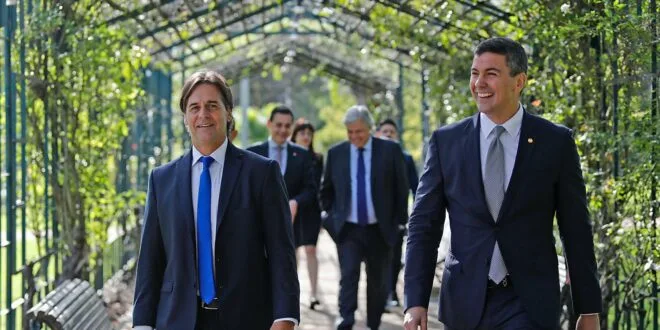
Bolivian President Luis Arce had 42.3%. Chilean President Gabriel Boric held 41.8%.
Who Has the Lowest Approval in South America?
The CB Consultora survey, conducted in May, involved 12,332 respondents across South America.
Each country had between 1,022 and 1,485 participants. The survey has a 95% confidence level and a margin of error between 2% and 3%.
Venezuelan President Nicolás Maduro faced a disapproval rating of 58.1%.
His approval rating dropped to 39.5% amid an election campaign. This represents a fall from 40.9% in April.
Colombian President Gustavo Petro ranked ninth with a 58.3% disapproval rating. His approval rating fell to 38.6%, down from 41.1% in April.
Peruvian President Dina Boluarte had the highest disapproval rate in the region. Her disapproval rating hit 72.1%.
Her approval rating was just 24.8%, a slight drop from 25.3% in April.
Conservative Leaders Top the List as South America’s Favorite Presidents
These findings reveal the current political climate in South America. They highlight leaders with strong public support and those facing significant challenges.
High approval ratings suggest effective governance and public satisfaction. Low ratings indicate potential unrest and dissatisfaction.
Understanding these trends helps grasp the broader economic and social picture. Leaders with high disapproval ratings may struggle to implement policies.
This can impact economic stability and social harmony. Conversely, popular leaders may find it easier to push through reforms and maintain stability.
These insights into South America’s political landscape show the region’s diverse challenges and opportunities.
As public opinion shifts, so does the potential for change and progress.
More: Brazil news in English, every day from The Rio Times.
This article was produced by The Rio Times’ automated newsroom system. How we use AI · Report an error · Editorial responsibility: Matthias Camenzind, Editor-in-Chief