Colombia’s External Debt Reaches 48.7% of GDP: A Moderate Position in Latin America
The Colombian peso’s devaluation has significantly impacted the country’s external debt this year. The Central Bank of Colombia recently disclosed that the external debt reached US$197.5 billion in July 2024.
This amount represents 48.7% of the GDP. Public debt exceeded US$113 billion, while private debt amounted to US$84 billion.
These figures translate to 27.9% and 20.8% of the GDP, respectively. Compared to the beginning of the year, the external debt has increased by US$39 million.
At today’s exchange rate, this equates to approximately 163.5 billion pesos (US$29.2 million). Colombia’s debt-to-GDP ratio of 48.7% places it in a moderate position among Latin American countries.
This ratio is lower than several major economies in the region, such as Argentina (156.7%), Brazil (78.55%), and Mexico (48.2%), but higher than Chile (40.8%) and Paraguay (29.4%).
The average public debt-to-GDP ratio for Latin America and the Caribbean reached 73.7% in 2023. Colombia’s debt ratio falls significantly below this regional average, indicating a relatively better fiscal position.
Colombia’s Economic Landscape
The Inter-American Development Bank recommends maintaining a prudent debt level between 55% and 44% of GDP, and Colombia’s ratio falls within this range.
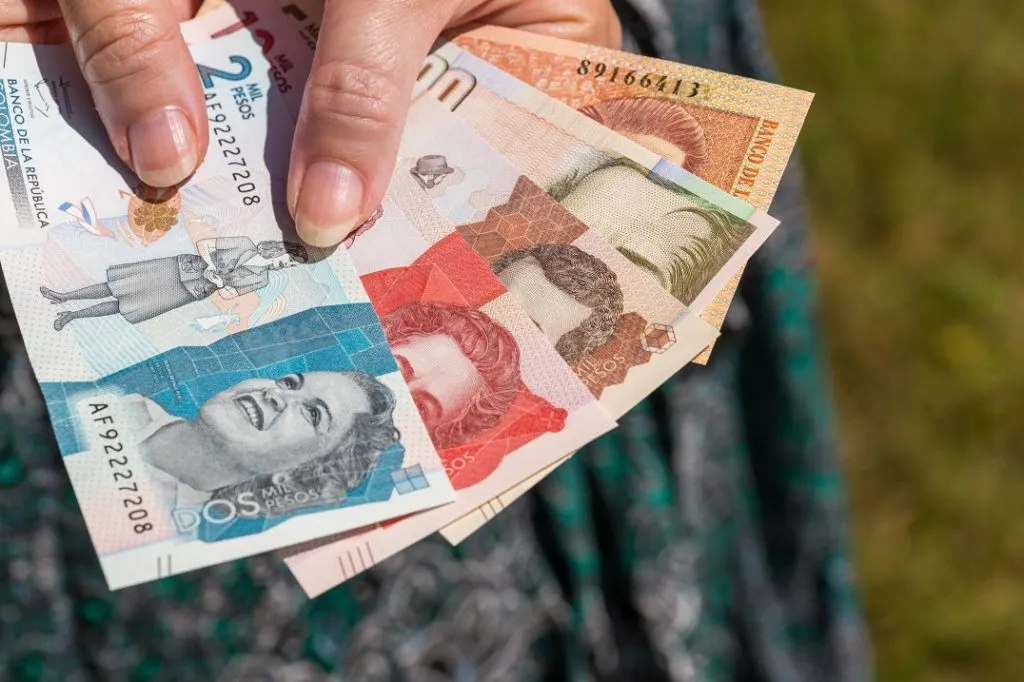
However, the peso’s devaluation adds another layer to this financial situation. The dollar started the year at 3,882.05 pesos and reached 4,148.04 pesos by July.
This represents a rise of 325.99 pesos during that period. Today’s exchange rate is even higher than July’s, standing at 4,192.56 pesos per dollar.
At this rate, the external debt would amount to 828.18 trillion pesos (US$147.89 billion). The dollar has remained above 4,150 pesos for 17 consecutive trading days.
Global factors, such as U.S. inflation at 2.4% in September, have influenced this trend. Although a slight downward trend began three days ago, it hasn’t been enough to break the 4,150 peso barrier.
Catalina Tobón, strategy manager at Skandia, attributes the dollar’s strength to global and regional factors. She cites the Federal Reserve‘s slower pace of interest rate cuts and concerns about fiscal sustainability in Colombia.
Sebastian Toro, founder and CEO of Arena Alfa, points out that Colombia’s currency is closely tied to movements in Brazil and Mexico.
Uncertainty surrounding Mexican elections and Brazil’s economic situation has kept regional currencies high. Despite these challenges, the Ministry of Finance has assured that Colombia will honor all its debts.
However, it has had to execute less of its budget than planned to comply with fiscal rules, according to a report from Banco de Bogotá.
Colombia’s moderate debt level reflects a balance between various economic factors, positioning it as a relatively stable economy within the region.
While the country faces challenges due to currency devaluation, its debt-to-GDP ratio remains within sustainable limits compared to many of its Latin American neighbors.
More: Colombia news in English, every day from The Rio Times.
This article was produced by The Rio Times’ automated newsroom system. How we use AI · Report an error · Editorial responsibility: Matthias Camenzind, Editor-in-Chief
In depth