China’s Communist Party (CCP) has been actively building political schools and extending its influence across Africa as part of a broader strategy to promote its development model and ideology.
This initiative is a component of China’s soft power approach, aiming to strengthen ties with African political entities and potentially shape governance models on the continent.
Political Schools and Training
Leadership Schools:
Kenya’s ruling United Democratic Alliance (UDA) is the latest African political party to benefit from China’s soft power push.
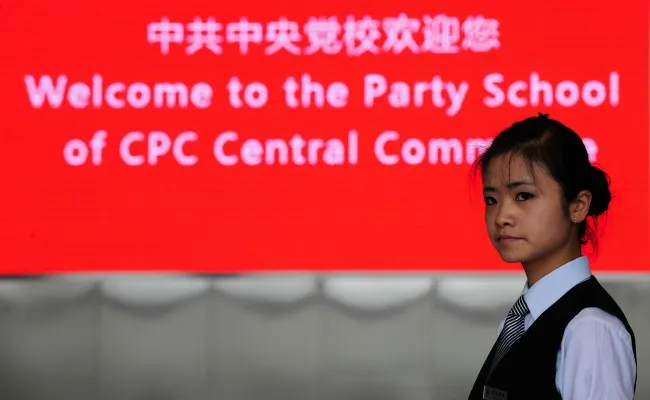
In May, UDA officials visiting China clinched a deal with the CCP to build a leadership school in Nairobi. This followed earlier talks in March when Chinese officials visited Kenya.
Beijing has also agreed to finance and build Nairobi’s new foreign ministry headquarters as a symbol of 60 years of diplomatic relations.
Other African countries, including Burundi, the Republic of the Congo, Equatorial Guinea, Morocco, and Uganda, have also approached the CCP for similar partnerships.
Mwalimu Julius Nyerere Leadership School:
Located in Kibaha, Tanzania, this school was built with a $40 million investment from China and opened in 2022.
Named after Tanzania’s founding father, it serves as a training ground for members of ruling parties from Southern Africa.
The program includes participants from Angola, Mozambique, Namibia, South Africa, Tanzania, and Zimbabwe.
This school is modeled after the CCP‘s Central Party School, emphasizing the CCP’s governance and political strategies.
Beijing also supported the refurbishment of the Herbert Chitepo School of Ideology in Zimbabwe, completed last year.
Training Programs:
The CCP conducts extensive training programs for African parties and government officials, both in Africa and China. These programs aim to consolidate friendly ties and promote the Chinese model of development.
The CCP has stepped up its training efforts, with expectations to receive over 50 African party delegations this year, double the number hosted in 2015.
The CCP’s National Academy of Governance also conducts year-round training with governance academies in countries like Algeria, Ethiopia, Kenya, and South Africa.
Strategic Objectives
Soft Power and Ideological Influence:
By building these schools and conducting training, China aims to reinforce ideological affinities with African political parties.
This strategy helps China project its governance model abroad and potentially influence African political systems towards a single, dominant party model.
Despite China’s economic growth, many Africans remain skeptical of its political model, with nearly 80% rejecting one-party rule.
However, China’s party and governance training has the potential to entrench dominant party models in Africa.
Long-term Relationships:
The construction of these schools is part of China’s commitment to fostering long-term relationships with African political parties.
However, this includes promoting a positive image of China globally and countering negative perceptions about the CCP.
Under the Forum on China-Africa Cooperation, Beijing has placed significant emphasis on African youth leadership, aiming to positively influence future leaders on the continent.
Western Countries’ Efforts
Western countries have also engaged in political training and support initiatives in Africa, albeit with different objectives and methods:
Democratic Party Reform:
Programs like the Political Party Strengthening Academy (PPSA) by the National Democratic Institute (NDI) focus on advancing democratic party reforms in West Africa.
In addition, these initiatives aim to promote internal democratic practices and combat democratic backsliding.
Support for Inclusive Democracy:
The U.S. has launched programs like the Support Program for Political Parties for a Resilient and Inclusive Democracy (POPRID) in Angola. These initiatives focus on strengthening democratic institutions and promoting good governance.
Conclusion
China’s efforts to build political schools and extend its influence in Africa are part of a strategic push to promote its development model and strengthen ties with African political entities.
While this approach has raised concerns about entrenching one-party rule, it also offers financial and developmental opportunities for African nations.
In contrast, Western countries focus on promoting democratic reforms and inclusive governance. This highlights a divergence in strategies and objectives between China and the West in their engagements with Africa.
This article was produced by The Rio Times’ automated newsroom system. How we use AI · Report an error · Editorial responsibility: Matthias Camenzind, Editor-in-Chief
Part of our ongoing coverage
Africa: The New Scramble — the great-power contest over the continent.