Chile Faces a 12.5% US Tariff. So Does Norway, Its Salmon Rival

Trade
Key Facts
—The deadline. Temporary US surcharges expire on July 24, when a 12.5% tariff under America’s Section 301 trade law would replace them.
—The scope. Sixty economies are under investigation, together covering more than 99% of American imports.
—The charge. Not that Chile uses forced labour, but that it never banned importing goods made with it.
—The company. Norway, Japan, Switzerland, Australia and Guyana face the same rate as Chile.
—The exposure. Chilean salmon sold $2.6bn to the United States last year, over 40% of the sector’s shipments.
—The ask. Exporters want their goods placed in Annex A, the list of products with no American substitute.
Chilean salmon farmers, foresters and winemakers spent this week in Washington. They argued that the proposed Chile tariff would punish American consumers, and they may be right. But they are answering a charge nobody made.
A delegation led by Chile’s foreign ministry and the industrial federation Sofofa appeared before the United States Trade Representative on Tuesday. Salmon, timber, fruit, wine and meat each sent a trade body.
Their case was straightforward and largely factual. America cannot grow counter-season fruit or farm salmon at scale, and its housebuilders have told the trade office in writing that Chilean timber is essential.
Each asked to be listed in Annex A, the schedule of goods exempted because no domestic substitute exists. Copper is already on it.
What the Chile tariff is actually about
Read the trade bodies’ statements and you would think Washington had accused Chilean industry of forced labour. Each insists no evidence connects its sector to such practices.
The trade office never made that accusation. Its own determination says something narrower and stranger.
The finding is that Chile has failed to ban and enforce a rule against importing goods made with forced labour anywhere in the world. Not that Chile produces such goods, but that it does not block them at its own border.
Fifty-four economies were found to have no such ban at all, and they face the higher rate of twelve and a half percent. Fourteen others have one they enforce poorly, and face ten.
The list Chile shares
The higher tier includes Norway, Japan, Switzerland, New Zealand, Australia, Israel, Singapore and South Korea. Also Brazil, Peru, Colombia, Uruguay and Guyana.
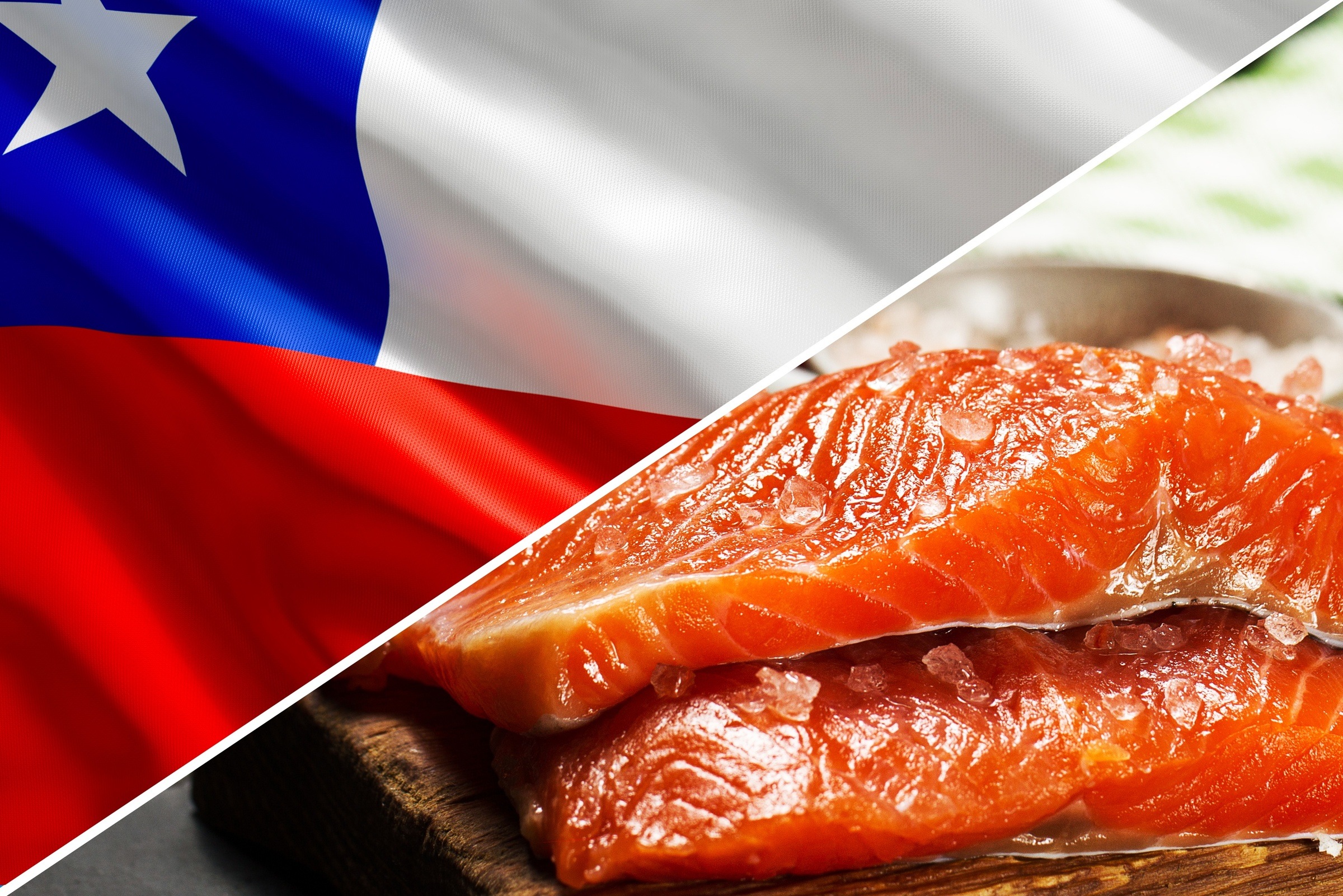
One name on that list matters more than the rest. Norway is the world’s largest farmed-salmon producer and Chile’s main competitor, and it faces the same rate.
A tariff that hits both market leaders equally does not redirect that market. It raises the price of salmon in American supermarkets and leaves the competitive ranking untouched.
That is close to what SalmonChile’s president, Patricio Melero, told the hearing. Since America farms almost no salmon of its own, he argued, the duty protects nobody and simply lands on the shelf price.
Why this tariff exists at all
The legal history explains the shape of it. The Supreme Court held that emergency economic powers did not authorise the administration’s earlier tariffs, so the White House needed a new legal footing.
Section 301 of the Trade Act of 1974 became that footing. Temporary surcharges were installed to bridge the gap, and they expire on the twenty-fourth of July.
The trade office must rule on the appeals by that same date. Sixty investigations, opened in March, now cover almost every country that sells anything to the United States.
Trade lawyers have called this the widest use of the statute yet. Whatever else it is, it is not a dispute about Chilean labour conditions.
What the Chile tariff would cost
Salmon is Chile’s largest export after copper. It was worth roughly six and a half billion dollars in 2025 and employs about eighty-six thousand people in the south, with the American share at two point six billion.
Timber exporters put their American sales near one point one billion dollars a year across four companies. Two of them, Arauco and CMPC, run a dozen plants inside the United States.
The fruit body cites industry-commissioned research valuing its American business at three and a half billion dollars and nineteen thousand five hundred seasonal jobs. Wine says four hundred to five hundred and fifty American importers would feel it.
A free trade agreement between the two countries has been in force since 2004, and has run right through this. For investors the useful lesson is that the exemption fight and the country finding are separate, so Chile can win Annex A and still be judged to have failed the test.
Is the United States accusing Chile of forced labour?
No. The trade office found only that Chile has not banned and enforced a rule against importing goods made with forced labour from other countries, which it called unreasonable and a burden on American commerce. The finding concerns Chilean import policy, not Chilean production.
What is Annex A?
It is the schedule of products excluded from the proposed duties, generally because no American substitute exists. Copper already appears on it, and Chilean salmon, timber, fruit and wine producers each asked to be added during hearings on July 7.
Will Chilean salmon lose market share to Norway?
Not on the basis of this measure alone. Norway sits in the same twelve and a half percent tier, so both suppliers would face the same extra duties, and the effect would fall on American retail prices rather than on the balance between them.
More: Chile news in English, every day from The Rio Times.
Frequently Asked Questions
What is the deadline for the temporary US surcharges on Chilean goods, and what replaces them?
The temporary US surcharges are set to expire on July 24. After that date, a 12.5% tariff under America's Section 301 trade law would replace them.
What is the actual charge against Chile that triggered the trade investigation?
The charge against Chile is not that it uses forced labour, but that it never banned importing goods made with it. Chile is one of 60 economies under investigation, which together cover more than 99% of American imports.
What are Chilean exporters asking for, and what arguments did they make in Washington?
Chilean exporters want their goods placed in Annex A, the list of products with no American substitute. Salmon farmers, foresters, and winemakers argued before the United States Trade Representative that America cannot grow counter-season fruit, cannot farm salmon at scale, and that Chilean timber is essential to US housebuilders, meaning the proposed tariff would ultimately punish American consumers.
Connected Coverage
Chile Exports Hit $60bn. Copper Out-Earned All Other Goods
This article was produced by The Rio Times’ automated newsroom system. How we use AI · Report an error · Editorial responsibility: Matthias Camenzind, Editor-in-Chief