Chevron Re-enters Venezuelan Oil Market Amid U.S.-China Rivalry
On July 24, 2025, the Trump administration permitted Chevron to resume oil operations in Venezuela, reversing a previous ban.
The new authorization followed extensive negotiations with Venezuelan energy officials, imposing strict rules that prevent the Maduro government from receiving royalties or taxes.
Venezuela holds some of the world’s largest oil reserves but struggled due to sanctions and political instability, limiting production to around 1 million barrels per day.
Chevron previously accounted for about 200,000 barrels daily, roughly 20% of Venezuela’s total output, through partnerships with the state-run company PDVSA. Earlier this year, Trump revoked Chevron’s limited license from the Biden era, allowing only basic maintenance.
The current shift is driven primarily by U.S. concerns over China’s rapidly growing control of Venezuela’s oil exports, which China increasingly imported through intermediaries like Malaysia.
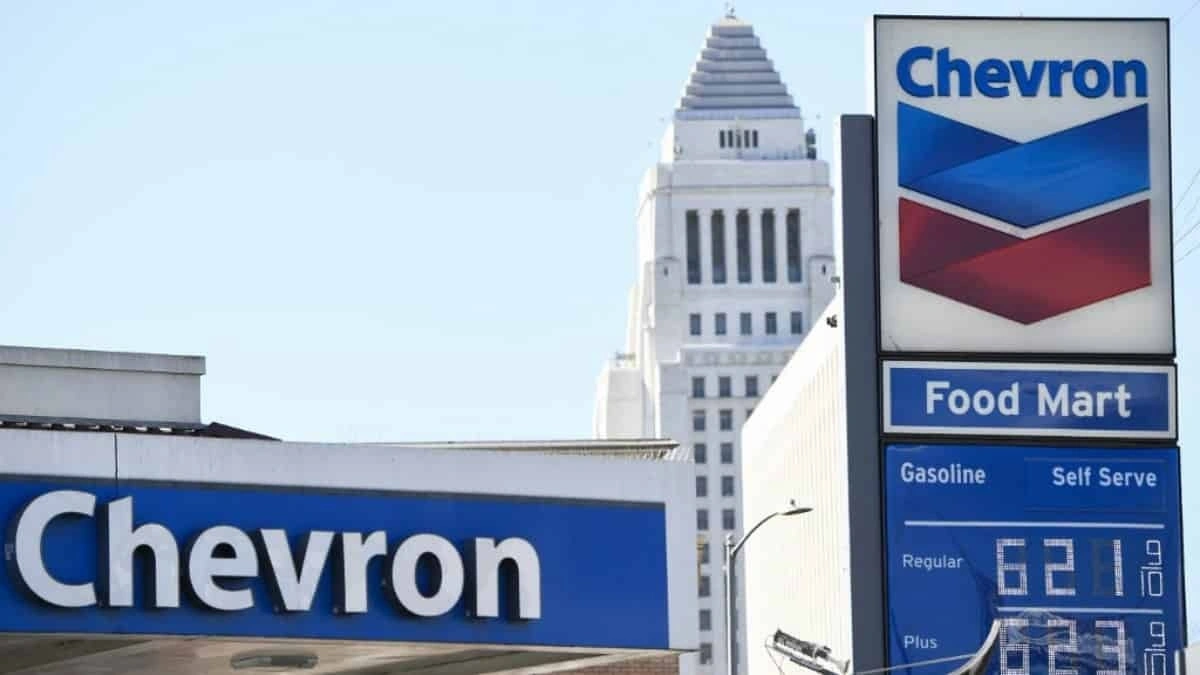
The U.S. sees Chevron’s return as essential for curbing China’s dominance in the Venezuelan oil market. The move aligns with the Trump administration’s strategy of using sanctions flexibly to advance U.S. economic interests and counterbalance rival powers.
Additionally, this decision coincides with recent diplomatic developments, notably a prisoner exchange involving ten American detainees released by Venezuela, while the U.S. arranged the deportation of many Venezuelans from El Salvador.
Chevron affirmed its commitment to comply with U.S. legal frameworks and sanctions policies. Its re-entry into Venezuela highlights the complex geopolitical rivalry shaping U.S. foreign policy, emphasizing pragmatic decisions driven by economic and strategic interests.
More: Latin America news in English, every day from The Rio Times.
Live Market IntelligenceCommodities — Live Market Board
Rio Times · Live Market Intelligence
Commodities — Live Market Board
-0.03%
| Instrument | Last | Change | YoY | Prev. | High | Low | Volume |
|---|---|---|---|---|---|---|---|
| GOLD | 4,461 | +1.78% | +33.20% | 4,383 | 4,503 | 4,421 | 139,824 |
| SILVER | 65.59 | +1.26% | +73.05% | 64.77 | 66.98 | 64.81 | 46,406 |
| BRENT | 88.88 | -0.03% | +34.42% | 88.91 | 90.07 | 88.12 | 29,713 |
| WTI | 83.11 | -0.11% | +31.57% | 83.20 | 84.35 | 82.40 | 166,848 |
| COPPER | 6.61 | +0.03% | +46.70% | 6.61 | 6.71 | 6.61 | 39,543 |
| LITHIUM | 75.20 | +1.47% | +62.95% | 74.11 | 75.80 | 75.08 | 89,275 |
| IRON ORE | 161.91 | — | +58.10% | 161.91 | 161.91 | 1 | |
| SOY | 1,184 | +3.20% | +17.05% | 1,148 | 1,199 | 1,168 | 163,179 |
| CORN | 480.50 | +10.02% | +29.34% | 436.75 | 480.75 | 459.50 | 341,248 |
| WHEAT | 655.00 | +3.93% | +29.70% | 630.25 | 657.75 | 631.50 | 128,793 |
| COFFEE | 317.25 | -5.51% | +0.67% | 335.75 | 321.20 | 313.55 | 21,747 |
| SUGAR | 16.43 | -1.79% | -3.01% | 16.73 | 17.11 | 16.22 | 171,992 |
| COCOA | 5,719 | +3.18% | -34.96% | 5,543 | 5,779 | 5,574 | 26,773 |
| ORANGE JUICE | 138.55 | -0.47% | -45.38% | 139.20 | 141.05 | 137.50 | 703 |
| COTTON | 85.03 | +2.33% | +26.78% | 83.09 | 82.90 | 81.96 | 16,546 |
| BEEF | 223.60 | -3.93% | -5.18% | 232.75 | 226.40 | 223.00 | 16,126 |
| CATTLE | 339.10 | -3.16% | -1.82% | 350.17 | 345.50 | 338.60 | 10,164 |
| USD/BRL | 5.16 | +0.01% | -5.13% | 5.16 | 5.18 | 5.14 | — |
This article was produced by The Rio Times’ automated newsroom system. How we use AI · Report an error · Editorial responsibility: Matthias Camenzind, Editor-in-Chief