Chad’s Economy Hinges on Oil and a Delayed IMF Loan
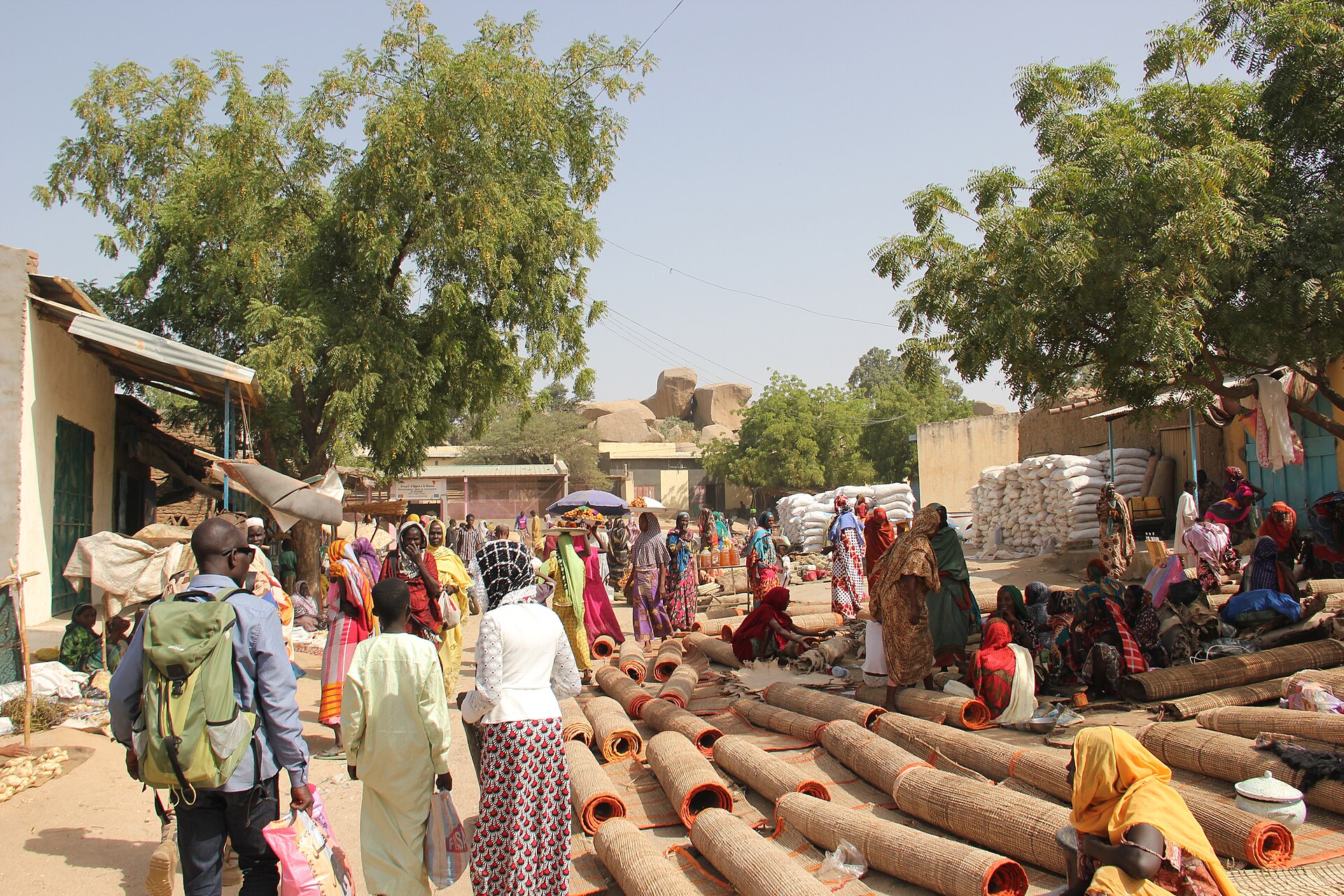
Chad’s economy has exported oil for more than two decades, yet about four in ten people live in extreme poverty. Here is what the country runs on, and where it is stuck.
Chad earns most of its export income from crude oil in the southern Doba basin. It is piped about 1,070 kilometres, mostly through Cameroon, to the Atlantic.
President Mahamat Idriss Déby Itno has led the country since 2021; Allamaye Halina has been prime minister since May 2024.
Chad is landlocked, with Libya to the north and Sudan to the east. It uses the CFA franc, shared with five other countries in CEMAC, the Economic and Monetary Community of Central Africa.
Key Facts
- The country. Chad is a landlocked Central African state of about 21 million people, roughly New York State’s population. Its economy, about US$21.4 billion in 2025, is roughly half the size of Vermont’s.
- Why it matters. Oil supplied 51.8% of government revenue and 65.3% of exports in 2024, World Bank figures show. That ties the budget, and the debt, to a single commodity price.
- Why now. A US$625 million IMF (International Monetary Fund) loan approved in July 2025 is held up. Its reviews are waiting on a delayed regional check of the shared central bank’s policies.
- What happened. Almost 1 million Sudanese refugees have crossed into Chad since April 2023, the UN refugee agency said on 25 September 2026. More than 55,000 arrived this year.
- The numbers. Growth was 5.6% in 2025 and is forecast at 5.2% for 2026. Public debt is about 30% of GDP, and 40.7% of people live below US$3 a day.
- What it means for you. The CFA franc is pegged to the euro, which limits currency risk. Contract risk is the bigger worry: Chad nationalised ExxonMobil’s former oil assets in 2023.
- Still open. Whether the regional review clears in December 2026 and releases IMF money. Also whether new oil investment arrives while Savannah Energy’s legal fight continues.
Oil first
Oil has dominated exports since 2003, when the Doba fields came on stream and the Chad-Cameroon pipeline opened. In 2024 the oil sector produced 14.3% of GDP, 51.8% of fiscal revenue and 65.3% of exports, the World Bank says.
That makes Chad’s economy a bet on one price. When crude rises, revenue jumps and debt is repaid faster; when it falls, the state must cut spending or borrow.
Ownership changed sharply in 2023. ExxonMobil sold its Chad assets to the British company Savannah Energy in December 2022, and in March 2023 the government nationalised them.
Savannah is still pursuing legal claims. It seeks CFA 228.6 billion (about US$392 million) over Cotco, the pipeline’s Cameroonian operator, Business in Cameroon reported on 28 September.
All conversions in this article use 583 CFA francs per US dollar, the rate at the close on Friday 2 October 2026. For investors, the nationalisation was a warning about contract security, although the World Bank still expects oil output to expand.
Everything else
Most Chadians do not work in oil. Rain-fed farming accounts for about 40% of GDP, the World Bank says, so rainfall decides most household incomes.
Cotton is the main cash crop in Chad’s economy. In 2018 the state sold 60% of CotonTchad, the national cotton company, to Singapore’s Olam.
Herds of cattle, camels, sheep and goats support much of the rural population. Chad is also one of the world’s main sources of gum arabic, a tree resin used in soft drinks and sweets.
Growth has picked up. The World Bank puts it at 5.6% in 2025 and forecasts 5.2% for 2026.
Part of that upgrade reflects revised data for earlier years, as The Rio Times reported. Inflation was negative in 2025, at minus 2.6%, as food and transport prices fell.
Debt and the IMF
Chad was the first country to agree a debt treatment under the G20 Common Framework. The G20 created the scheme in late 2020 to help poor countries restructure what they owe.
The agreement, announced on 11 November 2022, included Chad’s largest private creditor, the Swiss commodity trader Glencore. It did not cut the roughly US$3 billion external debt.
Creditors instead promised extra relief if oil prices fell, and some 2024 payments were reprofiled. Public debt stood at about 30% of GDP in 2025 and is forecast at 28.7% for 2026.
On 25 July 2025 the IMF approved a four-year Extended Credit Facility, its low-interest loan for poor countries. It is worth about US$625 million, with about US$38.5 million paid out at once.
IMF staff agreed the first review in December 2025. But the IMF board also needs regional policy pledges from CEMAC’s institutions, led by the BEAC, the Bank of Central African States.
That regional review has been suspended since December 2025, the BEAC said on 14 September 2026. The bank hopes to complete it in December 2026, after IMF missions in October.
The delay has held up reviews and disbursements for Chad, Ecofin Agency reported in March. After a visit to N’Djamena in May 2026, IMF staff reported “significant progress” on the first and second reviews.
Refugees from Sudan
Sudan’s civil war began in April 2023. Since then almost 1 million refugees have crossed into eastern Chad, UNHCR, the UN refugee agency, said on 25 September 2026.
More than 55,000 arrived in 2026, and crossings rose to about 400 a day in late September. Only 20% of the US$1.6 billion regional refugee appeal had been funded.
The influx strains food, water and public services in the east. The IMF named the refugee crisis as a key pressure when it approved Chad’s loan.
The poverty baseline
Oil money has not reached most households. About 40.7% of Chadians lived below US$3 a day in 2025, the World Bank’s extreme poverty line.
The Bank expects that share to fall only slowly, to 39.5% by 2028. The government says it needs 8,000 more kilometres of fibre-optic cable to connect its provinces.
For a wider view of politics and oil since the 2024 election, see our Chad country profile.
What to Watch
The next milestone is the BEAC’s regional review in December 2026. If it clears, the IMF board can turn to Chad’s delayed reviews and release more money.
The oil price remains the biggest swing factor for Chad’s economy. The World Bank lists insecurity, climate shocks and refugee inflows as the main downside risks.
What Is Not Known
Official figures for current oil output and revenue are not published regularly in English. The date of an IMF board vote on Chad’s reviews has not been announced.
Frequently Asked Questions
What does Chad’s economy depend on?
Oil supplied 65.3% of exports and 51.8% of government revenue in 2024, on World Bank figures. Rain-fed farming, herding, cotton and gum arabic support most households.
What currency does Chad use?
The CFA franc, issued by the BEAC for the six CEMAC countries and pegged to the euro. At the close on Friday 2 October 2026, the rate was 583 francs per US dollar.
Was Chad’s debt restructured?
Yes. In November 2022 it became the first country to agree a debt treatment under the G20 Common Framework, including Glencore. The deal reprofiled payments but did not cut the debt stock.
Does Chad have an IMF programme?
Yes. The IMF approved a four-year loan of about US$625 million in July 2025. Its reviews are waiting on a regional review of CEMAC policies, which the BEAC hopes to finish in December 2026.
Sources
World Bank, Macro Poverty Outlook for Chad, April 2026 · World Bank, Chad data (population, GDP) · IMF, ECF approval, 25 July 2025 · IMF, first review staff-level agreement, 19 December 2025 · IMF, staff mission to Chad, 21 May 2026 · IMF Country Report 23/7 (Common Framework treatment) · Reuters, Chad debt deal with Glencore, 11 November 2022 · Trends n Africa, BEAC and IMF talks, 18 September 2026 · Ecofin Agency, CEMAC and IMF, 26 March 2026 · UNHCR, Sudanese refugees in Chad, 25 September 2026 · Al Jazeera, 25 September 2026 · JPT, Chad nationalises Doba project, March 2023 · Ecofin Agency, Olam and CotonTchad, April 2018
This article was produced by The Rio Times’ automated newsroom system. How we use AI · Report an error · Editorial responsibility: Matthias Camenzind, Editor-in-Chief
LatAm Markets: Live Signals → — real-time movers, turnover leaders and FX across Latin America.