Central African Republic Economy Grows Again, and Slowly
CENTRAL AFRICAN REPUBLIC · ECONOMY
Key Facts
- —The number The African Development Bank puts growth at 3.3% in 2025, up from 1.8% in 2024. It projects 2.9% for 2026 and 3.9% for 2027.
- —The disagreement The IMF put 2025 growth at 3.0%, not 3.3%. Two lenders, two numbers, the same year.
- —The deficit The budget deficit narrowed to 3.5% of GDP in 2025 from 5.1% a year earlier. Public debt edged up to 59% of GDP.
- —The exports Extractives are about 92% of exports but under 2% of GDP. Forestry and mining together raise little revenue for the state.
- —The constraint Electricity reaches 18.2% of the population. That is up from 15.7% in 2022, and still among the lowest rates measured anywhere.
- —The ask The national development plan for 2024 to 2028 needs about US$12.8 billion. That is several times the size of the economy.
Growth is back in the Central African Republic. It is also too slow to change how most people live, and its lenders have started saying so out loud.
What the African Development Bank Actually Found
The Central African Republic grew 3.3% in 2025. That figure comes from the African Development Bank’s 2026 country report, launched in Bangui in August 2026. It is a clear improvement on 1.8% in 2024 and 0.7% in 2023.
The bank projects 2.9% for 2026 and 3.9% for 2027. Growth is driven by the primary sector and by investment that has begun to recover. The bank names three things that could stop it: security, the availability of electricity, and whether planned projects in energy, transport and agro-industry actually get built.
The bank’s own framing is unusually blunt for a development lender. The recovery, it says, remains insufficient to meet social needs, to create enough employment, or to improve living conditions. That is a lender describing its client’s progress as real but inadequate.
One caution belongs here. The IMF put 2025 growth at 3.0% in its own assessment, not 3.3%. The gap is small, but it is a reminder that national accounts in a country with limited statistical capacity carry wide margins. Read either figure as a direction rather than a measurement.
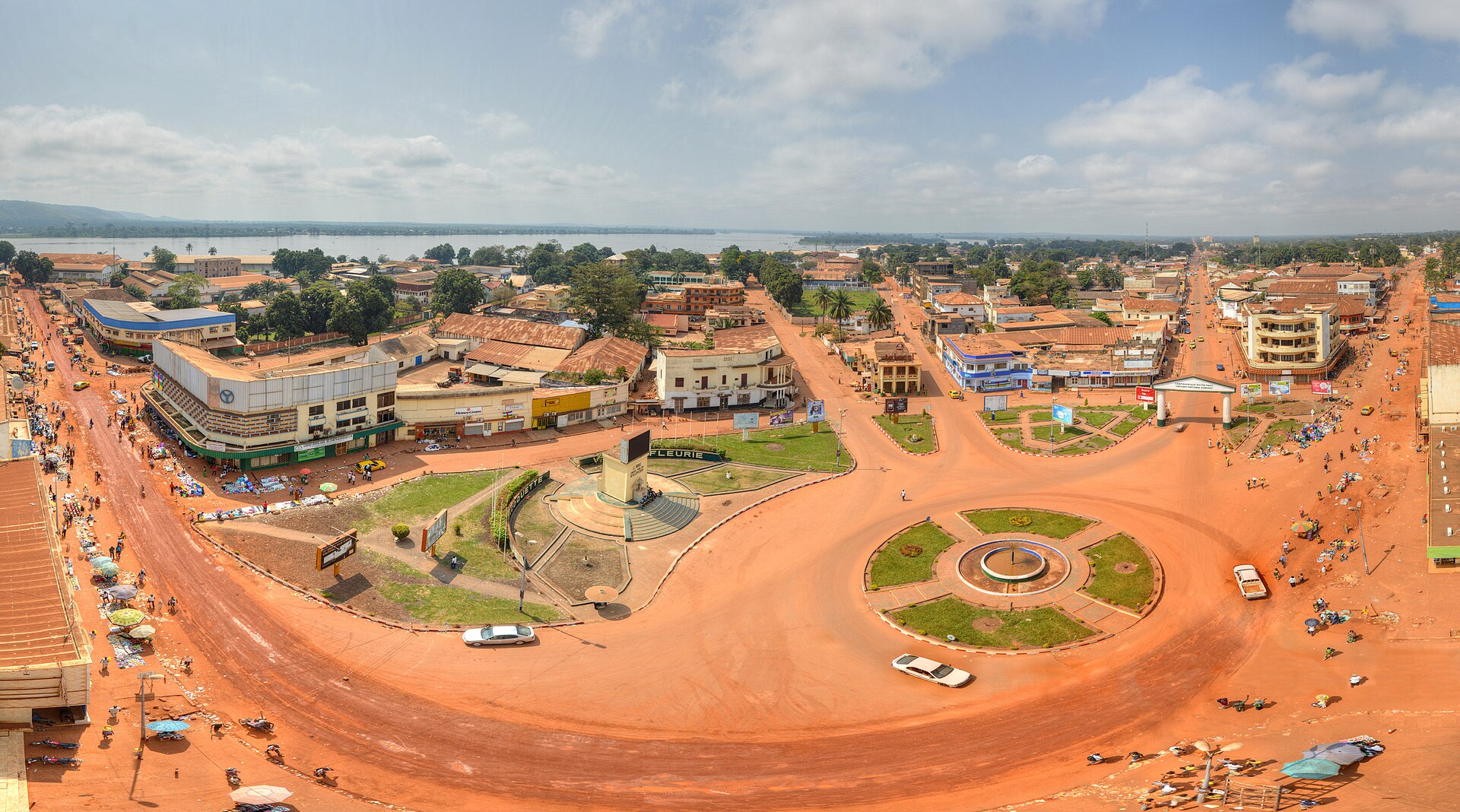
The Fiscal Picture Behind the Growth Rate
The budget deficit narrowed to 3.5% of GDP in 2025, from 5.1% in 2024. The bank expects it to hold at 3.5% in 2026 and fall to 3% in 2027. That is genuine consolidation.
Public debt moved the other way, rising to 59% of GDP from 58%. The current account deficit improved, from 9% of GDP to 7.4%. Inflation is expected to run above the 3% target set for the Central African Economic and Monetary Community, the regional bloc whose currency the country uses.
The country has been under an IMF Extended Credit Facility since April 2023, worth about US$191.4 million. The third and fourth reviews were completed together in June 2025, releasing about US$58 million. The Fund described programme performance as mixed and the downside risks as substantial. Its stated priorities were fuel market reform, governance, and finding concessional financing rather than expensive commercial money.
Diamonds, Gold and Timber Pay for Almost Everything
The shape of the export economy is unusual, and it explains a great deal. Extractive industries account for roughly 92% of exports. They account for under 2% of GDP and about 6% of government revenue.
Forestry is about 2.6% of GDP and 47.4% of exports. World Bank researchers put the revenue actually collected from it at around 3.7 billion CFA francs a year, about US$6.5 million. They put the potential at 6.5 to 9.1 billion CFA francs, roughly US$11 million to US$16 million. Industrial logging concentrates on four species, making up 70% to 75% of production.
Mining is about 0.6% of GDP and 46.5% of exports. Revenue collected was around 2.0 billion CFA francs in 2022, about US$3.5 million, against a potential of 6.4 billion, roughly US$11 million, after reforms adopted in 2024. The same researchers put total additional domestic revenue potential at 150 to 180 billion CFA francs, about US$263 million to US$316 million.
That is the country’s central fiscal problem stated in numbers. Almost everything it sells abroad comes out of the ground, and almost none of the value stays with the state.
The Extractive Industries Transparency Initiative has had the country temporarily suspended since November 2024. Its validation score came in below the threshold, and the initiative also cited problems with civil society participation. A new mining code was submitted in August 2024, and two state-owned mining companies were created in 2025.
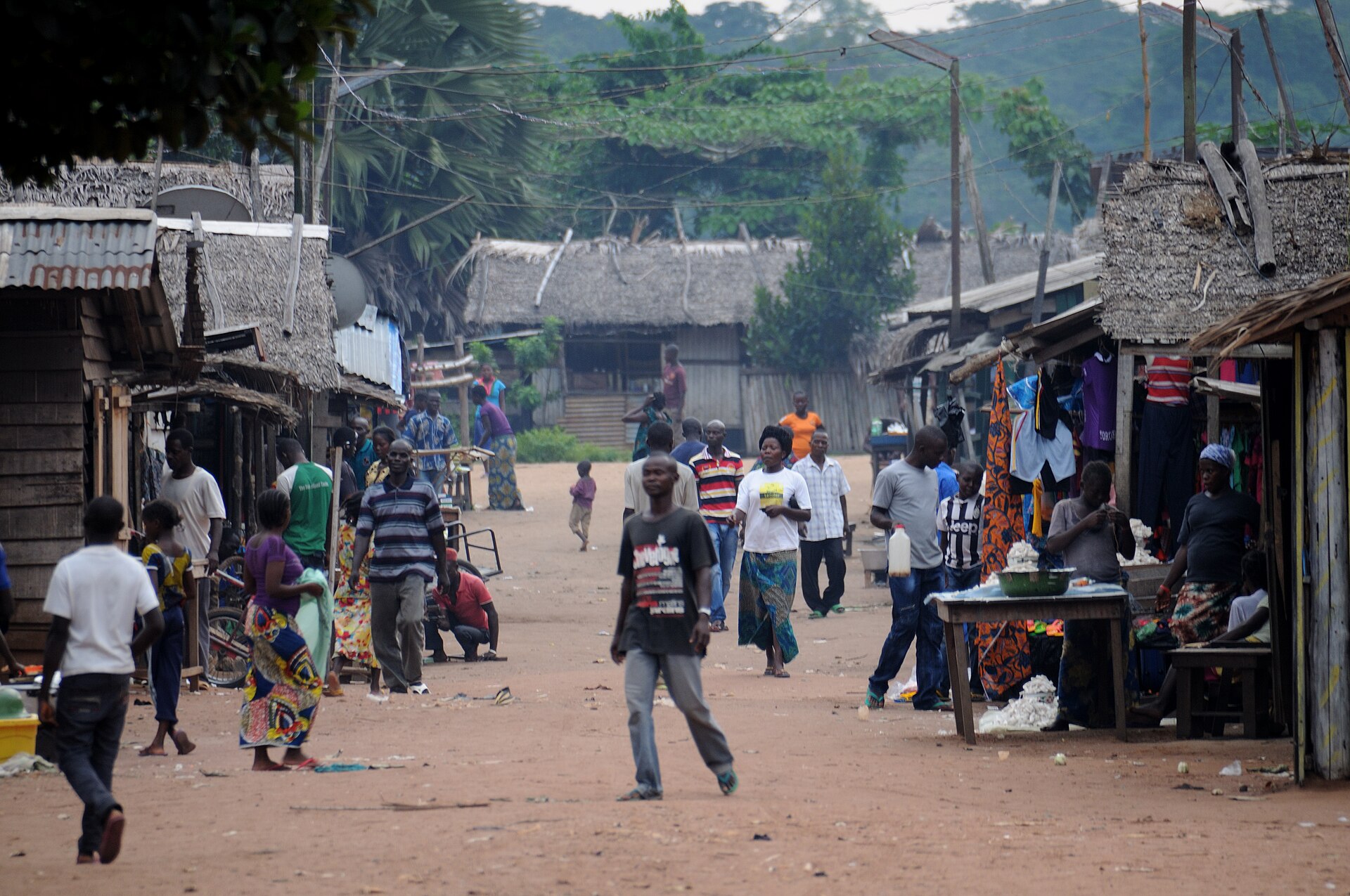
The Electricity Problem Underneath Everything Else
Electricity reaches 18.2% of the population, according to World Bank data for 2024. The figure was 17.6% in 2023 and 15.7% in 2022. It is rising, and it is rising from a very low base.
This is not a side issue. The African Development Bank lists energy availability as one of the three risks to its own growth forecast. A manufacturing sector cannot be built on a grid that four in five people cannot reach. Nor can the processing industries that would let the country keep more of what its forests and mines produce.
It also shapes what foreign investment looks like. Projects that bring their own generation can operate. Projects that depend on a public grid largely cannot. That filters who arrives and what they build.
The Currency Is Not Its Own
The country uses the CFA franc of Central Africa, shared across the six-member Central African Economic and Monetary Community. Monetary policy is set regionally, at the Bank of Central African States, not in Bangui. The currency is pegged to the euro.
That arrangement has two consequences worth understanding. The first is stability. A small, conflict-affected economy does not carry its own exchange-rate risk, and imported inflation is dampened by the peg. Prices move, but they do not move the way they do in a country with a floating currency and thin reserves.
The second is that the country cannot devalue its way out of a competitiveness problem, and cannot print money to cover a deficit. Fiscal discipline is not optional here in the way it sometimes is elsewhere. When the budget does not balance, the gap is closed by borrowing or by arrears, not by the central bank.
Inflation running above the regional 3% target matters in that context. It is a signal that domestic supply constraints, not currency weakness, are pushing prices. Food and fuel logistics in a landlocked country with poor roads are the usual explanation.
Security Is Still the First Variable
Every institutional assessment of the country puts security first among the risks, and none of them treats it as resolved. The African Development Bank lists it ahead of energy and project delivery. The IMF called downside risks substantial while noting that improved security had contributed to the recovery.
The practical effect is on the cost of doing anything. Movement of goods between the capital and the interior carries a risk premium. Insurance is expensive where it is available. Staff rotation, security provision and contingency planning are line items that do not appear in a comparable budget elsewhere in the region.
It also shapes the composition of investment. Extractive projects with contained footprints and their own logistics can function. Distributed businesses that depend on moving people and goods across the country face a different calculation entirely.
None of this is a prediction. Conditions have improved enough for lenders to write it down as a contributing factor to growth. They have not improved enough for any of them to stop listing it as the leading risk.
What This Means If You Work or Invest Here
For anyone considering the country professionally, the useful reading is narrow and specific.
The macroeconomic direction is positive but shallow. A deficit falling toward 3% of GDP and debt at 59% are manageable numbers. They are not the numbers of a country in crisis. They are also not the numbers of a country about to transform.
The revenue gap is the opportunity and the risk at once. Researchers think the state could collect several times what it does from forestry and mining. If it does, the fiscal position improves and public services become possible. If it tries and does it badly, the sector that produces 92% of exports becomes harder to operate in.
The development plan asks for about US$12.8 billion between 2024 and 2028. For an economy of this size that is an enormous figure, and it is a statement of need rather than a financing plan. Treat announcements of committed money carefully, and check whether commitments have become disbursements.
For practical purposes, energy and security remain the two questions that decide whether anything else works. Both are named by the lenders themselves, which is the most reliable signal available.
What Is Not Known
Whether the IMF programme remains on track is not clear from public information. The most recent milestone we could confirm is the June 2025 review. No later review or Article IV assessment was available at the time of writing.
The size of the informal economy is not measured. In a country where most activity sits outside recorded channels, headline GDP growth describes the part that is counted.
Whether the 2024 mining reforms will raise collections is untested. The projection of higher potential revenue is a modelled figure, not an outcome.
And the two growth estimates for 2025 have not been reconciled. Until they are, the honest description is that the economy grew somewhere around 3%.
Connected Coverage
- Taxes in Morocco for Expats 2026: The 37% Band Starts Early
- Kenya Residency Visa Requirements 2026: Class K Starts at 35
- Is Tanzania Safe for Expats in 2026: A Level 3 With One Hotspot
Sources
- African Development Bank — Central African Republic country report 2026
- IMF — third and fourth reviews under the Extended Credit Facility, June 2025
- World Bank — domestic resource mobilisation in forestry and mining, working paper 11209
- EITI — Central African Republic country page
Frequently Asked Questions
How fast is the Central African Republic economy growing?
The African Development Bank puts growth at 3.3% in 2025, up from 1.8% in 2024, with 2.9% projected for 2026 and 3.9% for 2027. The IMF put 2025 growth slightly lower, at 3.0%.
What does the country export?
Extractive industries are about 92% of exports, chiefly diamonds, gold and timber. They account for under 2% of GDP and about 6% of government revenue, which is the core fiscal problem.
Is there an IMF programme in place?
Yes. An Extended Credit Facility worth about US$191.4 million was approved in April 2023. The third and fourth reviews were completed in June 2025, releasing about US$58 million. The Fund called performance mixed and the risks substantial.
How many people have electricity?
About 18.2% of the population, according to World Bank data for 2024, up from 15.7% in 2022. The African Development Bank names energy availability as one of three risks to its own growth forecast.
This article was produced by The Rio Times’ automated newsroom system. How we use AI · Report an error
Read More from The Rio Times