
CENTRAL AFRICAN REPUBLIC · RIGHTS
Key Facts
- —The country The Central African Republic is a landlocked country in the heart of the continent, with a fragile peace and a large UN peacekeeping mission.
- —What happened On Tuesday 20 October, lawyer Nicolas Tiangaye asked the justice authorities to state the offences behind the arrest of five civil society leaders in Bangui.
- —The arrests The five were arrested on Thursday 15 October during a press conference; four are held at a security unit and one at the central police station.
- —The trigger The government raised petrol to 1,150 CFA francs (about US$1.97) a litre in the start of October, and civil society called a stay-at-home day on Monday 12 October.
- —The government’s line On Sunday 18 October the interior minister accused opposition parties of preparing to destabilise state institutions.
- —Why it matters The case tests how a government that hosts UN peacekeepers treats protest over living costs, a risk for aid groups and firms in Bangui.
- —Still open No charge has been made public, and lawyers say they have not been allowed to see the detainees.
Five civil society leaders in the Central African Republic have been in custody since Thursday 15 October, and their lawyer now wants to know why. On Tuesday 20 October, Nicolas Tiangaye asked the justice authorities to state the offences and the legal basis for the arrests in Bangui, the capital.
For US readers, the case shows how far a government that hosts a large UN peacekeeping mission will tolerate protest over fuel prices. The Central African Republic activists have not been told publicly what crime they are suspected of.
What Lawyer Nicolas Tiangaye Said
Nicolas Tiangaye, a veteran human-rights lawyer and prime minister from 2013 to 2014, represents the five detainees, Corbeau News Centrafrique reported on Tuesday 20 October. He asked the judicial authorities to state which offences the five are accused of and on what legal basis.
Tiangaye argues that a call for a stay-at-home day is not a crime in itself. He says asking for a review of fuel prices falls under freedom of expression, opinion and assembly, and that “they are not terrorists”.
He also says no demonstration or public disorder took place. Police officers consulted their superiors before refusing the lawyers permission to see the detainees.
How the Five Were Arrested
The five leaders were arrested on Thursday 15 October in Bangui, during a press conference at the Centre Saint-Jean-XXIII, according to Corbeau News Centrafrique. Four are held at the Compagnie nationale de sécurité, a national security body, and one at the central police station.
Tiangaye’s team told the public prosecutor at the Bangui court of first instance in writing that they act for the five. They say the ban on visits breaches the rights of the defence, which include a lawyer’s help from the start of an investigation.
Civil society groups signed a statement in Bangui on Saturday 17 October saying the legal limit on police custody had been passed. They blamed instructions from Interior Minister Bienvenu Zokoué for the ban on visits by lawyers, families and other activists.
Why Fuel Prices Sparked the Protest
At the start of October the government raised petrol to 1,150 CFA francs (about US$1.97) a litre and diesel to 1,400 CFA francs (about US$2.39). Petrol had cost 1,050 CFA francs (about US$1.80) and diesel 1,250 CFA francs (about US$2.14), at 585 CFA francs to the dollar on 19 October.
President Faustin-Archange Touadéra, in office since 2016, defended the rise by saying the state can no longer afford to subsidise fuel. The government’s case is set out in a report on the Central African Republic fuel price rise.
Civil society groups called a stay-at-home day in Bangui on Monday 12 October, which was only partly followed, according to Le360, a Moroccan news site. The government said life in the capital carried on and offered to reopen talks with unions and civil society.
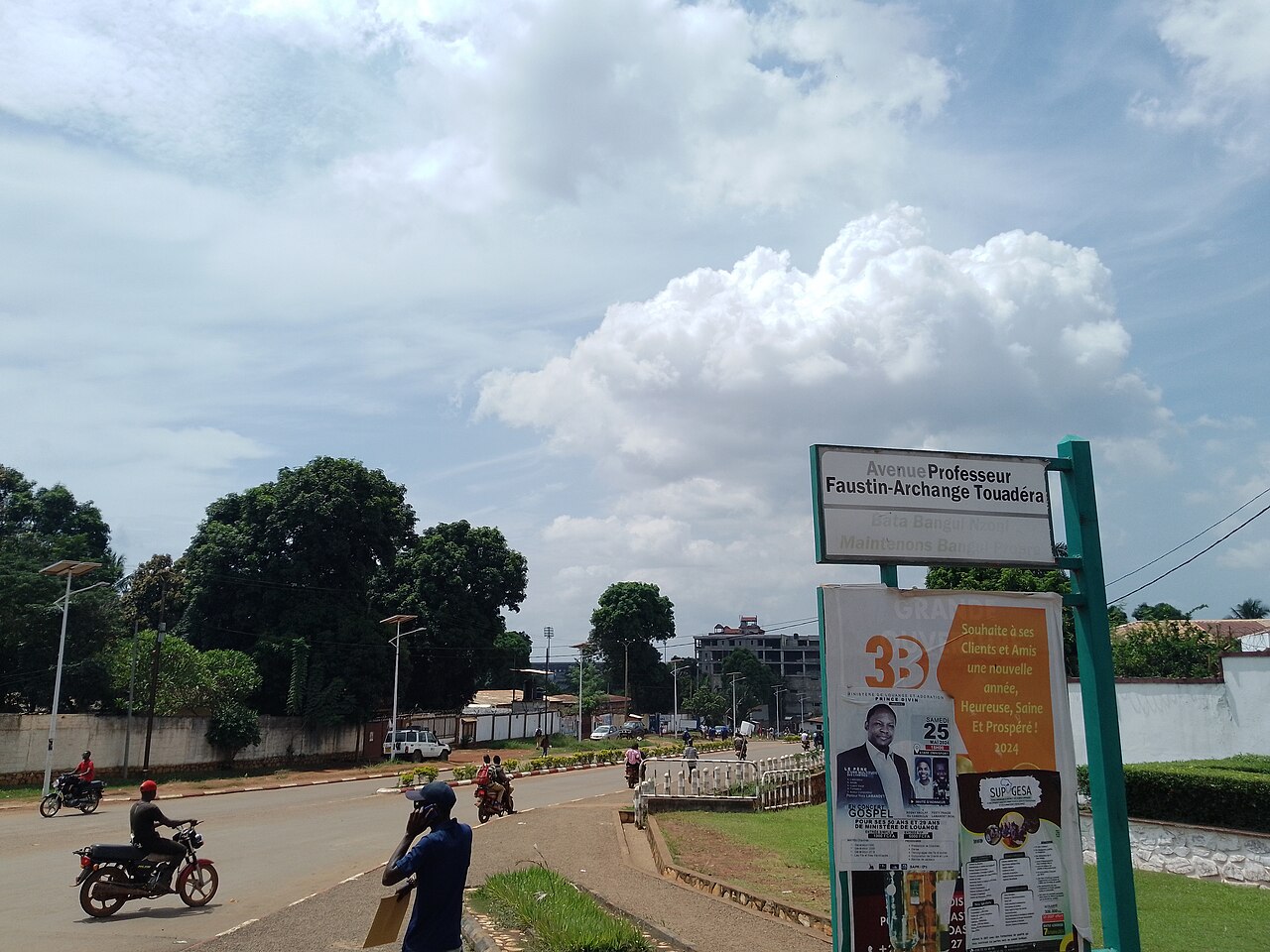
What the Government Says
On Sunday 18 October, Interior Minister Bienvenu Zokoué issued a statement saying the opposition is preparing to destabilise state institutions, Corbeau News Centrafrique reported. He said stay-at-home days hide that plan and that some people presented as civil society leaders are tied to opposition parties.
He named figures in two opposition groups, the Bloc républicain pour la défense de la Constitution and the Union pour le renouveau centrafricain. Corbeau News Centrafrique, an outlet critical of the government, said the statement gave no public evidence for these claims.
Civil society groups set a deadline of 3:30 p.m. on Monday 19 October for the release of the five and lower fuel prices. They warned that they reserve the right to call new civil disobedience if neither happens.
What It Means for US Readers
The Central African Republic hosts MINUSCA, the large UN peacekeeping force whose costs are shared among UN member states, including the United States. Aid groups and UN staff in Bangui depend on a calm capital and on fuel that arrives by road from Cameroon.
A standoff over arrests and living costs raises the risk of unrest for humanitarian operations and for firms that ship goods into the country. A recent truck blockade on the road from Cameroon already left more than 100 trucks stranded.
What Is Not Known
No court or prosecutor has said publicly whether the five face charges or when they will see a judge. It is also open whether they were released after the civil society deadline of Monday 19 October passed.
The government has not made public the evidence behind its claim of a plot to destabilise the state. Nobody has said whether ministers will lower fuel prices or only talk, although the government said on 12 October that it was ready for dialogue.
More: Africa news in English, every day from The Rio Times.
Frequently Asked Questions
Who are the five people held in Bangui?
They are five leaders of civil society groups who had called for protest against higher fuel prices. They were arrested on Thursday 15 October during a press conference at the Centre Saint-Jean-XXIII.
Have the five been charged with a crime?
No charge has been made public. Their lawyer, Nicolas Tiangaye, asked on Tuesday 20 October for the authorities to state the offences and the legal basis.
Who is Nicolas Tiangaye?
Tiangaye is a veteran human-rights lawyer and was prime minister of the Central African Republic from 2013 to 2014. He now acts as defence counsel for the five detainees.
What is the government’s position?
Interior Minister Bienvenu Zokoué said on Sunday 18 October that the opposition is preparing to destabilise state institutions. He linked the fuel protests and stay-at-home days to that plan.
Why are fuel prices so high in the Central African Republic?
Pump prices rose at the start of October to 1,150 CFA francs (about US$1.97) for petrol and 1,400 CFA francs (about US$2.39) for diesel. President Touadéra says the state can no longer afford to subsidise fuel.
Sources: Corbeau News Centrafrique, lawyer Tiangaye demands the offences, 20 October 2026; Corbeau News Centrafrique, civil society ultimatum, 18 October 2026; Corbeau News Centrafrique, interior ministry statement, 20 October 2026; Alwihda Info, government and the stay-at-home day, 13 October 2026; Le360, fuel price standoff, 12 October 2026; AllAfrica, fuel prices and union reaction, 7 October 2026.
This article was produced by The Rio Times’ automated newsroom system. How we use AI · Report an error · Editorial responsibility: Matthias Camenzind, Editor-in-Chief