Caiado Asks Supreme Court to Lift Secrecy on Master, INSS Probes
Brazil · POLITICS
Key Facts
- —Candidate Ronaldo Caiado, former governor of Goiás, is running for president for the PSD
- —Appeal lift STF secrecy over the INSS pension-fraud, Banco Master and Operação Carbono Oculto cases
- —Amnesty repeats vow to pardon all those convicted over the 8 January coup attempt, including Bolsonaro
- —Other pledges a Latin American transnational police force and tighter control of public spending
- —Calendar the first round of the election is scheduled for Sunday 4 October 2026
The PSD candidate told voters they risk being deceived unless the court opens the files on Brazil’s biggest fraud scandals before the October election.
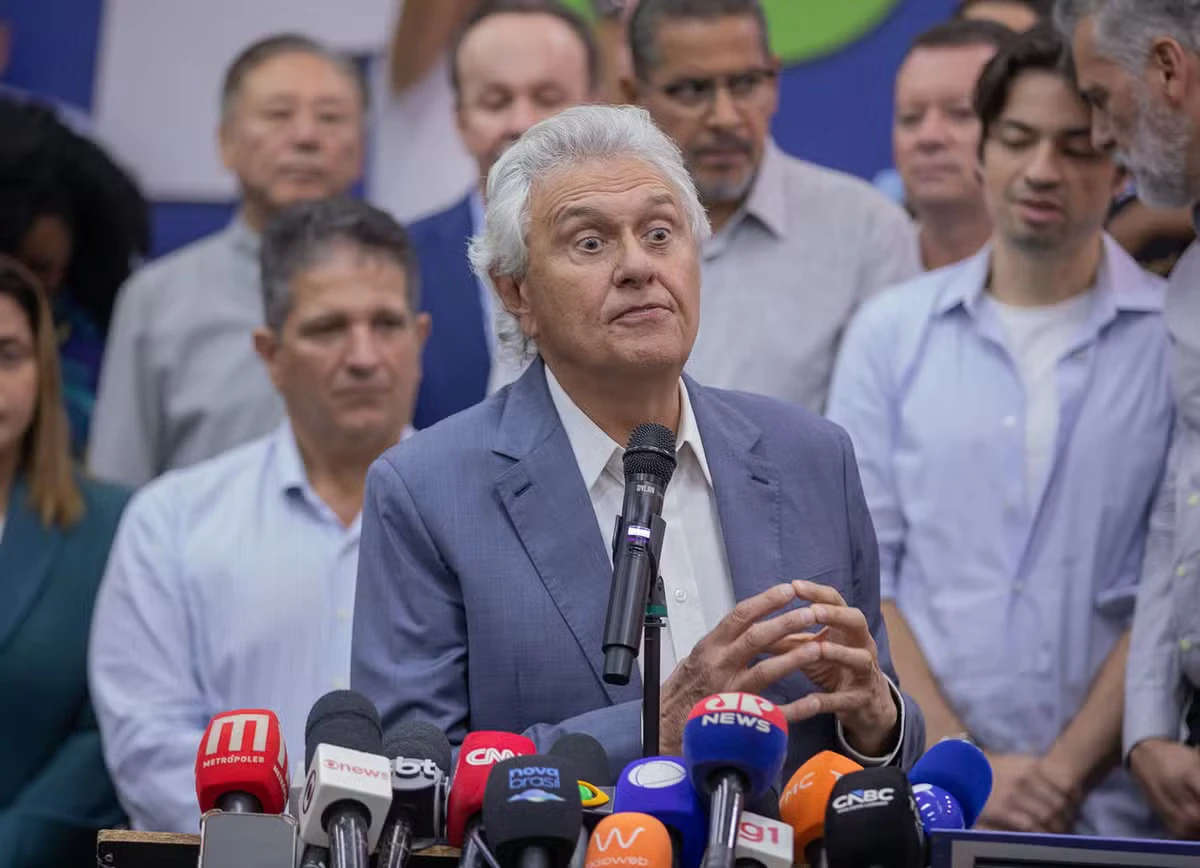
Ronaldo Caiado, the Social Democratic Party (PSD) candidate for president of Brazil, used a prime-time television interview on Tuesday 25 August 2026 to appeal to the Supreme Federal Court (STF) to lift the secrecy that shields the country’s biggest fraud investigations, and to restate the Caiado amnesty plan covering everyone convicted over the January 2023 coup attempt, including former president Jair Bolsonaro.
What Caiado asked the Supreme Court to do
Speaking to journalists Renata Vasconcellos and César Tralli in the second of a Globo series with the six best-placed candidates, Caiado closed the interview with a direct appeal to the justices in his final-minute statement. Alongside the Caiado amnesty plan, it was the clearest political message of the night. He asked the court to lift the secrecy covering the INSS, the Master case and the Carbono Oculto operation, so that voters “would not be deceived by people involved in serious crimes who could be elected tomorrow”, in remarks broadcast by Globo.
The appeal, made without naming names, politically wears on two of his rivals: Flávio Bolsonaro of the Liberal Party (PL), whose circle has been touched by the Banco Master fallout, and President Luiz Inácio Lula da Silva (PT), whose administration has been battered by the pension-deduction scandal at the National Social Security Institute (INSS). The Supreme Court has kept layers of confidentiality over the Master investigation since late 2025, when the case reached the tribunal under then-rapporteur Dias Toffoli; the rapporteurship passed to André Mendonça in February. Secrecy decisions since then, including orders sealing seized material and restricting access to case files, have turned the court itself into a campaign issue, with opposition figures accusing it of shielding powerful names and the justices insisting that confidentiality protects ongoing police work.
The Caiado amnesty plan returns to the campaign
Caiado reaffirmed that, if elected, he will grant amnesty to all those convicted over the 8 January 2023 invasion of Congress, the Supreme Court and the Planalto Palace, and over the wider coup plot, explicitly including Jair Bolsonaro, who is serving his sentence under house arrest. He has described the proposal since 2025 as “broad, general and unrestricted”, and the Caiado amnesty plan would be sent to Congress as one of his first acts in office.
The candidate again compared his position to the release of Lula and the restoration of the president’s political rights in 2021, after the annulment of his Car Wash convictions. Critics across the legal and political spectrum argue that an amnesty for coup convicts would weaken accountability for attacks on democracy, while supporters frame it as a way to pacify a polarized country. Caiado insists the country must close that chapter to discuss growth and public services, and he has said he would follow the example of Juscelino Kubitschek, the president remembered for governing through amnesty and national reconciliation in the 1950s.
Security and economic pledges
On public security, Caiado defended the creation of a transnational police force for South America, involving Brazil and its ten neighbouring countries, with shared intelligence and officers able to operate across borders. He compared the idea to European police cooperation and said he would tour the ten bordering countries as president to build it.
On the economy, he promised to rein in public spending and criticised the growth of the public debt, but declined to detail where he would cut. Pressed repeatedly on the fiscal adjustment, the minimum wage and pensions, he answered that he had already defined the macro framework and would prioritise fighting corruption, extortionate salaries and the diversion of budget funds. “I will manage,” he said.
The fraud cases behind the appeal
The Banco Master scandal centres on banker Daniel Vorcaro, arrested in the Federal Police’s Operation Compliance Zero, which investigates an alleged R$12 billion fraud involving credit portfolios traded with the Banco de Brasília; the bank is now in extrajudicial liquidation, and the INSS has withheld about R$2 billion in payroll-loan transfers over irregularities in some 254,000 contracts. The Rio Times reported this week on Operation Saturno and the Campo Grande pension probe linked to the same web of investigations.
The INSS scandal, examined by a joint parliamentary inquiry in Brasília, involves billions of reais in unauthorized deductions from retirees’ and pensioners’ benefits. Operação Carbono Oculto, the third case named by Caiado, is a Federal Police investigation that the candidate argued should be made public alongside the others. The court has not indicated whether it will respond to the appeal, which Caiado framed as a defence of the voter rather than an attack on the judiciary.
Six candidates and a fixed calendar
The Globo series, based on a 14 August Quaest voting-intention poll, opened on Monday with Romeu Zema (Novo) and continues with Renan Santos (Missão) on Wednesday, Lula on Thursday, Flávio Bolsonaro on Friday and Augusto Cury (Avante) on Saturday. It is the first time the network’s candidate interviews air after the Jornal Nacional flagship newscast rather than inside it, and the first round is set for Sunday 4 October. The order of the interviews was drawn by lot, in the presence of party representatives.
Analysts read the secrecy appeal as a way for Caiado to press the vulnerabilities of both front-runners while presenting himself as the candidate of transparency. At the same time, the Caiado amnesty plan courts the conservative electorate that Flávio Bolsonaro also needs, setting up a direct contest for the right-of-centre vote in the five weeks before the ballot.
Frequently Asked Questions
What did Ronaldo Caiado ask Brazil’s Supreme Court?
In a Globo interview on Tuesday 25 August 2026, he asked the court to lift the secrecy covering the INSS pension-fraud investigation, the Banco Master case and Operação Carbono Oculto, arguing that voters should know before the election whether any candidate is implicated in serious crimes.
Who would the Caiado amnesty plan cover?
The Caiado amnesty plan would cover everyone convicted over the 8 January 2023 attacks and the attempted coup, including former president Jair Bolsonaro. Caiado compares the idea to the release of Lula and the restoration of his political rights in 2021.
When is Brazil’s 2026 presidential election?
The first round is scheduled for Sunday 4 October 2026. If no candidate wins more than half of the valid votes, a runoff between the two best-placed candidates is held later in October.
Connected Coverage
Operation Saturno Takes Banco Master to Brazil’s Top Court
Brazil Police Raid Municipal Offices in Banco Master Pension Probe
Sources
This article was produced by The Rio Times’ automated newsroom system. How we use AI · Report an error · Editorial responsibility: Matthias Camenzind, Editor-in-Chief