Brazil’s transatlantic heritage from the African continent
By Thaís Regina
RIO DE JANEIRO, BRAZIL – How far back does the music you listen to go? And the way you speak? After all, how do you see yourself in the world? The culture of almost five million people forcibly brought from the African continent found fertile ground in Brazilian soil to thrive in phonemes, philosophies, religions, and rhythms.

More than building a country, these concepts have resisted violence by establishing their civilizing values here. “There is an African experience in our country that is not taught,” fires Aza Njeri, 35, an Africa researcher.
“Here, it is widespread for families to live in the same yard; the eldest buys the house, then the son lives on top, next to it, in front, and when you realize, there are seven houses in the same yard! This is the logic of the matriarchal construction of a quilombo: everyone watches over a child in this backyard. Everyone must be vigilant that the gate is closed so that the child doesn’t get out into the street; if the child is doing something wrong, no one will call the mother, the child is instructed there, on the spot,” explains Aza Njeri.
But how would we be if these roots had not undergone a process of erasure? What would our present be like if the construction of Brazil had been officially Afrocentric, that is, if it had had African culture at the center as opposed to Eurocentric, which looked to Europe as a reference?
A respectful relationship with nature and the power of the word, for instance, are among the Laws of Maat, which guided the society of Kemet, the name given to ancient Egypt and the cradle of African culture. This report is dedicated to identifying some of these features still present today in the Brazilian experience, and discovering ways to think about a sustainable future for the whole world.
Affection
However, within these backyards, something has changed radically: the way we love. “Of the differences throughout humanity, throughout time, this one is brutal. Before Romanticism, this romance that we imagine didn’t exist, this romanticizing of relationships,” explains Caroline Sodré, 26, a Master’s student in history at PUC and a specialist in diversity at Farm.
“It’s a delicate subject because we can stereotype the ancient peoples, thinking that they didn’t love. It’s not that, the difference is that these people didn’t see relationships as something that should last a lifetime. The relationships were not romantic love. And it’s sensitive because it really messes with us, it throws our world upside down.
“To help the exercise of thinking like ancestral societies,” Sodré brought a word that we sometimes hear in Brazilian music, from Nação Zumbi to Luedji Luna, and that is present in the Bantu linguistic trunk, widespread in the territory that extends south of the Sahara desert – Malungo. “It means bond of brotherhood. That is why in the black movement we call ourselves brothers and sisters because I understand my neighbor as someone who came from the same seed as me.”
“At the time, the word malungo was used for everyone, from the youngest to the oldest. People had children together and, of course, this strengthened the respect and care, but it did not mean that the relationship would become affectionate, romantic, or that the child would be a life-long bond. The affection is another, of brotherhood.”
But this is not true for all societies on the African continent. According to Njeri, it depends on how the family lineage is structured (matrilineal or patrilineal) – that is, whether the children are given the mother’s or father’s surname – and how social-political power takes place, with the community’s mothers at the center or the fathers (matriarchal or patriarchal).
“All of that has to be considered to discuss relationships. There’s a book called ‘Niketche: A History of Polygamy’ [(2001), by Paulina Chiziane], in which the author criticizes the colonization of polygamy; she discusses that polygamy after the arrival of Europeans becomes something completely different from what it was before.”
Nature
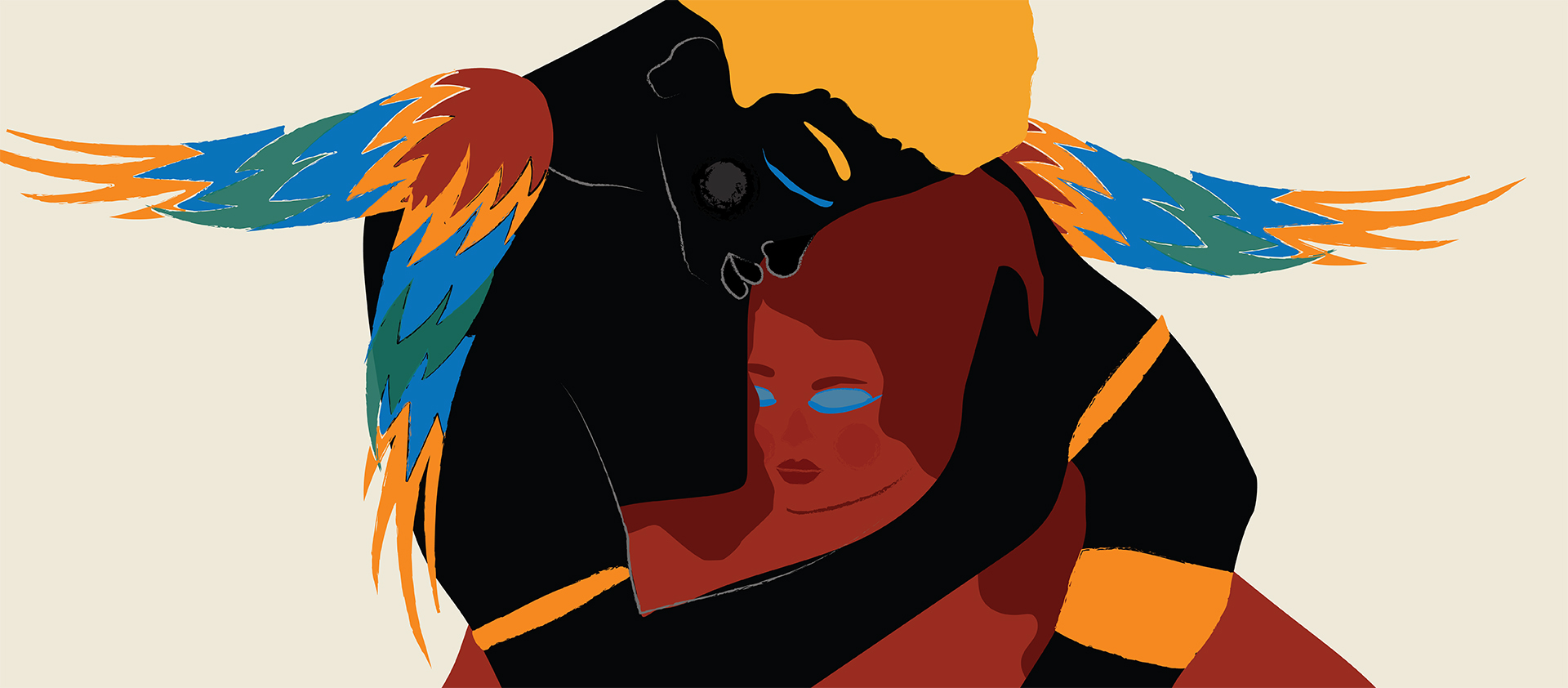
When Sodré relates the bond of brotherhood to the idea of a common seed, she refers to one of Africa’s creation myths: Baobab tree worship. Most creation theories involve nature and, according to Sodré, it is difficult to think at which point in history there was a split between spirituality and environment. The constant exchange relationship with nature is also central to the worldview of indigenous peoples. “The other religions that have gone through history, besides being polytheistic, connect [directly] with elements of nature,” she comments.
Other trees, such as Iroko, are also protagonists of creation myths, varying from society to society. The choice was not random: it is about a range of evidence and conditions of a better quality of life from the proximity to these trees.
“Many people south of the Sahara desert will worship the baobab seed with this idea of the tree of life, the idea that life began in a tree seed,” explains Sodré. “The Kush kingdom, which was one of the largest, will be created with many baobabs around it because it is a tree that, because it draws a lot of water from the soil, necessarily grows near rivers, so it indicated to the population that there were rivers nearby. In a desert region, being close to the river is essential. The wide crowns of the baobab also provided shade, the fruit attracted animals, which could be hunted. At that time, that tree was not only a symbol of life, it was life.”
Interestingly, here in Brazil, we have continued this creation myth in a playful way. When we explain to a child how it was born or why a person is pregnant, the seed story comes back into the picture. “People thought: if trees are like this and they come from seeds, why don’t we come from seeds too?”
“At that time there was no ultrasound or tools that could see what was inside women’s bellies. Many mothers still say to their children today: ‘We planted a little seed and you were born. Even without wanting to, we spread this oral history and we are part of this orality without realizing it,” says Sodré.
Society
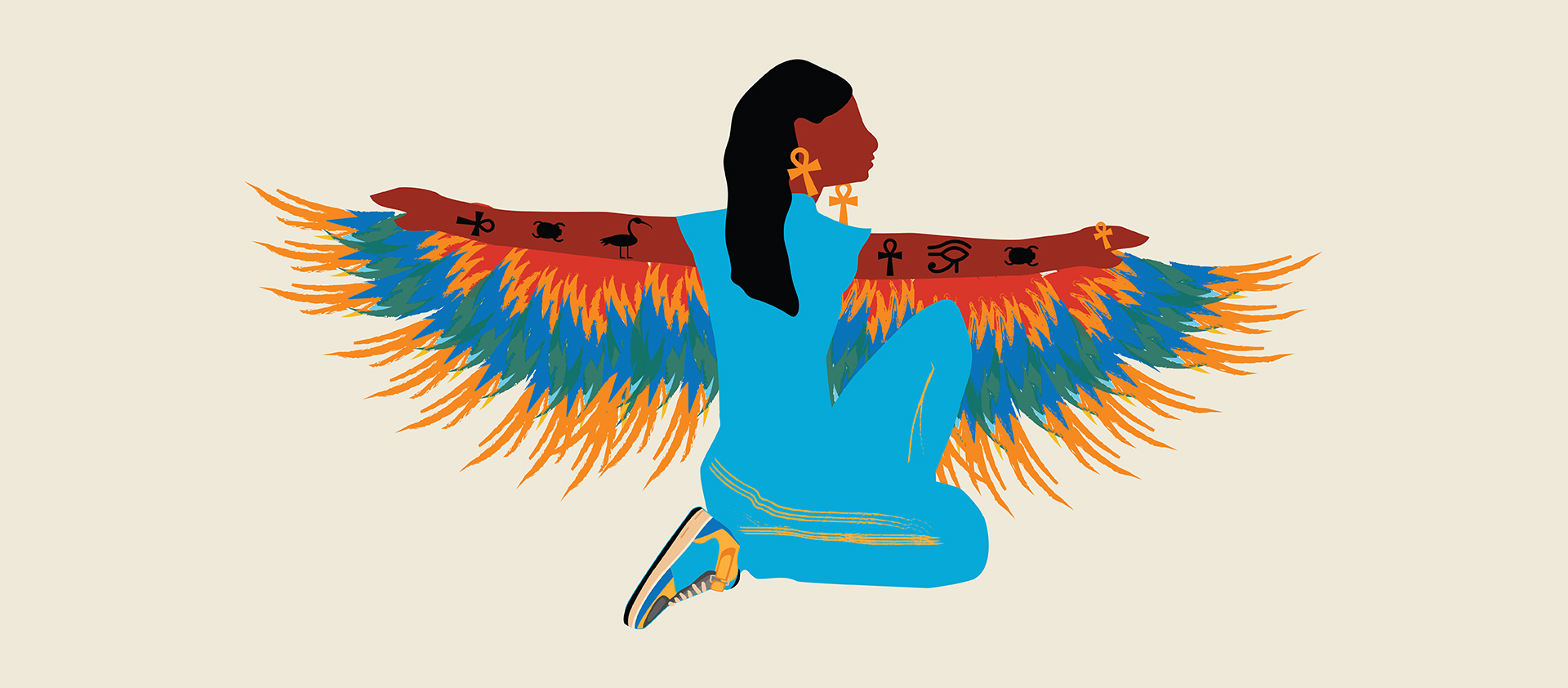
Gender is also a western construction, with all of its historical and symbolic relevance. Thus, the division of tasks between men and women in ancient Africa varies among societies. In the Kemetic civilization, for example, the position of priest, high within the social hierarchy, was often held by women. “This means that women were literate and, more than this, were the guardians of thought, of writing,” reflects Sodré.
Nigerian sociologist Oyèrónké Oyewùmí explains how relations from marriage onwards were different in Yorubaland from what we see in the West: “For example, my brother’s wife also calls me husband. Because husband in English [and other languages] has to be a man, someone who has a penis. But in Yoruba it’s a social category, that’s the key. It’s not a biological or gender category.
“In these great civilizations, such as the Assyrians, Kushites, Kemetics, and Nubians, there were exchange currencies, but they were not unitary. In other words, people traded with what they had, be it heads of cattle, crops, or a common exchange currency between the West and the East: women. Marriage was a non-romantic contract and was often used to unify kingdoms and regions.
In Namibia, which is near one of the largest desert regions on the continent, water and camels become very valuable. It varies greatly among regions, but the European culture of basing the economy on gold and precious metals, which are abundant in Africa, did not make sense within those communities. In general, these metals were used in construction for their power of resistance, but they were not given a high value.

Work
Another divergence is how we view work. Thinking about Yoruba and Bantu peoples, within the cities there were craft clans. While the profession is individual and does not define the individual, the craft is the activity itself, specialized and with knowledge passed from father to son.
“As the orixás are the guardians of the city, it was common for religion and trades to go together; if you are from the Ogum lineage, your family probably works with iron; or yet, thinking of the Bantus, if you are Zulu, your trade will probably be mining,” Njeri exemplifies. In this way, there is no mobility of craft, because it is already ancestrally defined.
Oyewùmí agrees. “Your family, your lineage is more important than whether you are male or female. So if hunting is the vocation of your family, you, as a woman in that family, have access and opportunity to be a hunter well before a man in a non-hunting family,” says the Nigerian sociologist.
Imagining this possible Brazil, and with so much to rescue from its latent bonds, we asked Aza Njeri what are Africa’s greatest heritages in our country. “Besides the body, the word, the ethical and aesthetic set, which are more than heritages, they are survival strategies. I think that Africa leaves us the principle of balance, the circularity of the experiences of living: our family, capoeira, samba, jongo. Circularity is a civilizing value that I can see in Afro-Brazilian black experiences,” she answers.
“Another very important legacy is the ancestry, spirituality of the religions of African matrix. A candomblé terreiro is a mythical womb of African civilization, what we have of Africa as a living experience. And “pretuguese”, this “black” way of speaking Portuguese, this entrance of Bantu phonetics and lexical cadence into the Portuguese language, that will make us speak: falanu, comenu, craudia, bicicreta, you know?”
From the language, the sound, the way of looking and looking at life, millions of African lives continue to live in the Afro-Brazilian soil they built, without breaking the umbilical cord that nourishes Africa in Brazil.
Source: UOL
More: Egypt news in English, every day from The Rio Times.
Editorial responsibility: Matthias Camenzind, Editor-in-Chief · Editorial standards · Report an error