Argentina: gender perspective behind the wheel
RIO DE JANEIRO, BRAZIL – Gender, roles and stereotypes. Violence. Patriarchy. Femicides and hate crimes. All these are concepts that from now on are integrated into the mandatory study material to obtain a driver’s license in Argentina.
“We believe that driving a vehicle requires much more than a person having skills or technical knowledge regarding rules and signals,” says Pablo Martínez Carignano, director of Argentina’s National Road Safety Agency.
“Traffic is social interaction par excellence,” the agency’s director maintains in dialogue with DW. “We want drivers to be able to coexist peacefully and in solidarity on public roads”, and to banish “road violence, which has a strong male chauvinist component, with very marked stereotypes”, he explains.

Thus, as of this March, anyone wishing to obtain a driver’s license in the South American country must pass, as part of the required theoretical contents, a special module on gender perspective.
“The cultural resource is shown as an aspect of vital influence with regard to the incorporation of relatively crystallized gender norms”, can be read in the rationale of the regulation.
Therefore, new content is provided in order to “promote values of equality and the delegitimization of violence against women in the driving of vehicles, public roads and vehicle safety,” the Official Gazette publication states.
“I think it is a very interesting affirmative action measure that, to the extent that it makes it mandatory, contributes to all people -men, women and diversities-, have the opportunity to know what gender refers to”, and to reflect on “the inequalities that persist in the patriarchal society”, says Ana Falú, director of CISCSA, Ciudades Feministas and member of the Red Mujer y Hábitat de América Latina y el Caribe, consulted by this media.
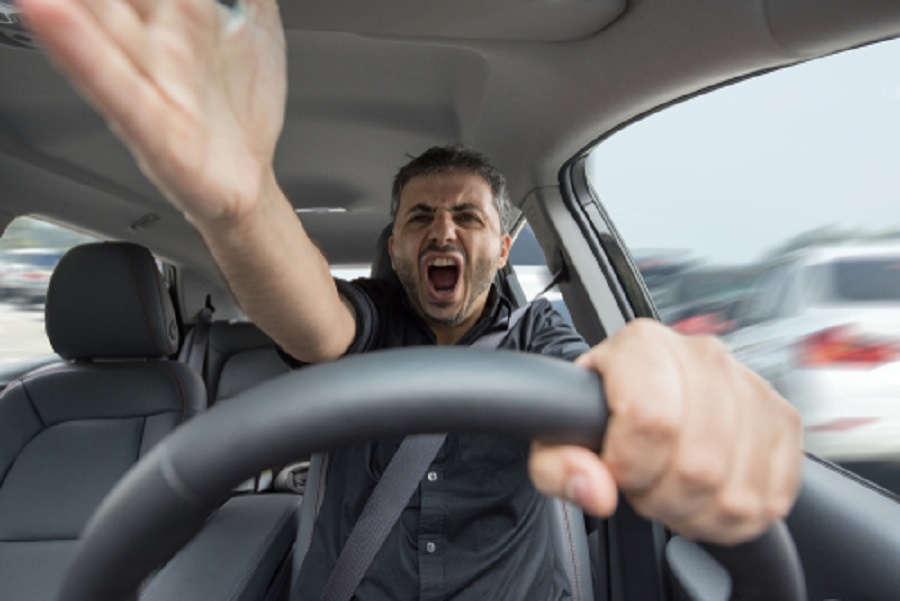
“Violent behavior towards women is very common in traffic. The insults, the violent ways of driving are very masculine and macho,” says Professor Falú from the Argentine province of Córdoba.
And she argues: “A car whose only owner has been a woman is worth more than a car owned by a man on the used car market: this speaks of driving habits.”
The difference in figures
“In Argentina, of the total number of licenses issued, 70% correspond to men and 30% to women,” says Martínez Carignano.
“However, this proportion does not hold when we look at the number of people killed in road accidents, where the proportion is 85% men and 15% women -and the latter, in many cases, as passengers in vehicles driven by men,” reveals the Argentinean official.
And he continues: “Neither with respect to positive cases of alcohol, in which the proportion is 90 to 10, nor in illegal speeding competitions or street violence due to traffic arguments, in which the difference is 100 to 0, respectively,” the ANSV director explains.
Even so: “There are still myths that we hear every day, such as that women are “slow” or “fearful”, or that, to be a good driver, you have to know “the law of the street” or be “daring”,” enumerates Martínez Carignano. However, “this is foolish,” he asserts.
Reception of the measure
“I think the results will be seen in the long term,” says Martín Turletti, a mechanical engineer specialized in road accidents, when asked about the new provisions.
And he adds: “Although I agree with educating society about equal rights, in our country we have a deficient road safety education. Therefore, when it comes to modifying contents, I would prioritize improving the quality of driving of the population, adopting more rigorous evaluative instances”, Turletti specifies to DW.
The changes are recent and citizens are slowly confronting the issue. There is no lack of criticism and skepticism, but the new generations are largely in agreement.
“I think the changes are very positive,” Ianis Safigueroa Fischbein, an 18-year-old “porteño” (someone from Buenos Aires) soon to take his exam in April, tells DW.
“Many situations of gender violence and micromachismos experienced on public roads are the result of ignorance, and transforming the gender perspective into a requirement for driving can generate greater sensitivity and empathy among drivers,” he reflects.
Inclusive language in the transport sector
The novelties, meanwhile, promise to be visible throughout the territory: there will be changes in traffic signs, street posters and official communications of all kinds.
In line with the changes in the requirements, the Ministry of Transportation has published a “Practical Guide for Gender-Sensitive Communication”, which recommends the use of inclusive language (for example, by not using “o” endings -masculine- as the universal form), as well as the adequate visibility of women and diversities.
The Argentine experience is unique in its kind, and promises to be monitored in detail by other countries in the continent.
Source: DW
More: Argentina news in English, every day from The Rio Times.
This article was produced by The Rio Times’ automated newsroom system. How we use AI · Report an error · Editorial responsibility: Matthias Camenzind, Editor-in-Chief