Supreme Court Investigation Covering Fake News and 2018 Elections Outrages Bolsonarists
RIO DE JANEIRO, BRAZIL – On Tuesday, May 26th, Bolsonarists were rejoicing. They were celebrating the Federal Police operation, set up by the Office of the Prosecutor General and with the endorsement of the Federal Supreme Court, against a former ally, the governor of Rio de Janeiro, Wilson Witzel.
The event poured oil on the troubled water surrounding the alleged political use of the Federal Police (PF) by Bolsonarism and Brazil’s plunge into a “police state”. Less than 24 hours later, it was the PF’s turn to knock on the door of part of those celebrating the day before. Based on the controversial fake news inquiry, Supreme Court Justice Alexandre de Moraes ordered searches and seizures of 29 of the President’s supporters.
Against four people, the magistrate, who had already shielded the PF delegates working on the case as soon as Bolsonaro began changing assignments and leaders in the force, also ordered the lifting of banking and tax confidentiality between July 2018 and April 2020, a period that covers the presidential campaign.
In the procedure opened by the Court, which investigates rumors against magistrates, Moraes also wants to know if the group financed the spreading of fake news during the campaign won by Bolsonaro, and if it continued after he took office. This is a development that could prove explosive, since there are proceedings in the TSE (Supreme Electoral Court) investigating this very issue.

Entrepreneur Luciano Hang, owner of the Havan department store chain; Edgard Corona, owner of the Smart Fit network of gyms; former Navy officer Winston Rodrigues Lima; and comedian Reynaldo Bianchi were among those who had their confidentiality lifted.
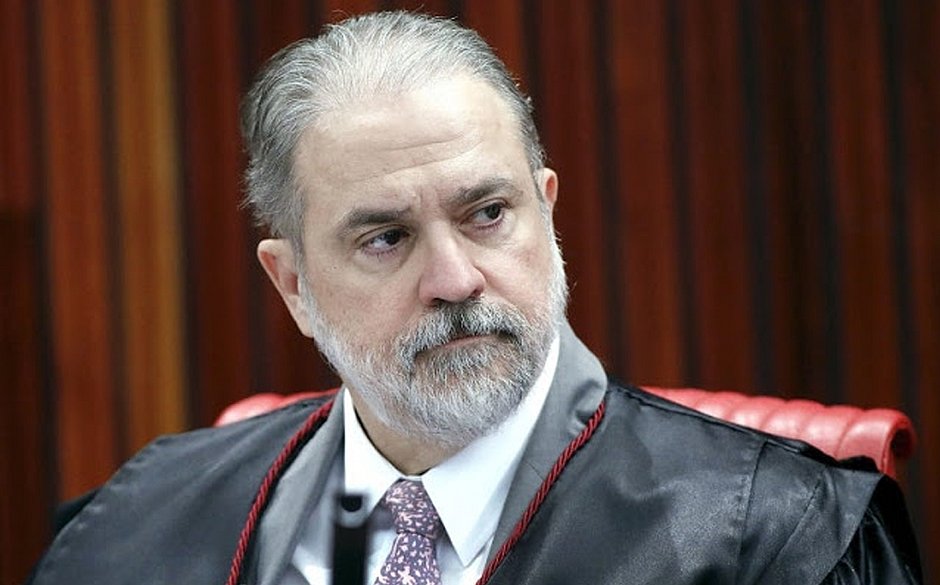
Prosecutor General Aras’ reaction was not long in coming and he began to ask for the suspension of the Supreme Court’s investigation – something that not even the Solicitor General of Brazil, whose job, under the constitution, is to defend the Presidency, had so far requested.
When questioned by the STF on the issue last year, Prosecutor Aras said the inquiry was a “legitimate exercise on the part of the Supreme Court in the investigation of allegedly criminal events that could harm the Court’s operation”. He now calls for an end to the proceedings and says the Office of the Prosecutor General (PGR) was “surprised by news in the mainstream media that dozens of searches and seizures and other proceedings were ordered against at least 29 people”.
Aras is not alone. He is in line with those in the legal world who perceive the inquiry as an extrapolation by the STF, particularly given the lack of a clear definition of what is being investigated. The PGR, challenged by the excessive alignment with Bolsonaro, complained of the its lack of participation, supervision or prior consent.
The retaliation plan
With yet another institutional shock exposed, President Bolsonaro called an emergency meeting to examine operations against his allies, many of them key in his social media support engine. At the meeting, he considered the possibility that he and his Ministers might violate judicial orders coming from the Supreme Court, as reported by sources from the Planalto Palace.
One of the strategies discussed was to press for the appointment of Alexandre Ramagem as Director-General of the Federal Police. Ramagem is a friend of the President’s sons and Director of the Brazilian Intelligence Agency (ABIN) and was banned from taking over by STF Justice Moraes in an earlier round in the conflict between the Planalto and the Supreme Court.
The other measure studied would be that the Minister of Education, Abraham Weintraub, would refuse to testify in the inquiry investigating him for the crime of racism, also under the oversight of the Supreme Court.
The entire scenario is a major issue, because Bolsonaro himself is the target of an investigation in the STF, in which he is suspected of committing five crimes, among them politically interfering with the PF. A few days ago, the President directed his digital machine gun against STF Justice Celso de Mello, in charge of the inquiry and responsible for the release of the cabinet meeting video last week.
On Wednesday evening he widened his Twitter focus to attack the STF for Moraes’ actions. “Watching good citizens have their homes invaded, for exercising their right to freedom of expression, is an indication that something very serious is happening with our democracy,” he wrote. And he added: “No violation of this principle should be passively accepted.”
Shortly before, some of the fake news inquiry targets, headed by Bolsonaro’s son Eduardo Bolsonaro, put out a live broadcast to redouble their efforts against the Court: “When it comes to the point where the President has no further choice and a strong measure is required, it is he who will be branded a dictator,” said Eduardo, in an over 100,000 viewer broadcast with the participation of Olavo de Carvalho, the ideologist-in-chief of Bolsonarism.
“I even understand anyone who has a more moderate stance, let’s say, in order to avoid reaching a breaking point, an even greater split, an even greater conflict. I understand these people who want to prevent this moment of chaos, but, speaking quite openly, Eduardo Bolsonaro’s opinion is no longer an opinion of ‘if’, but rather of ‘when’ it will occur,” said the deputy, who foresaw the moment when the STF investigation will knock on his door.
They were not alone in closing ranks against the Supreme Court. Earlier, Vice President Hamilton Mourão had joined the choir against the STF investigation. “It is up to the Prosecutor’s Office to take public criminal action, in addition to ensuring investigation proceedings and the opening of a police inquiry (accuse, investigate and indict). And the other Powers must ensure the transparency and disclosure of governmental actions. Is this what’s happening in Brazil?” Mourão asked on Twitter.
However, there are more questions than answers about the crisis, and indications that the STF has no intention of backing down. In the early afternoon, Luiz Fux, interim chief justice in the absence of Antonio Dias Toffoli, who is on medical leave recovering from surgery, used the opening of a Court session to send a message: “The empire of our Constitution, the sustainability of our democracy and the guarantee of our freedoms would not be possible without a Judiciary that would not hesitate to oppose majorities for the promotion of republican values and the achievement of the common good”, he stated.
Repercussion in Congress
The day was also one of great commotion in Congress, because among the targets of Moraes’ action, with the order to seize cell phones and tablets, are no fewer than eight Bolsonarist federal and state deputies: Carla Zambelli, Bia Kicis, Luiz Philippe de Orleans Bragança, Junio Amaral, Filipe Barros and Daniel Silveira, in addition to São Paulo state deputies Douglas Garcia, Gil Diniz.
They are all members of the PSL (Social Liberal Party), Bolsonaro’s former party, and were summoned to testify about the existence of the so-called “Hate Cabinet,” an alleged group organized by Bolsonaro’s advisors that aims to spread fake news and attacks on political opponents and the Supreme Court.
The Bolsonarist social media networks were another obvious sounding board, as the STF also targeted bloggers and pro-Bolsonaro activists Allan dos Santos, Bernardo Kuster, Marcos Belizia and Sara Winter. Roberto Jefferson, president of the PTB (Brazilian Labour Party) and a former federal deputy, who was convicted under the ‘Mensalão’ scandal and a pro-Bolsonarist stalwart, was also a target of the operation.
Most complained that they did not officially know why they were being investigated. Everyone said they were being censored and that they wouldn’t shut up, they would maintain their criticism of the Supreme Court. “If you think we’re going to soften up, ‘Oh, my God, I’m so scared!’. We will not shut up. We’re going to piss you off,” Kuster said on his YouTube channel.
Without a majority to force an eventual defeat of President Bolsonaro, the opposition to the government in Congress is trying to magnify the incident as much as they can. Deputy and PT (Workers’ Party) President Gleisi Hoffmann has demanded the continuity of the Fake News joing parliamentary inquiry (CPMI) that is currently stalled in Congress due to the coronavirus pandemic.
“They will soon reach the lair of criminals. It’s a matter of time. That’s why there’s no justification for the Fake News CPMI in Congress being stalled,” claimed Hoffman. In a note, PT said it intends to append the inquiry results to a lawsuit being processed in the Supreme Electoral Court (TSE) and asks for the annulment of the electoral win of the Bolsonaro-Mourão slate.
The CPMI rapporteur, federal deputy Lídice da Matta (PSB-BA), said that the details match the findings of the group of deputies. “We will now have important new facts that will help us to dismantle this hate, lies and impunity network that has been threatening the very existence of democracy and dominating national politics since the 2018 presidential elections”.
Amid the crossfire, constitutionalist attorney and professor Erick Pereira fears for the deepening of society’s distrust of institutions. “If citizens don’t understand that having strong institutions and a strong judiciary is essential for democracy, we’ll create a deep sense of anarchy, in which no one respects anyone”, Pereira analysed.
Edvandir Paiva, president of the Association of Federal Police Detectives, lamented damage to the Federal Police’s image, a subject of dispute particularly after Operation Lava Jato: “Our credibility has been earned through hard work;iN we cannot let them think that we serve the government or ideologies. Many colleagues have told me that it is not enough to be honest, you have to look honest. That’s our struggle”.
More: Brazil news in English, every day from The Rio Times.
This article was produced by The Rio Times’ automated newsroom system. How we use AI · Report an error · Editorial responsibility: Matthias Camenzind, Editor-in-Chief