Analysis: Brazil Was Planned to Be Unequal; Regrettably, It Has Succeeded
RIO DE JANEIRO, BRAZIL – The year 2278 will be historic for Brazil. It will be this year that, according to the PISA, the international learning evaluation program, Brazilian students will reach the same level of proficiency in reading as students from wealthy countries. Luckily, in 2093, also according to PISA, it will reach the same level of math skills.
Despite what it may seem, the notion that education is a significant factor in explaining a country’s income or inequality, is not that old. In fact, Jacob Mincer, a Polish economist, wrote his best known work called “Schooling, Experience, and Earnings”, in 1974, when he paved the way for a field that economists call “labor economics”.

For this same decade, while Mincer found that one extra year of schooling accounted for between five and ten percent of the increase in Americans’ income, Brazil’s Carlos Langoni published his study on the disturbing increase in inequality in Brazil in the 1960s and 1970s.
According to Langoni, the educational distribution had become more unequal in the country. In fact, the percentage of Brazilians with higher education rose significantly by 255 percent between 1965 and 1975, while access to basic education changed little. His suggestion? Focus on investments in basic education, which, as Marcos Lisboa recalled when addressing the current change at the FUNDEB (Fund for Maintenance and Development of Basic Education), “would yield more than investing in any economic sector.”
Although his research was very relevant at the time, the country would only turn to basic education two decades later, when more than a century after countries like France, Germany and Sweden, Brazil would reach the so-called “universalization of education”.
Placing students in school is only half the process; conditions must also be improved. This is not just about increasing resources.
The result of all this neglect is easy to gauge. The income of a youth who completes higher education in Brazil can rise up to 243 percent compared to those who have no schooling at all, or 150 percent compared to those who have only completed high school. For those completing high school, the increase is 66 percent more compared to those without formal schooling.
In all honesty, the word “only” is not among the most appropriate, after all, 52.6 percent of Brazilians have not completed high school. Even today, one in four 19-year-olds has not completed this stage and at least one in six has left school permanently.
Bearing all this in mind, Brazil did not become the 7th most unequal country on the planet due to an unfortunate coincidence. It was, as the acerbic writer Nelson Rodrigues might have said, the result of hard work and effort.
However, education is only the most visible part of this equation. Understanding Brazilian inequality and why it is a problem for the country requires taking a step further, or backwards in this case, in relation to its history.
First, a distinction must be drawn. Contrary to what might seem to liberal and conservative fans of Prime Minister Margaret Thatcher, our greatest national band is not Queen and our soccer national team has not won only one World Cup; in short, we are not in England.
This reference is made to the notorious claim by the former British Premier when she accused Laborites, the English Labor Party, of advocating a reduction in inequality by equalizing the wealthy and the poor in poverty.
It is possible, and indispensable, to discuss inequality in Brazil without giving in to easy discourses or panaceas, such as the famous “tax on large fortunes”, which according to a study commissioned by Worker’s Party (PT) Senator Gleisi Hoffmann, would raise R$6 billion per year, or less than one percent of the expenses expected to mitigate the impact of the current pandemic.
More relevant than talking about taxing the wealthy, it is necessary first to stop handing them money, something in which Brazil has become almost an expert. Between 2006 and 2016, far beyond the commercial jetliners financed by BNDES (National Development Bank), R$723 billion in subsidies were awarded to large companies.
Giving with one hand and taking a fraction of this with the other will not, therefore, mitigate the country’s problems; quite the reverse, it will only preserve Brazil’s populist tradition.
Unlike the utopian income equality, legal equality is achievable, and much needed. As its history shows, Brazil has sinned on this notion for centuries and today is reaping the frustrating results of all this.
In 1850, for instance, while the slave trade was vetoed by the Eusebio de Queiroz law, the country passed the so-called “Land Law”, according to which foreign immigrants were denied access to property rights. The result, of course, was none other than to take immigrants to the plantations of large landowners, replacing slave labor.
In one go Brazil pruned a growing free labor market, as well as preventing the country from being perceived as a land of opportunities for immigrant workers with some qualifications.
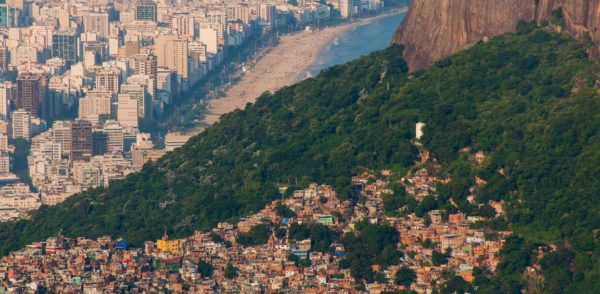
In the cities, even today, access to private property is unequal. As economist Paulo Rabello de Castro comments, there are about 15 million residences in Brazil without registered property rights. From restrictive municipal planning to high notarial costs, the distance between owning and registering a property in the country is blatant among the poorest and the middle class.
In Rabello’s accounts, when he conducted the “Cantagalo” project, helping to register real estate in the Rio de Janeiro favela with that name, these properties could have an estimated value of R$1 trillion, or in other words, about R$1 trillion in property rights are being denied to the poorest.
With no guarantees, this population becomes marginalized within the financial system, without access to the most basic tool of modern capitalism: credit. Without credit, or having to pay extortionate interest rates, small businesses are stifled right from the outset.
However, the exclusion of a large part of the population from the financial system is not new. If you are a little older, you may remember what it was like to live in a country with 80 percent monthly inflation. What you may not remember is how different was the access to protection devices against currency mega-devaluation.
While the wealthy and the middle class were able to protect themselves through “overnight” investments paying interest, the poorest part of the population paid almost single-handedly for the burden of inflation, the cost of which ranged between four and six percent of GDP. Not by coincidence, the end of hyperinflation with the Real Plan in 1994 represented a significant drop in poverty rates and extreme poverty, reaching 18 million people then.
Excluded from the financial system and struggling to obtain effective ownership of their property, the poorest in the country still have to face other challenges, such as the labor market and social security, where equality is definitely outdated.
As the IPEA (Institute of Applied Economic Research) showed some years ago, about 18 percent of inequality in the country is produced by unequal welfare rules. Until last year, a middle class worker would be able to retire at 54, while the poorest part retired at 65, due to age (a fact that tends to change, albeit slowly, after the Pension reform).
To make matters worse, those who retire earlier will end up receiving more, due to the contribution they generated for being employees registered under the CLT (Consolidated Labor Code).
On average, a worker with CLT registration earns up to 70 percent more than casual workers, and contributes, along with the employer, to ensure a greater retirement as well. The issue? Approximately 45 percent of Brazilians do not have a registered worker’s record book.
The reasons, of course, are well known. Registering an employee with all the rights guaranteed in the country means paying at least 66 percent of wages in labor costs. For every R$1100 that employers undertake to pay, they will disburse R$1820.
Considering the size of most small-sized Brazilian companies, this amount becomes virtually prohibitive. In all, about 70 percent of entrepreneurs earn up to three minimum wages.
Thus a Brazilian paradox is revealed. If one owns a large company, or even a startup, one will have to choose between hiring more formal workers, or expanding automation.
If the former is chosen, the company will incur high labor costs, and will invariably also have proceedings to deal with in labor courts. If it chooses more automation, it will have credit lines subsidized by the government.
An iconic case of this is Rio de Janeiro, where companies that created a few dozen jobs have received R$700 million in subsidies.
Along the way different hiring models, such as the famous PJ (Legal Person), can still be found to render services. Under this system, the costs for both the employer and the service provider are lower; this in turn leads to a number of workers who, despite providing regular service, are not legally recognized as formal employees with rights under the CLT.
As if unequal access to property, to education, to credit, to labor rights, to retirement and everything else were not enough, one should bear in mind that the source of such inequalities lies in the one and same place: the Treasury. The government coffers are mostly sustained by taxes on consumption rather than on income, which burden the poor more than the rich.
These regressive taxes often serve to help certain industries. Nevertheless, the effects are distinct even in terms of race.
In a study published in late June this year, economists Guilherme Hirata and Rodrigo Soares found a shocking fact about wage inequality between blacks and whites in Brazil. According to their analysis, the reduction in the wage gap between 1990 and 2000 was 18 percent, for a ten percent reduction in import tariffs.
Yes, you didn’t read it wrong. Even the cost imposed on imports affects the population differently, and once again the method that generates the most social costs is chosen.
In this bureaucratic tangle fraught with loopholes, alternatives to problems that we have devised ourselves are being created, and thus artificially broadening the inequality gap.
We choose to remain in an unequal country and ignore the social and economic costs of this decision.
Source: Infomoney
More: Brazil news in English, every day from The Rio Times.
This article was produced by The Rio Times’ automated newsroom system. How we use AI · Report an error
Read More from The Rio Times