Africa Intelligence Brief — Sunday, September 13, 2026
Executive Summary
Africa Intelligence Brief for September 13: at least 26 students killed in an eastern DR Congo school fire, Nigeria's parliament keeps its South Africa visit suspension, Algeria's UAE airspace closure holds, and Kenya's reserves rebound to US$15.25 billion.
Africa Intelligence Brief — Sunday, September 13, 2026
Key Facts
- The classroom. At least twenty-six students were killed in a school fire and stampede in eastern DR Congo, Africanews reports — a provisional toll that may still move as eastern reporting catches up.
- The boycott, continued. Nigeria’s parliament suspended official visits to South Africa on Friday over anti-migrant attacks, and the suspension has held through the weekend; Reuters reports evacuations of Nigerian citizens are under way.
- The airspace, continued. Algeria’s closure of its skies to UAE-registered aircraft, in force since midnight Friday, now shapes a weekend of Gulf shuttle diplomacy — Egypt’s foreign minister has spoken with both Algiers and Abu Dhabi.
- The reserves. Kenya’s foreign-exchange reserves rebounded to US$15.25 billion after a three-week slide, Xinhua reports, as the competition authority cleared Japan’s Asahi Group to take sole control of Diageo’s Kenyan assets.
- The claim. Fano fighters say they captured more than one hundred fifty Ethiopian soldiers in clashes in Amhara — a claim, unverified, but a measure of the north’s unrest.
- The map. Congo’s Ebola outbreak now spans sixty-one health zones, AllAfrica reports, citing WHO-linked figures — a live statistic this brief carries as a reporting snapshot, not a settled count.
Sunday in Africa divides into the news that screams and the news that accumulates. The scream is in the east of Congo, where a school burned and twenty-six students did not come home. The accumulation is everywhere else: a boycott entering its second day, a closed sky entering its second night, an outbreak entering its sixty-first health zone. The continent’s register today is grief with paperwork — mourning that must queue behind procedure.
Read in English, French, Arabic, Portuguese and Swahili, across the continent’s largest outlets and our own Africa desk.
Eastern Congo: The School That Burned
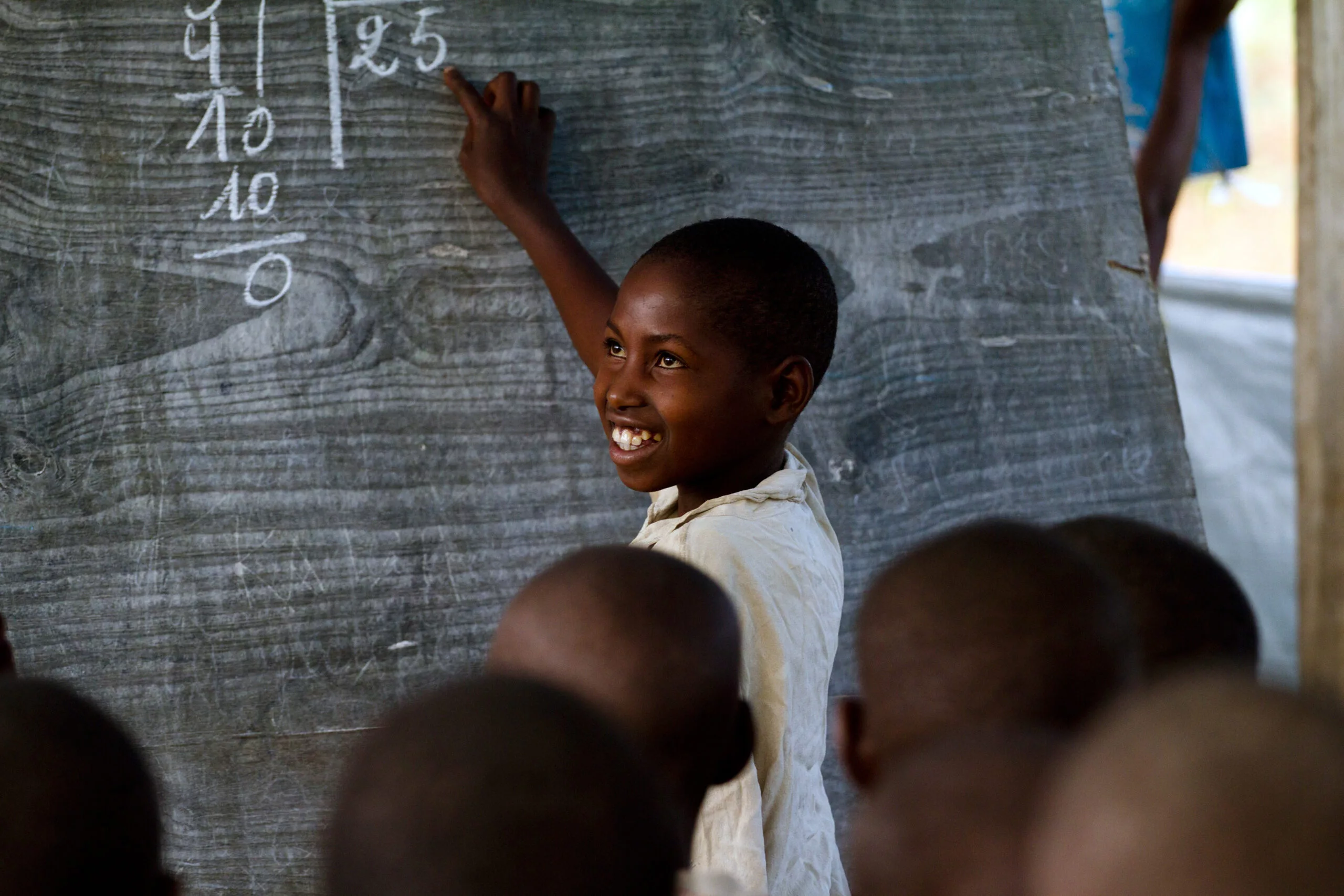
At least twenty-six students were killed in a fire and the stampede that followed it at a school in eastern DR Congo, Africanews reports, in a provisional count that may still move. Details remain sparse — the east is a place where news travels by foot before it travels by wire — and other outlets have carried figures between twenty-four and twenty-nine as reporting catches up.
The psychogram of the east is exhaustion that has stopped expecting rescue. This is the same east where Ebola has spread to sixty-one health zones by WHO-linked reporting, where burial teams work at their limit, and where a burned school will compete for a headline with an outbreak and three armed groups. A region can absorb one tragedy; what it cannot do is absorb them all at once, and yet that is the assignment.
The Giants, Day Two
Nigeria’s parliament suspended official visits to South Africa on Friday over anti-migrant attacks that counted Nigerians among their targets, the suspension held through the weekend, and Reuters reports the evacuation of Nigerian citizens is under way. A boycott that survives its first weekend is no longer a gesture; it is a policy with a calendar.
Pretoria spent the same weekend hosting the controversy rather than quelling it. President Ramaphosa used the moment to call on BRICS to defend multilateralism — a word that lands differently in a week when his own country’s streets made migrants unsafe. Abuja and Pretoria remain, as this brief wrote Saturday, the continent’s two giants prosecuting their anxieties through each other’s nationals; nothing today has adjourned that case.
Algiers, Abu Dhabi, And Cairo Between Them
Algeria’s rupture with the United Arab Emirates — ties severed, airspace closed to UAE-registered aircraft from midnight Friday, commercial flights to Algiers exempted until the end of 2026 — has drawn its first mediator. Egypt’s foreign minister discussed ties and regional developments with his Algerian and Emirati counterparts, Xinhua reports, which is Cairo’s way of standing between two friends without naming the fight.
The register across North Africa and the Gulf is the one this brief flagged Saturday: suspicion priced cheaper than contact. The exemption for commercial flights until the end of 2026 is the one clause written for reversal — a door left unlocked, on a timer. Watch who uses it first.
Nairobi’s Quiet Good Week
Kenya’s foreign-exchange reserves rebounded to US$15.25 billion after a three-week slide, Xinhua reports — a number that will not trend and matters more than most that will. The same week, the competition authority approved Japan’s Asahi Group to acquire sole control of Diageo’s assets in Kenya, a Friday decision that hands one of the country’s landmark breweries to Tokyo.
Nairobi’s temperament this Sunday is the rarest thing on today’s map: a capital with something to bank. Reserves recovering, a marquee asset changing hands cleanly, an airport strike from last fortnight already absorbed into memory. In a region ledgering grievances, Kenya is the line item in the black.
Amhara: The Number Nobody Can Check
Fano fighters claim to have captured more than one hundred fifty Ethiopian soldiers in clashes in Amhara, AllAfrica reports — a claim this desk cannot verify and prints as a claim. What is verifiable is the direction: the north’s war continues to produce numbers too large for peace and too vague for confirmation.
Addis Ababa’s silence on the claim is its own datum. A government that does not answer a capture announcement has decided the admission costs more than the rumour, and that arithmetic tells you where the war stands better than the figure itself.
What This Means From Latin America
The week’s most Latin American story out of Africa is a small institutional one: a Latin-African Chamber of Commerce has launched in Mexico, with Ivory Coast’s embassy involved and an ambassador conceding the relationship remains “marginal” despite its potential — trade between Mexico and Africa barely exceeds one per cent. A chamber of commerce is a bet that the map can be redrawn by invoices.
For Latin American readers the deeper parallel is the Nigeria–South Africa rupture: two regional giants whose citizens became each other’s question. Latin America knows this reflex from its own history of migration panics and knows how rarely the giant wins by closing the door. The one per cent between Mexico and Africa is what the open door was worth; the boycott is what a closed one costs.
What We Are Watching
- Whether the Congo school-fire toll moves as eastern reporting catches up with the event.
- Any South African response to the Nigerian boycott that goes beyond statements — a recall, a summit, a signature.
- Whether Cairo’s calls produce a Gulf-Africa de-escalation format, or only more calls.
- The commercial-flight exemption into Algiers, and whether traffic continues under it.
- Confirmation or collapse of the Fano capture claim in Amhara.
- The Ebola map after sixty-one health zones — and whether vaccination follows the new province.
A continent’s Sunday: a school fire in the east, a boycott in the south, a closed sky in the north, and in Nairobi the quiet anomaly of reserves that rose. Africa’s crisis headlines this weekend are all relationships — between capitals, between neighbours, between a state and its citizens — and the only relationship that improved is the one between Kenya and its balance sheet.
Frequently Asked Questions
What happened at the school in eastern Congo?
A fire broke out and a stampede followed, killing at least twenty-six students, according to Africanews. Eastern Congo’s distance from fast reporting means details and the toll itself may still move; this brief carries the figure as reported on Sunday.
Is the Nigeria–South Africa boycott new?
No — it was declared on Friday, and Saturday’s brief carried it as the lead. Today’s news is that it held through the weekend and that evacuations of Nigerian citizens are under way, which converts a protest into a standing diplomatic instrument.
Did Algeria really close its airspace to the UAE?
Yes, from midnight Friday, for UAE-registered civilian and military aircraft — with commercial flights to Algiers exempted until the end of 2026. Egypt’s foreign minister has since spoken to both sides, the weekend’s first visible mediation.
Why does Kenya’s reserve figure matter?
Because reserves are a country’s nerve. A rebound to US$15.25 billion after three weeks of decline tells creditors and markets that Nairobi’s external position is stabilising — unglamorous, and on this Sunday the continent’s only unambiguous good news.
Sources: Africanews, Reuters, Xinhua, AllAfrica, France 24, Al Jazeera, and the Rio Times Africa desk. Figures carried with their outlets and dates; conflicting counts are printed as conflicts.
This article was produced by The Rio Times’ automated newsroom system. How we use AI · Report an error
LatAm Markets: Live Signals → — real-time movers, turnover leaders and FX across Latin America.