IMF says Brazil will have poorer generation due to excessive school closures during pandemic
RIO DE JANEIRO, BRAZIL – The International Monetary Fund (IMF) estimates that incomplete learning during the health crisis, if not addressed, could reduce the average income of this generation of students by 9.1% over their lifetime.
This forecast places Brazil third among G20 countries, behind Indonesia, where the loss is estimated at 9.7%, and Mexico, which leads with 9.9%.
The report, released Tuesday (17), highlights that the impact of the pandemic on education is unprecedented and that the impact on the economy, inequality, and income of the population will be felt for a long time.
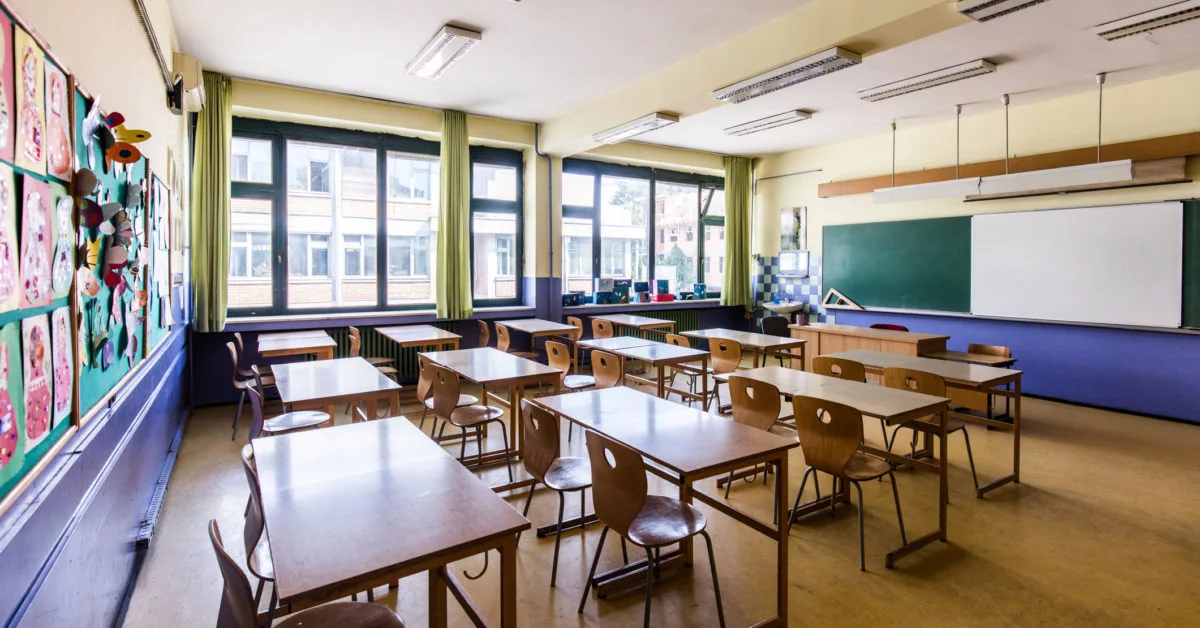
In 2020 and 2021 alone, 1.6 billion students worldwide will be affected by school absences. While all G20 countries were affected, learning losses disproportionately hit emerging economies, with even more severe consequences for vulnerable populations.
“Unless counteracted, the impact on human capital will lead to a decline in skill levels and overall output in the coming decades, which will increase inequality,” the document says.
The report recalls that school closures have already had a measurable impact on students. According to the IMF, several G20 economies have seen a decline in test scores, not to mention a significant drop in enrollment at all levels of education and the risk of dropping out of school.
Demographic projections suggest that the generation of students affected will account for up to 40% of the working-age population in G20 countries in the coming decades. With lower skills, the average income of workers is also expected to fall – unless the damage is mitigated by public policies, as the IMF points out.
Lower skill levels, for example, can inflate the informal labor market. And with the poorest families suffering the most significant learning loss, inequality is likely to increase.
But the impact on workers’ incomes may be underestimated. According to the IMF, the estimates do not consider secondary effects such as a reduction in job supply, as widespread disruptions in education can lower skill levels in the economy and hurt long-term growth.
For Naercio Menezes Filho, a professor at Insper, the IMF projections show what was already expected. In his view, Brazil is in a less favorable position because it has closed its schools for longer.
The economist also points out that the wage gap associated with education is very high in Brazil. According to him, few countries globally have such a strong correlation between better schooling and good salaries.
“A person can only get a big increase in income in Brazil if they go to higher education – and it will go down in the long run,” he says. “If these kids don’t learn to read, write and do math quickly, they won’t make it. So it’s a huge impact,” he adds.
He says the economic impact of school closures is not limited to the students affected. Even those who were able to continue their studies could be affected, as the economy’s productivity is impacted.
But the most critical factor, he said, is the increasing number of people who will have to rely on government social programs.
“Where will the money from Auxílio Brasil and the Benefício de Prestação Continuada come from for more people? From the taxes that come out of the pockets of the richest,” he says. “Even if [the problem] doesn’t directly affect people in public schools, there will be an indirect increase in the tax burden.”
For Guilherme Lichand, a professor of welfare economics and child development at the University of Zurich, the report is friendly to what could happen in Brazil.
One of the reasons, he said, is that the document does not take into account school dropouts. “We can’t see that there because it’s more than just a loss of learning: it’s a break in development,” he says. “The situation is more critical than the report indicates,” he adds.
The researcher stresses that the Fund’s estimate is counterfactual, meaning that it does not mean that incomes will fall by 9% compared to today. Incomes may increase, but they will grow less than without this phenomenon.
“We have been downgraded in terms of the possible future. The question that remains is what can we do to get closer to what could have been,” he says.
In this regard, Lichand is optimistic, citing a few “ways out.” One is to focus on the basic skills students should have learned during the health crisis but didn’t. Another is tutoring based on student performance and cash transfer programs to encourage retention.
“To say this is a lost generation is not good because it’s not true. We need to make the right policy decisions to restore the future of these generations,” he says.
More: Brazil news in English, every day from The Rio Times.
This article was produced by The Rio Times’ automated AI newsroom. Editorial responsibility: Matthias Camenzind, Publisher and Editor-in-Chief. The Rio Times also runs Ask Rio Times, which answers from 100,000+ of our own articles, the daily Latin America Power Map, and prediction-market odds on elections and markets.. How we use AI · Report an error
Brazil runoff, Sunday, October 25: When is the Brazil runoff election. Latest: Brazil runoff polls, Flávio 51%, Lula 49%.