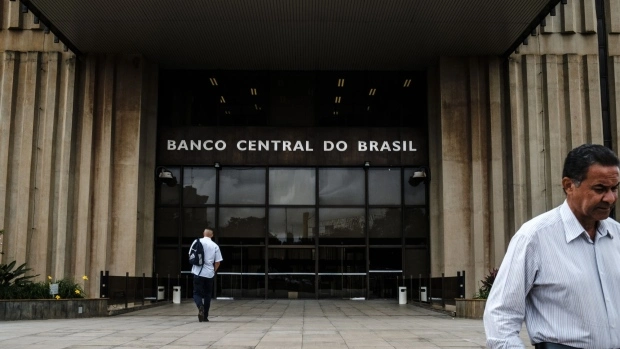
Brazil’s Central Bank, in a recent meeting, indicated fewer rapid interest rate cuts due to high long-term inflation expectations.
The bank stated that significant positive surprises would be needed to change this pace.
They aim to stabilize inflation expectations, currently above the 3% target for 2024 to 2026. Some board members worry about these steady projections.
They believe a firm approach will reduce these expectations. This approach will also bolster the institution’s credibility.
Roberto Campos Neto leads the bank’s policymakers. They plan to ease monetary policy as service inflation drops.
Half-point rate cuts will continue until at least December. Prior, an aggressive strategy had elevated borrowing costs to six-year highs.
Inflation is rising, but service prices and some core metrics are slowing. Despite high rates, Brazil’s economy remains strong.
A bumper harvest and strong labor market have exceeded early-year forecasts.
Investors grow anxious about Brazil’s fiscal outlook. The government is taking steps to increase revenue and end next year’s primary fiscal deficit.
The bank stressed the need to achieve these fiscal goals.
Brazil follows several Latin American countries in easing monetary policy. Peru, Chile, Uruguay, and Paraguay have also relaxed their monetary stances recently.
Background
slowing the rate cuts, it signals a hedge against long-term inflation, an issue that has historically plagued Brazil’s economy.
The focus is clearly on stabilization, as accelerating rate cuts could spur further inflation, undermining investor trust.
Moreover, there’s a tactical effort to anchor inflation expectations around the 3% target.
By doing so, the bank aims to maintain the value of the national currency and attract foreign investments.
The government’s fiscal promises for the upcoming year will also be a significant factor.
If it fails to meet targets, the Central Bank might have less room to maneuver, potentially leading to more stringent measures.
More: Brazil news in English, every day from The Rio Times.
This article was produced by The Rio Times’ automated newsroom system. How we use AI · Report an error
Read More from The Rio Times