Opinion: against the politicization of the indigenous issue in Brazil
By Luciano Trigo
(Opinion) Author of books such as the classic ‘Os índios no Brasil: passado, presente e futuro’ (Indigenous peoples in Brazil: past, present and future) and president of the National Foundation of Indigenous Peoples (FUNAI) during the first Lula administration (2003-2007), anthropologist Mércio Gomes is recognized as one of the greatest authorities on the subject of indigenism in the country.
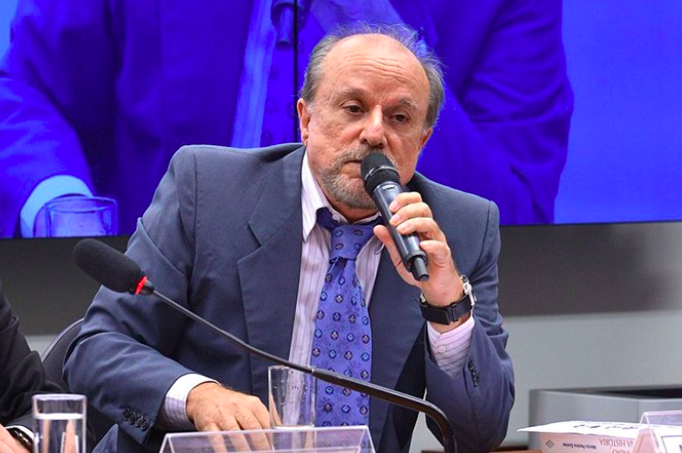
In this interview, Mércio, who recently published six articles on the Yanomami health crisis on Portal360, defends a less ideological discussion about the tragedy of malnutrition in Roraima, revealed by the media.
“I think there should be less partisan politicization of the indigenous peoples,” he says.

In a recent article, you wrote that the Yanomami tragedy has been “staged” since January 20, 2023, to gain political points.
Whose major responsibility is this tragedy? Are all the recent governments jointly responsible?
MÉRCIO GOMES: I called it “staging,” remembering that, in his first government, Lula took a huge entourage to see the “extreme poverty” in the Northeast, including a little town called Guaribas, in Piauí.
Now he has taken an even bigger motorcade to see the ‘Casa de Saúde do Índio’ (Indigenous Healthcare Centre) in Boa Vista, based on a complaint that the Yanomami are experiencing a health calamity.
They didn’t visit any Yanomami villages. It’s not known how badly Covid 19 has affected them, for instance.
In all this, there was, and is, a clear intention to accuse the Bolsonaro government of committing genocide.
As long as this narrative sounds good in the media, they will continue their media activities – until everything falls into oblivion.
The Yanomami have suffered from outbreaks of disease and epidemics since they first began to be assisted in the 1960s, passing through several governments and health policies.
The Yanomami’s situation is alarming but has been so repeatedly.
There is a very high infant mortality rate, and morbidity is high.
However, they have been growing for some decades, and their culture is very resilient.
The Yanomami deserve more serious and consistent consideration.
How did your experience as president of FUNAI for almost four years change your perception of the indigenous issue in Brazil?
MÉRCIO: First, I understood that indigenous peoples are more important to Brazil than people carelessly think.
That they are respected for the simple fact that they are autochthonous.
Deep down in our unconscious, Brazilians know they are descended from indigenous peoples and are proud of it.
Second, indigenous peoples’ physical and political survival has been consolidated since the 1980s.
You can not keep victimizing forever.
Third, Brazil recognized and demarcated a good part of its territory for the indigenous peoples.
These aspects form a new reality from which the State, FUNAI, or whatever organ it may be, must position itself in its defense and assistance.
The indigenous policy has to renew itself and act with the medium and long term in mind, no longer in an urgent and emergency way, and therefore in a haphazard way, as it has been doing.
The official body and Brazil have to absorb the indigenous talents, not because it is a question of political correctness, but because many have the notion of what can be done in favor of the indigenous cause in general and must take responsibility in their hands.
What this notion is, we do not know for sure. It would be a kind of integration of the indigenous peoples with political-cultural autonomy, but I don’t know how this can be done.
“Indigenist policy has to renew itself and act thinking in the medium and long term, no longer in an urgent and emergency mode, and therefore in a haphazard way, as it has been doing.”
It seems to me that there is a clash of visions.
One advocates the assimilation of indigenous people into society, even allowing them to benefit from the controlled economic exploitation of the riches of their territories, and another advocates the protection and even isolation of indigenous people to preserve their culture.
Do you agree?
MÉRCIO: Honestly, I think this dilemma has already expired. They are both things simultaneously, in a balance that only time will calibrate.
The important point is to preserve the indigenous lands, which means: keeping them exclusive to the indigenous peoples, having schools, health centers, infirmaries, and even hospitals, in the most populated lands, as well as economic programs, and with access to appeal to more effective instances in neighboring cities.
Opportunities should be promoted for talented young men and women to study in higher education institutions to better command their ethnic destiny in Brazil and manage their land and natural resources.
There should be less partisan politicization of indigenous peoples.
They should have the feeling that they belong to their ethnic groups and to a larger entity which is Brazil.
What solutions do you see for the Yanomami problem in the short and long term?
MÉRCIO GOMES: If the government decides against gold mining, be it by miners or by mining companies, the first step is to extricate the miners and maintain a strong surveillance scheme, greater than the one that existed before 2009, when they changed the structure of FUNAI, extinguished the indigenous posts inside the indigenous areas and dismantled the surveillance posts that protected the points where there was the greater entry of miners.
They should now create an exclusive assistance program for the Yanomami, with a medium-term duration – say, 20 years.
They require special attention due to their population size and the spacing of the villages over a vast territory.
Such a program must involve the Yanomami people and the state and private agencies that assist them, including the armed forces – under the supervision of FUNAI or a higher body.
This is difficult anthropological engineering to achieve and will test the wisdom of Brazilian indigenism and the skills of all. It is not only by the goodwill that the situation of the Yanomami will be improved.
Speaking about the Yanomami issue last Saturday, former president Bolsonaro insinuated that there are international interests in the mineral wealth of the territories demarcated as indigenous reserves.
“If no wealth existed (in Roraima), it wouldn’t be demarcated as indigenous land. The interests are many. (The Roraimans) are the poorest people in the richest soil in the world.”
How do you analyze Bolsonaro’s statement? Is he right? Or is he wrong?
MÉRCIO: There is a lot of interest in indigenous lands on the part of everybody, including international economic and geopolitical interests.
But I don’t think the Yanomami Indigenous Land was demarcated and homologated for that reason.
It was demarcated due to political and cultural pressure from Brazilian society, as other lands were also demarcated.
This does not mean economic and geopolitical interest in this indigenous land has diminished.
But the fact that it has been officially demarcated makes it better protected, and it will not be easy to deconstruct it.
If its mineral and timber riches are to be exploited, I believe it must be by some more rational means than those we have seen so far.
As for the idea that one day the UN will propose the dismemberment of this land and the corresponding part of Venezuela to create a protectorate, I find this frankly unreal.
However, we must be vigilant.
Nobody can doubt history, nor can they guess what might happen.
Brazil must maintain its political and moral strength regarding such ideas or pretensions.
“On the sovereignty aspect, the left and the right think alike. There is a certain feeling of paranoia. I think they are wrong for wanting to project their views of history onto Brazilian reality and current affairs.”
Some left-wingers have already been concerned with the risk of losing sovereignty in the Amazon – such as former Defense Minister Aldo Rebelo, who associates the indigenous issue with this theme.
How do you evaluate the theses of Rebelo and other left-wing representatives worried about losing sovereignty in the region?
MÉRCIO: In this aspect, the left and the right think alike. There is a certain feeling of paranoia here.
I think they are wrong for wanting to project their views of history onto Brazilian reality and today.
At least this vision should not stop what is urgent and necessary, which is to protect and respect indigenous lands and promote indigenous peoples’ cultural and economic autonomy.
What is your evaluation of the actions of national and foreign NGOs in the region?
What concrete benefits have they brought to the indigenous people?
And why didn’t they speak up sooner about the humanitarian crisis of the Yanomami?
MÉRCIO: As an anthropologist of Rondonian stock, I have my suspicions.
I would like FUNAI to prevail in its indigenous activities over these NGOs.
But they exist; they were created in a time of fragility of the indigenous body, and they have planted a big foot in many indigenous lands.
I believe they were important during the demarcation process of some indigenous lands and, to a lesser extent, on the health issue.
However, there is an element of amateurism in this national and international nongovernmental indigenism.
In general, while respecting the sacrifice of some, their sense of responsibility wanes when the situation gets difficult.
I think that at this moment, they should be called to participate in the renewal of Brazilian indigenism and know what space they can have.
The same should be said about the Christian missions.
But, for this to happen, FUNAI has to gain moral standing with the indigenous populations and Brazilian society in general.
Regarding the Christian missions, what did you think of the ordinance forbidding the access of religious people and using images with references to religion by people entering the villages?
MÉRCIO: I was surprised because there are many missions in indigenous lands, even competing with each other and even in the state of Roraima.
I don’t know if this ban aims to affect any of them. I believe the missions in Brazil have been less doctrinaire than those in Venezuela.
In many cases, the missions are more participative and responsible than the NGOs.
In any case, I don’t think the Yanomami need Christian indoctrination, regardless of where it comes from.
If one day they want to, then it must be their own decision.
How do you see the growing interest of foreign private funds in Amazonia, like BlackRock, which is being reported naively, as if these funds were only driven by kindness?
MÉRCIO: I take it with one foot back. Surely there is more to it than economic interest.
Money incites power. If it is only the economic aspect, we can face it.
As for how to face what might be behind it, I believe that Brazil as a whole is becoming increasingly outdated in preserving its sovereignty, and not only in the economic aspect.
Shouting, fussing, kicking, and screaming are not serious attitudes.
It is necessary to have the capacity to know what is happening and is about to happen in the world and the great changes that are emerging due to the great concentration of capital and knowledge in a few global companies.
It is important to have a critical attitude towards some international institutions, open-handed patrons, and benefactors.
Either Brazil leaps in higher education and science, or it will become demilinguished in the coming years.
I don’t want to see Brazil as a big fat boy always enjoying the carnival.
How to deal with the issue of garimpo? Prohibit? Regulate it?
Wouldn’t the big mining companies, who act legally, impact the environment more than the illegal miners?
That’s what a report published a year ago by the Articulation of the Indigenous Peoples of Brazil (APIB) suggests …
MÉRCIO: I don’t know what the present government intends to do about mining and goldmining on indigenous lands.
There have already been several proposals to regulate mining on indigenous lands, including the last one during the second mandate of President Lula.
The bill was detonated in Congress, evidently by conflicting interests of politicians but also by pressure from indigenous peoples, their friends, and NGOs.
It is something to be discussed seriously and with political responsibility.
I think it will eventually be regulated, but I don’t know how or when. I just hope it doesn’t happen the way it does now.
In all this debate, isn’t it necessary to listen more carefully to what the indigenous people themselves have to say?
What are the demands of the indigenous leaders? Do they have divergent opinions among themselves?
MÉRCIO: Well, in this aspect, the government has already come up with the answer.
It created an exclusive ministry for indigenous peoples, nominated two indigenous leaders to head the ministry and the FUNAI, and is nominating many indigenous persons in almost all positions of trust and power.
I hope it works, even with some eventual mishaps.
However, to work well, the government has to talk to the indigenous peoples seeking economic alternatives using their lands and natural resources, usually in consortium with private companies.
They will not back down; I think many other indigenous peoples would also like economic autonomy.
The other two big issues – health and education – should be guided by people with knowledge and experience – and definitely, politicization and apparatization of the instances of power and action should be avoided.
With information from Gazeta do Povo
Editorial responsibility: Matthias Camenzind, Editor-in-Chief · Editorial standards · Report an error
Read More from The Rio Times