The Debasement Trade Is the Tree. Financial Infrastructure Is the Forest.
OPINION · DIGITAL ASSETS
Opinion
A signed column by an outside contributor. The views are the author’s own. Her firm holds positions in two of the companies named here; both are disclosed at the foot of the piece.
Bitcoin’s August rally was a debt-market story wearing a bitcoin chart. The build-out that matters is happening on the rails beside it, and Brazil is where it shows.
Bitcoin and digital assets remain a highly volatile asset class, acutely sensitive to the macro implications of interest rates. In the second half of August, in the midst of a prolonged crypto winter, bitcoin rose sharply — some 23 percent in a single week — and has held that gain. Because of bitcoin’s outsized share of total crypto market value, what traders call bitcoin dominance, most other large digital assets rose alongside it.
The catalyst is straightforward. Treasury Secretary Scott Bessent doubled the size of the Treasury’s long-end buyback operations on 19 August, from US$2 billion to at least US$4 billion apiece, with the larger purchases scheduled to begin on 9 September — aimed at easing pressure on the long end of a yield curve under real strain. Markets read the move as a tacit admission that the government’s own debt picture has a problem, reviving what traders call the debasement trade: capital rotating into hard assets as a hedge against currency devaluation. Ray Dalio made the same read explicit two days later when he wrote that he expects “non-government-produced monies like gold and Bitcoin to do relatively well,” advising investors to underweight bonds while holding gold and, in his words, “a bit” of Bitcoin.
Despite the extraordinary adoption we have seen across the Americas, fuelled by genuine regulatory progress and real demand to modernise outdated financial services infrastructure, one cannot say that August’s rally was linked directly to that. That move was a confirmation of the market’s appetite for hard assets and the debasement trade specifically — a debt-market story wearing a bitcoin chart.
The Tree That Hides the Forest
The forest is the rapid build-out of blockchain-based infrastructure for financial services, and it has nothing to do with one Treasury Secretary’s bond math. It is worth being precise about the underlying technology: bitcoin itself, owing to its technical limitations and volatility, has not emerged as a payment platform. For retail and speculative investors it functions as a store of value, not as a settlement rail. The infrastructure actually being adopted runs largely on rails adjacent to bitcoin — Ethereum, Solana and other chains — and its build-out is already visible and well documented.
In the United States, that build-out spans payments and market structure alike. Visa has launched live stablecoin settlement domestically and is backing Open USD, a new stablecoin platform whose more than 140 corporate participants include Stripe, Mastercard, BlackRock and American Express — a direct challenge to the market share Tether and Circle have held. JPMorgan has expanded Kinexys, its blockchain settlement network, issued its own JPM Coin deposit token, and completed the tokenisation of both a money market fund and a private equity fund. The Depository Trust and Clearing Corporation began production trades in tokenised stocks and Treasuries in July with JPMorgan, BlackRock and Goldman Sachs among the counterparties. Robinhood has gone furthest toward the retail end of that spectrum, launching its own layer-2 blockchain, Robinhood Chain, in July, with tokenised US stocks trading on it around the clock — though not for US retail investors, who cannot buy them. None of this activity required any view on bitcoin’s price.
What Is Being Built in Latin America
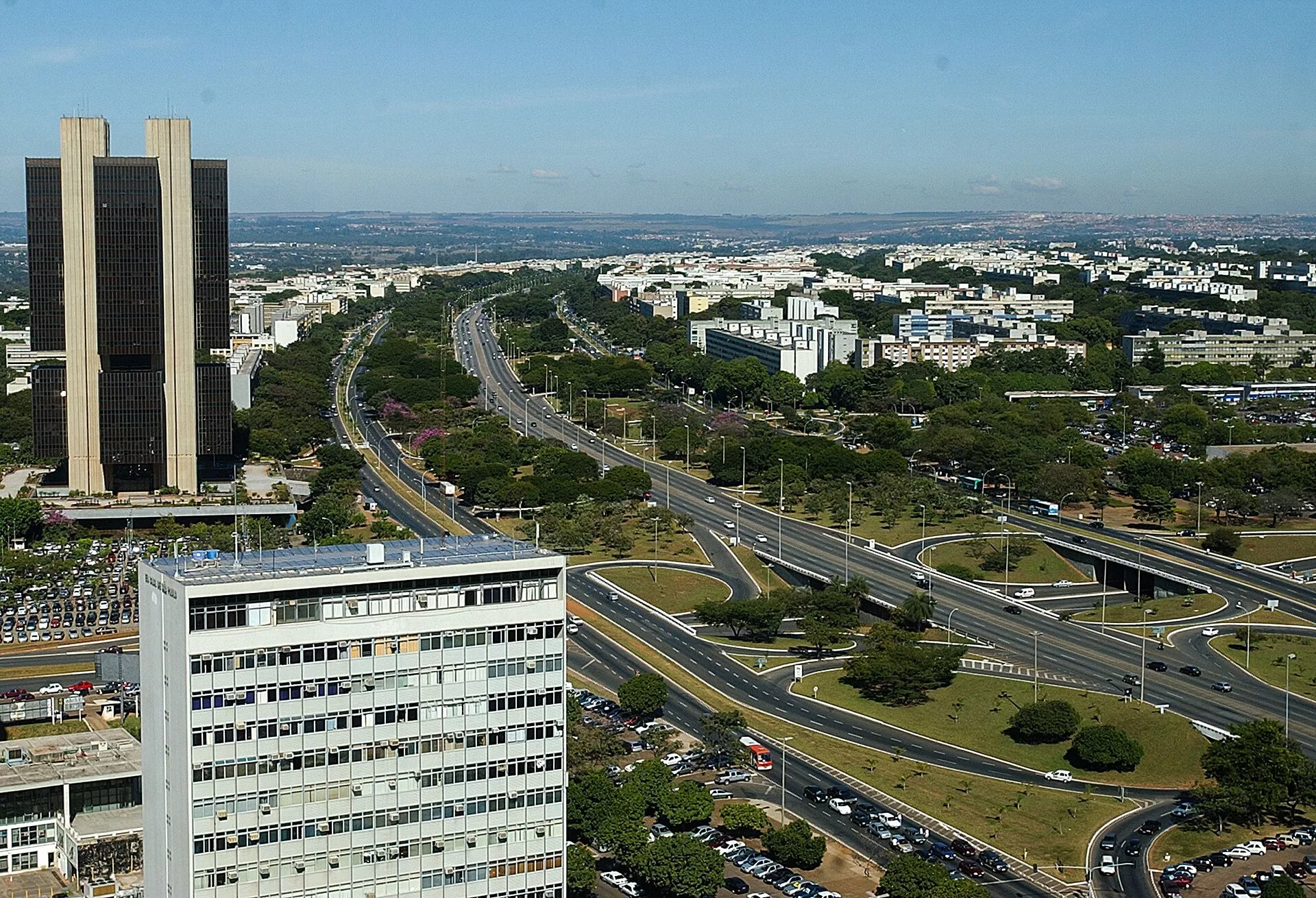
Latin America, and Brazil in particular, shows the same build-out advancing under an increasingly formal regulatory perimeter. Brazil’s central bank now requires every exchange, broker and custodian to hold formal authorisation. Bradesco launched an institutional custody platform for cryptocurrencies, stablecoins and tokenised assets on 12 August 2026, with the exchange Foxbit as its first client. Itaú has offered in-house crypto custody and trading through Itaú Digital Assets since December 2023. Both sit inside Brazil’s regime for virtual asset service providers under central bank resolutions 519 to 521, which took effect on 2 February 2026.
Nubank has said it will pilot dollar-pegged stablecoin payments on its credit cards, and has flagged tokenised deposits as the harder problem, since those balances also fund client credit. Bitso, the largest crypto exchange headquartered in Mexico City, now serves more than nine million users across Mexico, Argentina, Brazil and Colombia, letting customers hold savings in dollar-denominated stablecoins, send remittances, and spend crypto directly through a Visa debit card.
Live Market IntelligenceCrypto — Live Market Board
Rio Times · Live Market Intelligence
Crypto — Live Market Board
-0.26%
| Instrument | Last | Change | YoY | Prev. | High | Low | Volume |
|---|---|---|---|---|---|---|---|
| BTC | 63,384 | -0.26% | -47.24% | 63,552 | 64,346 | 63,305 | 22,774,743,040 |
| ETH | 1,886 | +0.26% | -58.90% | 1,881 | 1,920 | 1,879 | 7,916,475,392 |
| SOL | 75.89 | -0.40% | -60.44% | 76.20 | 76.99 | 75.39 | 1,473,821,056 |
| XRP | 1.01 | -1.15% | -69.07% | 1.02 | 1.02 | 1.01 | 1,144,044,416 |
| BNB | 609.60 | -1.12% | -26.81% | 616.50 | 619.30 | 609.23 | 1,266,706,432 |
| ADA | 0.18 | -1.98% | -78.22% | 0.19 | 0.19 | 0.18 | 238,085,632 |
| DOGE | 0.07 | -1.56% | -70.00% | 0.07 | 0.07 | 0.07 | 553,256,192 |
| AVAX | 6.38 | +1.04% | -74.11% | 6.32 | 6.42 | 6.21 | 248,470,560 |
| LINK | 8.77 | -0.06% | -62.73% | 8.77 | 8.87 | 8.68 | 317,054,880 |
| DOT | 0.78 | -0.75% | -81.11% | 0.79 | 0.80 | 0.78 | 43,490,492 |
| LTC | 45.08 | -0.85% | -65.45% | 45.47 | 45.59 | 44.98 | 143,727,712 |
| BCH | 213.85 | +0.10% | -65.44% | 213.64 | 215.69 | 212.54 | 137,956,688 |
| TRX | 0.34 | +0.28% | -4.73% | 0.33 | 0.34 | 0.33 | 436,576,064 |
| XLM | 0.16 | -1.33% | -64.46% | 0.16 | 0.16 | 0.16 | 89,559,864 |
| HBAR | 0.07 | -0.53% | -74.67% | 0.07 | 0.07 | 0.07 | 22,546,186 |
| NEAR | 1.65 | +2.42% | -40.55% | 1.62 | 1.68 | 1.61 | 187,591,264 |
| ATOM | 1.40 | -2.36% | -70.15% | 1.44 | 1.44 | 1.40 | 18,626,964 |
| AAVE | 89.06 | +0.93% | -72.33% | 88.24 | 90.20 | 88.19 | 129,099,704 |
Where That Leaves Investors
It depends on what, specifically, they hold.
Public markets exposure — tokens like Bitcoin and Ethereum accessed through crypto exchanges, ETFs, or listed digital asset treasury vehicles — is, whether investors recognise it or not, a position highly influenced by the debasement trade and by bitcoin’s dominance of the broader market. In Brazil, OranjeBTC completed a reverse merger in early October 2025, into the listed education company Intergraus on the B3 exchange, to become Latin America’s largest publicly traded bitcoin treasury company — giving Brazilian investors bitcoin exposure through an ordinary brokerage account.
Private exposure through venture capital or strategic investment is a different proposition. A substantial cohort of start-ups is building the underlying rails themselves, in payments, custody, trading and neobanking, and that is where the region’s regulatory and infrastructure progress shows up first, well before it is reflected in any token’s price. The picks and shovels of the digital assets revolution are still being built, and that is where the opportunity lies for Latin America to innovate through its start-ups while working with, and benefiting from, the distribution of the existing financial services firms.
About the author
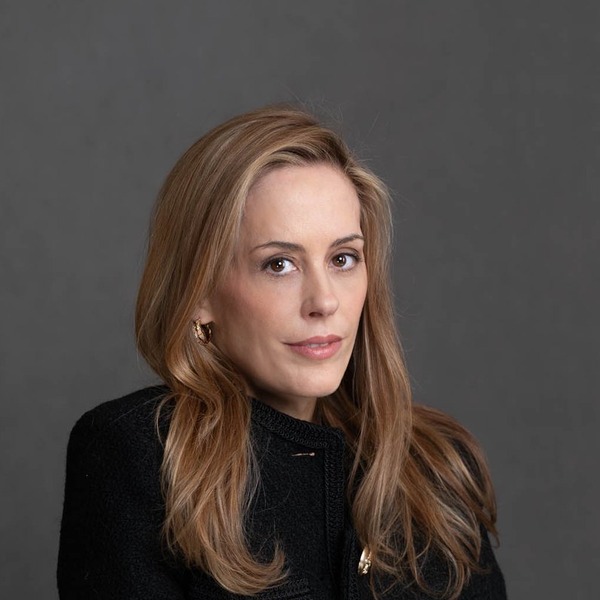 |
Vanessa Grellet is co-founder and managing partner of Arche Capital Management, a board member of the Enterprise Ethereum Alliance, and the author of Digital Assets and Crypto for Investors: Your Practical Guide to Building a Diversified Portfolio (Wiley). |
Disclosure. In Latin America, Arche Capital is an investor in OranjeBTC, which this column names, and in limited, a neobank operating in Mexico and across the region. It holds further investments in payments and stablecoin infrastructure, privacy, data and staking; its portfolio is listed on its website. Arche Capital holds no position in any other company named in this column.
Sources: US Treasury — long-end buyback sizes · CNBC — Dalio on gold and bitcoin · Open USD — launch partners · DTCC — first tokenised production trades · Robinhood Chain · Nubank — stablecoin card pilot · BCB resolutions 519–521 · CoinDesk — OranjeBTC on the B3
Editorial responsibility: Matthias Camenzind, Editor-in-Chief · Editorial standards · Report an error
Read More from The Rio Times