The U.S. Southern Command (SOUTHCOM) is set for a leadership change. Admiral Alvin Holsey will replace General Laura J. Richardson as commander on November 7.
The U.S. Senate confirmed Holsey’s appointment on September 24, and he will be promoted to four-star admiral before taking command.
Holsey, 59, currently serves as Southcom’s deputy commander. He joined the Navy in 1988 through the Naval Reserve Officers Training Corps at Morehouse College.
His education includes a Computer Science degree and a Master’s in Administration from Troy State University. As a naval pilot, Holsey flew SH-2F Seasprite and SH-60B Seahawk helicopters on various missions.
In addition, he has commanded an Anti-Submarine Helicopter Squadron and the USS Makin Island, an amphibious assault ship.
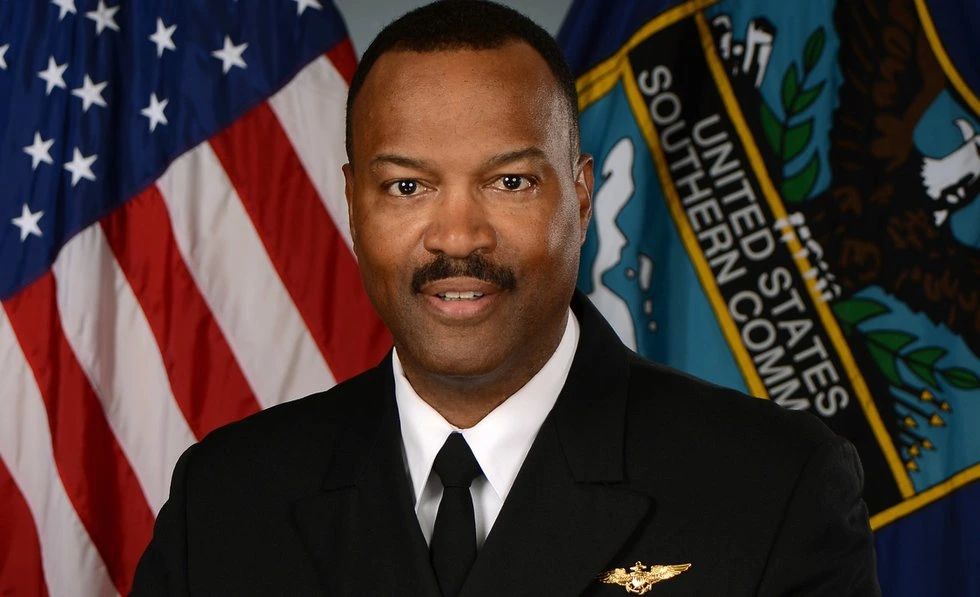
General Richardson, who has led Southcom since October 2021, will retire after 40 years of military service. Her tenure focused on fighting transnational criminal organizations and countering malign state actors in the region.
SOUTHCOM Leadership Change
SOUTHCOM oversees U.S. military operations in Central America, South America, and the Caribbean, excluding U.S. territories, Mexico, and the Bahamas. It plays a key role in regional security and cooperation.
This leadership change comes amid complex challenges in Latin America, including political instability, migration issues, and growing Chinese and Russian influence.
Post-pandemic economic difficulties have further complicated the situation. Holsey’s naval background may bring a new focus on maritime security to SOUTHCOM.
However, the organization’s core mission of countering transnational threats and providing humanitarian assistance is likely to remain unchanged.
The transition offers an opportunity for the U.S. to reassess its engagement with Latin American partners. Observers will watch closely to see how Southcom’s strategies may evolve under Holsey’s leadership.
As Holsey prepares to take command, SouthCOM will continue strengthening alliances with South American countries. In short, his unique experience may offer fresh perspectives on addressing the region’s complex security challenges.
This article was produced by The Rio Times’ automated newsroom system. How we use AI · Report an error · Editorial responsibility: Matthias Camenzind, Editor-in-Chief
Read More from The Rio Times