IBOV 177,583.27 ▲ 1.09% IPSA 11,347.98 ▼ 0.86% IPC MEX 65,048.39 ▼ 0.67% MERVAL 2,999,080 ▲ 0.66% COLCAP 2,467.23 ▲ 0.38% BVL PERÚ 59,928.30 ▼ 0.14% USD/BRL5.19▼ 0.16% USD/MXN17.00▼ 0.22% USD/CLP934.34▲ 0.31% USD/COP3,228▲ 0.86% USD/PEN3.37▲ 0.56% USD/ARS1,509▼ 0.25% USD/UYU40.29▲ 0.05% USD/PYG5,892▼ 0.13% USD/BOB11.84▲ 0.51% USD/DOP58.64▲ 0.05% USD/CRC446.47▼ 0.04% USD/GTQ7.62▼ 0.02% USD/HNL26.84— 0.00% USD/NIO36.62— 0.00% USD/VES793.00▼ 0.13% USD/PAB1.00— 0.00% USD/BZD2.00— 0.00% USD/JMD 157.28 — 0.00% USD/TTD6.69▼ 0.37% EUR/BRL6.02▼ 0.12% BRENT 88.88 ▼ 0.03% WTI 83.11 ▼ 0.11% IRON ORE 161.91 — — COPPER 6.61 ▲ 0.03% GOLD 4,461 ▲ 1.78% SILVER 65.59 ▲ 1.26% SOY 1,184 ▲ 3.20% CORN 480.50 ▲ 10.02% WHEAT 655.00 ▲ 3.93% COFFEE 317.25 ▼ 5.51% SUGAR 16.43 ▼ 1.79% ORANGE JUICE 138.55 ▼ 0.47% COTTON 85.03 ▲ 2.33% COCOA 5,719 ▲ 3.18% BEEF 223.60 ▼ 3.93% CATTLE 339.10 ▼ 3.16% LITHIUM 75.20 ▲ 1.47% PETR4 41.64 ▼ 0.05% VALE3 72.97 ▲ 0.83% ITUB4 38.60 ▼ 1.03% BBDC4 16.85 ▲ 0.36% ABEV3 14.89 ▼ 0.80% BBAS3 19.37 ▲ 0.47% B3SA3 14.26 ▼ 0.21% WEGE3 47.59 ▲ 0.49% PRIO3 59.14 ▼ 0.19% SUZB3 41.33 ▲ 2.35% RENT3 34.68 ▼ 0.09% AZZA3 15.89 ▼ 2.63% CSAN3 3.22 ▼ 1.83% RAIZ4 0.25 — 0.00% PCAR3 2.75 ▼ 0.36% GMAT3 3.65 ▼ 1.08% PSSA3 48.13 ▼ 0.54% CVCB3 1.33 ▼ 2.92% POSI3 3.36 ▲ 2.44% SLCE3 13.34 ▲ 0.30% NATU3 8.14 ▼ 0.73% IBOV 177,583.27 ▲ 1.09% IPSA 11,347.98 ▼ 0.86% IPC MEX 65,048.39 ▼ 0.67% MERVAL 2,999,080 ▲ 0.66% COLCAP 2,467.23 ▲ 0.38% BVL PERÚ 59,928.30 ▼ 0.14% USD/BRL 5.16 ▲ 0.01% USD/MXN 17.06 ▼ 0.24% USD/CLP 913.98 ▲ 0.04% USD/COP 3,140 ▲ 0.03% USD/PEN 3.36 ▼ 0.66% USD/ARS 1,493 ▲ 0.10% USD/UYU 40.27 ▲ 1.24% USD/PYG 5,939 ▲ 1.68% USD/BOB 11.64 ▼ 0.76% USD/DOP 58.34 ▲ 1.25% USD/CRC 445.92 ▲ 0.89% USD/GTQ 7.62 ▲ 2.21% USD/HNL 26.79 ▲ 1.57% USD/NIO 36.62 ▲ 0.69% USD/VES 762.44 ▼ 0.13% USD/PAB 1.00 — 0.00% USD/BZD 2.00 — 0.00% USD/JMD 157.28 — 0.00% USD/TTD 6.70 ▲ 0.61% EUR/BRL 5.95 ▲ 1.01% BRENT 88.88 ▼ 0.03% WTI 83.11 ▼ 0.11% IRON ORE 161.91 — — COPPER 6.61 ▲ 0.03% GOLD 4,461 ▲ 1.78% SILVER 65.59 ▲ 1.26% SOY 1,184 ▲ 3.20% CORN 480.50 ▲ 10.02% WHEAT 655.00 ▲ 3.93% COFFEE 317.25 ▼ 5.51% SUGAR 16.43 ▼ 1.79% ORANGE JUICE 138.55 ▼ 0.47% COTTON 85.03 ▲ 2.33% COCOA 5,719 ▲ 3.18% BEEF 223.60 ▼ 3.93% CATTLE 339.10 ▼ 3.16% LITHIUM 75.20 ▲ 1.47% PETR4 41.64 ▼ 0.05% VALE3 72.97 ▲ 0.83% ITUB4 38.60 ▼ 1.03% BBDC4 16.85 ▲ 0.36% ABEV3 14.89 ▼ 0.80% BBAS3 19.37 ▲ 0.47% B3SA3 14.26 ▼ 0.21% WEGE3 47.59 ▲ 0.49% PRIO3 59.14 ▼ 0.19% SUZB3 41.33 ▲ 2.35% RENT3 34.68 ▼ 0.09% AZZA3 15.89 ▼ 2.63% CSAN3 3.22 ▼ 1.83% RAIZ4 0.25 — 0.00% PCAR3 2.75 ▼ 0.36% GMAT3 3.65 ▼ 1.08% PSSA3 48.13 ▼ 0.54% CVCB3 1.33 ▼ 2.92% POSI3 3.36 ▲ 2.44% SLCE3 13.34 ▲ 0.30% NATU3 8.14 ▼ 0.73%
since 2009
Monday, August 31, 2026

Africa Southern Africa

Zimbabwe’s Currency Crisis Deepens: 42% Devaluation of the ZiG

By · September 27, 2024 · 2 min read

Africa Intelligence

A daily Africa read from a Latin American newsroom. Free.

By subscribing you agree to our privacy policy. We never share your email.

Zimbabwe’s economic woes have intensified as the country’s central bank devalued its recently introduced currency, the Zimbabwe Gold (ZiG), by a staggering 42%.

This drastic move, announced on Friday, September 27, 2024, marks the latest chapter in Zimbabwe’s tumultuous monetary history.

John Mushayavanhu, governor of the Reserve Bank of Zimbabwe (RBZ), adjusted the official exchange rate from 14.1 to 24.4 ZiG per US dollar.

While avoiding the term “devaluation,” Mushayavanhu emphasized the need for “greater exchange rate flexibility” in response to rising inflation and increasing demand for foreign currencies.

The ZiG, introduced in early April 2024, replaced the Zimbabwean dollar, which had lost about 80% of its value since the beginning of the year.
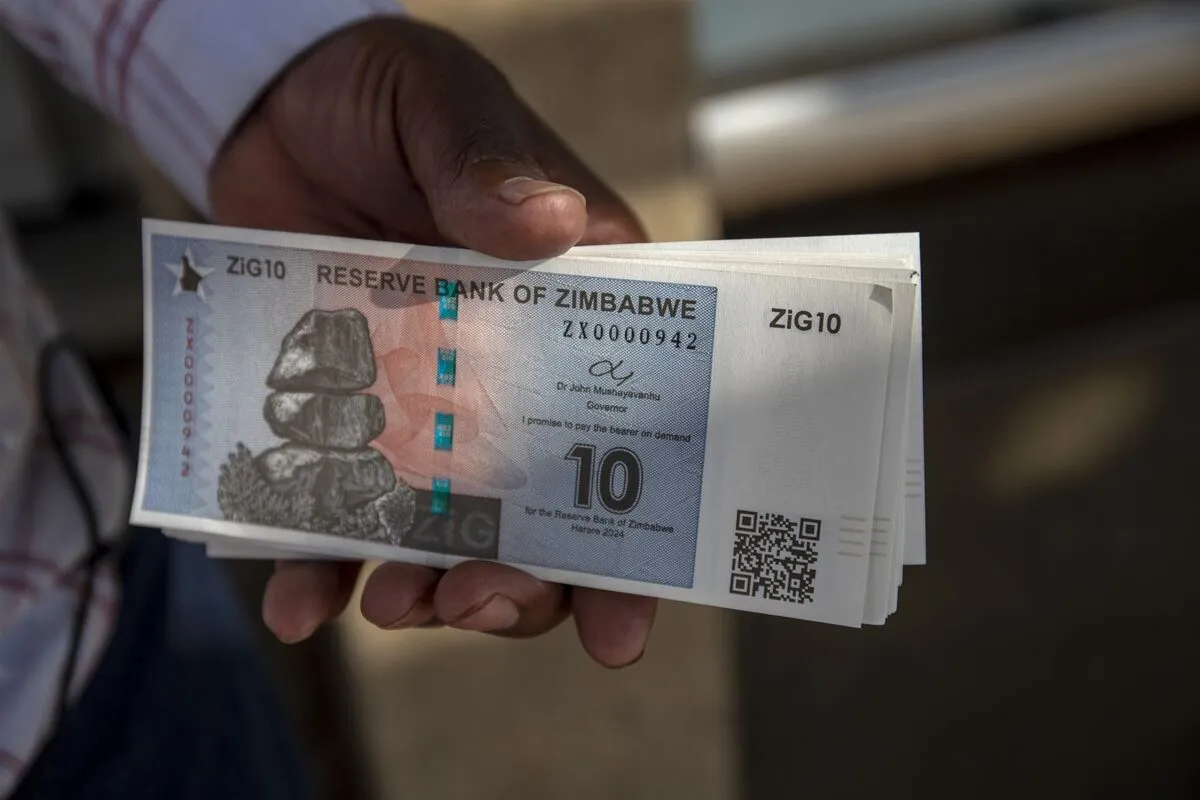
Zimbabwe's Currency Crisis Deepens: 42% Devaluation of the ZiG
Zimbabwe’s Currency Crisis Deepens: 42% Devaluation of the ZiG. (Photo Internet reproduction)
One-stop reference
Company Intelligence
Every listed company in Latin America — financials, ownership and structure for 1,450+ companies across 26 exchanges, in one place.
Browse the directory →
RT
Ask Rio Times
17 years of Latin America reporting, on demand.
Open the full Ask Rio Times →

It represents Zimbabwe’s sixth attempt at establishing a stable national currency in just 15 years, underscoring the country’s persistent monetary instability.

Initially touted as a gold-backed currency aimed at tackling inflation, the ZiG was presented with assurances of sufficient gold reserves.

However, its rapid devaluation raises questions about the transparency and adequacy of these reserves. Independent economist Hapi Zengeni noted that the official exchange rate does not reflect parallel market realities.

This discrepancy leads to challenging economic implications. Despite the central bank’s efforts, the parallel foreign exchange market has continued to thrive.

The ZiG’s Plummet and Economic Implications

In recent weeks, the ZiG’s value plummeted to approximately 30 per US dollar on the unofficial market, while the official rate remained fixed at 13.7 for most of the month.

This disparity triggered a surge in commodity prices during September. Zimbabwe’s former finance minister, Tendai Biti, observed that the new currency is “destined to fail” in the current policy environment.

He highlighted that fundamental issues extend beyond currency reform. The country’s history of hyperinflation looms large. Inflation reached an astounding 79.6 billion percent month-on-month at its peak in November 2008.

The nation’s struggle to maintain a stable currency contrasts sharply with other countries’ ability to manage their monetary systems.

Chronic mismanagement, lack of fiscal discipline, political instability, and erosion of public trust have all contributed to Zimbabwe’s ongoing currency crisis.

As Zimbabwe grapples with this latest economic challenge, the impact on citizens is immediate and severe. The devaluation is likely to lead to a spike in the cost of living, erode savings, and further diminish purchasing power.

While it may potentially boost exports and attract foreign investment, it also risks exacerbating inflationary pressures in the short term.

The coming months will be crucial in determining whether this bold move can break the cycle of currency instability. Alternatively, it may join Zimbabwe’s long list of failed monetary experiments.

The government and central bank face the daunting task of implementing fundamental reforms. These reforms are essential to address the root causes of the country’s economic turmoil.

This article was produced by The Rio Times’ automated newsroom system. How we use AI · Report an error

Part of our ongoing coverage

Africa: The New Scramble — the great-power contest over the continent.

More from Southern Africa

Read More from The Rio Times

The Rio Times · Power Map
See who really holds power in Latin America
Click to open the Power Map

Rotate for Best Experience

This report is optimized for landscape viewing. Rotate your phone for the full experience.