IBOV 177,583.27 ▲ 1.09% IPSA 11,347.98 ▼ 0.86% IPC MEX 65,048.39 ▼ 0.67% MERVAL 2,999,080 ▲ 0.66% COLCAP 2,467.23 ▲ 0.38% BVL PERÚ 59,928.30 ▼ 0.14% USD/BRL5.18▼ 0.17% USD/MXN16.99▼ 0.27% USD/CLP934.76▲ 0.35% USD/COP3,217▲ 0.53% USD/PEN3.37▲ 0.54% USD/ARS1,509▼ 0.28% USD/UYU40.29▲ 0.05% USD/PYG5,892▼ 0.13% USD/BOB11.84▲ 0.51% USD/DOP58.64▲ 0.05% USD/CRC446.47▼ 0.04% USD/GTQ7.62▼ 0.02% USD/HNL26.84— 0.00% USD/NIO36.62— 0.00% USD/VES793.00▼ 0.13% USD/PAB1.00— 0.00% USD/BZD2.00— 0.00% USD/JMD 157.28 — 0.00% USD/TTD6.69▼ 0.37% EUR/BRL6.02▼ 0.11% BRENT 88.88 ▼ 0.03% WTI 83.11 ▼ 0.11% IRON ORE 161.91 — — COPPER 6.61 ▲ 0.03% GOLD 4,461 ▲ 1.78% SILVER 65.59 ▲ 1.26% SOY 1,184 ▲ 3.20% CORN 480.50 ▲ 10.02% WHEAT 655.00 ▲ 3.93% COFFEE 317.25 ▼ 5.51% SUGAR 16.43 ▼ 1.79% ORANGE JUICE 138.55 ▼ 0.47% COTTON 85.03 ▲ 2.33% COCOA 5,719 ▲ 3.18% BEEF 223.60 ▼ 3.93% CATTLE 339.10 ▼ 3.16% LITHIUM 75.20 ▲ 1.47% PETR4 41.64 ▼ 0.05% VALE3 72.97 ▲ 0.83% ITUB4 38.60 ▼ 1.03% BBDC4 16.85 ▲ 0.36% ABEV3 14.89 ▼ 0.80% BBAS3 19.37 ▲ 0.47% B3SA3 14.26 ▼ 0.21% WEGE3 47.59 ▲ 0.49% PRIO3 59.14 ▼ 0.19% SUZB3 41.33 ▲ 2.35% RENT3 34.68 ▼ 0.09% AZZA3 15.89 ▼ 2.63% CSAN3 3.22 ▼ 1.83% RAIZ4 0.25 — 0.00% PCAR3 2.75 ▼ 0.36% GMAT3 3.65 ▼ 1.08% PSSA3 48.13 ▼ 0.54% CVCB3 1.33 ▼ 2.92% POSI3 3.36 ▲ 2.44% SLCE3 13.34 ▲ 0.30% NATU3 8.14 ▼ 0.73% IBOV 177,583.27 ▲ 1.09% IPSA 11,347.98 ▼ 0.86% IPC MEX 65,048.39 ▼ 0.67% MERVAL 2,999,080 ▲ 0.66% COLCAP 2,467.23 ▲ 0.38% BVL PERÚ 59,928.30 ▼ 0.14% USD/BRL 5.16 ▲ 0.01% USD/MXN 17.06 ▼ 0.24% USD/CLP 913.98 ▲ 0.04% USD/COP 3,140 ▲ 0.03% USD/PEN 3.36 ▼ 0.66% USD/ARS 1,493 ▲ 0.10% USD/UYU 40.27 ▲ 1.24% USD/PYG 5,939 ▲ 1.68% USD/BOB 11.64 ▼ 0.76% USD/DOP 58.34 ▲ 1.25% USD/CRC 445.92 ▲ 0.89% USD/GTQ 7.62 ▲ 2.21% USD/HNL 26.79 ▲ 1.57% USD/NIO 36.62 ▲ 0.69% USD/VES 762.44 ▼ 0.13% USD/PAB 1.00 — 0.00% USD/BZD 2.00 — 0.00% USD/JMD 157.28 — 0.00% USD/TTD 6.70 ▲ 0.61% EUR/BRL 5.95 ▲ 1.01% BRENT 88.88 ▼ 0.03% WTI 83.11 ▼ 0.11% IRON ORE 161.91 — — COPPER 6.61 ▲ 0.03% GOLD 4,461 ▲ 1.78% SILVER 65.59 ▲ 1.26% SOY 1,184 ▲ 3.20% CORN 480.50 ▲ 10.02% WHEAT 655.00 ▲ 3.93% COFFEE 317.25 ▼ 5.51% SUGAR 16.43 ▼ 1.79% ORANGE JUICE 138.55 ▼ 0.47% COTTON 85.03 ▲ 2.33% COCOA 5,719 ▲ 3.18% BEEF 223.60 ▼ 3.93% CATTLE 339.10 ▼ 3.16% LITHIUM 75.20 ▲ 1.47% PETR4 41.64 ▼ 0.05% VALE3 72.97 ▲ 0.83% ITUB4 38.60 ▼ 1.03% BBDC4 16.85 ▲ 0.36% ABEV3 14.89 ▼ 0.80% BBAS3 19.37 ▲ 0.47% B3SA3 14.26 ▼ 0.21% WEGE3 47.59 ▲ 0.49% PRIO3 59.14 ▼ 0.19% SUZB3 41.33 ▲ 2.35% RENT3 34.68 ▼ 0.09% AZZA3 15.89 ▼ 2.63% CSAN3 3.22 ▼ 1.83% RAIZ4 0.25 — 0.00% PCAR3 2.75 ▼ 0.36% GMAT3 3.65 ▼ 1.08% PSSA3 48.13 ▼ 0.54% CVCB3 1.33 ▼ 2.92% POSI3 3.36 ▲ 2.44% SLCE3 13.34 ▲ 0.30% NATU3 8.14 ▼ 0.73%
since 2009
Monday, August 31, 2026

Africa Southern Africa

Zimbabwe Launches Gold-Backed ZiG Currency in Economic Revamp

By · April 8, 2024 · 3 min read

Africa Intelligence

A daily Africa read from a Latin American newsroom. Free.

By subscribing you agree to our privacy policy. We never share your email.

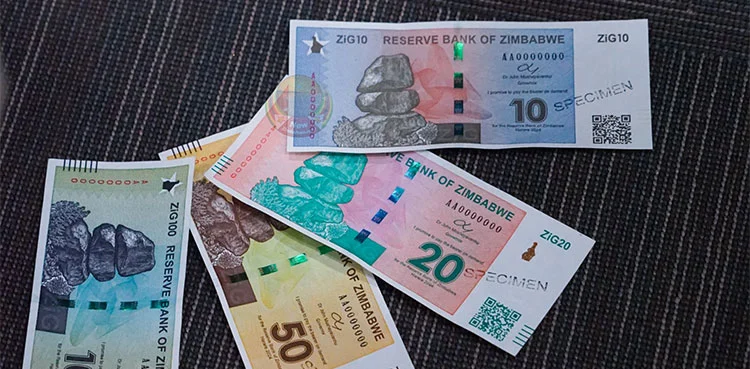
On April 8, 2024, Zimbabwe transitions to the gold-backed ZiG currency, moving away from the depreciating ZWL.

This initiative, led by Central Bank Governor John Mushayavanhu, relies on 2.5 tons of gold and diverse foreign currency reserves.

The change aligns with extensive economic reforms aimed at stabilizing Zimbabwe’s economy amidst inflation and currency depreciation challenges.

The ZiG’s introduction required rapid adjustments within the financial sector, leading to a temporary halt in ZWL transactions.

Financial institutions worked diligently over the weekend to integrate ZiG into their systems.

A 21-day period allows for ZWL note deposits before complete phase-out, safeguarding the value for non-account holders.
Zimbabwe Launches Gold-Backed ZiG Currency in Economic Revamp
One-stop reference
Company Intelligence
Every listed company in Latin America — financials, ownership and structure for 1,450+ companies across 26 exchanges, in one place.
Browse the directory →
RT
Ask Rio Times
17 years of Latin America reporting, on demand.
Open the full Ask Rio Times →

Mushayavanhu’s reforms emphasize fiscal discipline, steering clear of the money printing that previously fueled hyperinflation.

His approach reassures markets, despite skepticism rooted in Zimbabwe’s financial history.

Zimbabwe’s Currency Reform

The central bank assures no impact on US dollar balances, with ZWL converted to ZiG at April 5 rates.

Foreign exchange policies have been standardized, with a focus on a market-driven mechanism for import finance, replacing the forex auction system.

Interest rates have been cut dramatically from 130% to 20% annually, demonstrating the central bank’s commitment to money supply control, aligned with gold and foreign currency reserves.

This strategic move towards a structured currency model, backed by gold and a currency basket, marks a significant shift in Zimbabwe‘s monetary policy.

It aims to rebuild economic stability and public confidence by addressing the deep-seated issues of currency devaluation and inflation.

The effectiveness of the ZiG and the broader reforms in revitalizing Zimbabwe’s economy will be closely watched.

Zimbabwe launches ZiG, a gold-backed currency, replacing ZWL, effective April 8, 2024, signaling a major monetary shift.

Anchored by 2.5 tons of gold and a mix of foreign currency reserves, the ZiG aims to stabilize the nation’s economy.

Part of broader economic reform by new Central Bank Governor, John Mushayavanhu, unveiled Zimbabwe Gold (ZiG) on April 5, 2024.

To tackle economic challenges like currency depreciation and inflation, ZiG’s introduction accompanies monetary policy adjustments.

These include fostering exchange rate and price stability while transitioning from the severely devalued ZWL, which has plummeted against the US dollar.

Zimbabwe’s Transition to ZiG

Zimbabwe, with a multi-currency system since 2020, primarily transacts in US dollars due to its informal economy.

The transition to ZiG involved significant preparations by financial institutions.

System updates over the weekend for new currency, temporarily halting transactions in the old currency.

Central bank offers 21-day window for ZWL banknote deposits, preserving value for unbanked individuals before phase-out.

Governor Mushayavanhu opposes money printing, shifting quasi-fiscal activities to Treasury for disciplined monetary approach.

This stance is critical, given Zimbabwe’s history of hyperinflation linked to excessive money printing.

The central bank assures US dollar balances remain unaffected; ZWL balances will convert to ZiG at the April 5 exchange rate.

Central bank standardizes foreign exchange retentions and adopts market-driven mechanism for import foreign exchange, replacing previous auction system.

Interest rates slashed from 130% to 20%. The central bank aligns the money supply with ZiG’s gold and currency reserves.

However, this move deviates from a traditional gold standard to a structured currency model, adding a contemporary twist to currency backing.

This bold step by Zimbabwe aims to restore economic stability and confidence, addressing long-standing issues of inflation and currency devaluation.

We await the success of reforms and the impact of the new currency on Zimbabwe’s economy, marking a pivotal financial moment.

This article was produced by The Rio Times’ automated newsroom system. How we use AI · Report an error

Part of our ongoing coverage

Africa: The New Scramble — the great-power contest over the continent.

More from Southern Africa

Read More from The Rio Times

The Rio Times · Power Map
See who really holds power in Latin America
Click to open the Power Map

Rotate for Best Experience

This report is optimized for landscape viewing. Rotate your phone for the full experience.