Net-Firing Drones Will Guard the 2026 World Cup’s US Stadiums
Key Facts
—The contractor. Fortem Technologies, a Utah counter-drone firm backed by Lockheed Martin, won a multimillion-dollar order for the US venues.
—The method. Its DroneHunter interceptor fires a net to capture hostile drones in mid-air, avoiding debris over crowds.
—The kit. The order also covers ground radar and command software, designed to move between host cities.
—The scale. The tournament spans 48 teams and 16 host cities across the US, Mexico and Canada, with 11 US cities hosting matches.
—The budget. US Homeland Security set up a counter-drone office and earmarked about 115 million dollars for event protection this year.
—The precedent. Fortem ran the same role at the 2022 Qatar World Cup, where it was also the lone kinetic option.
The World Cup drone defense plan for the tournament’s eleven US host cities leans on a net-firing interceptor, a glimpse of how the threat of cheap drones is reshaping the business of event security.
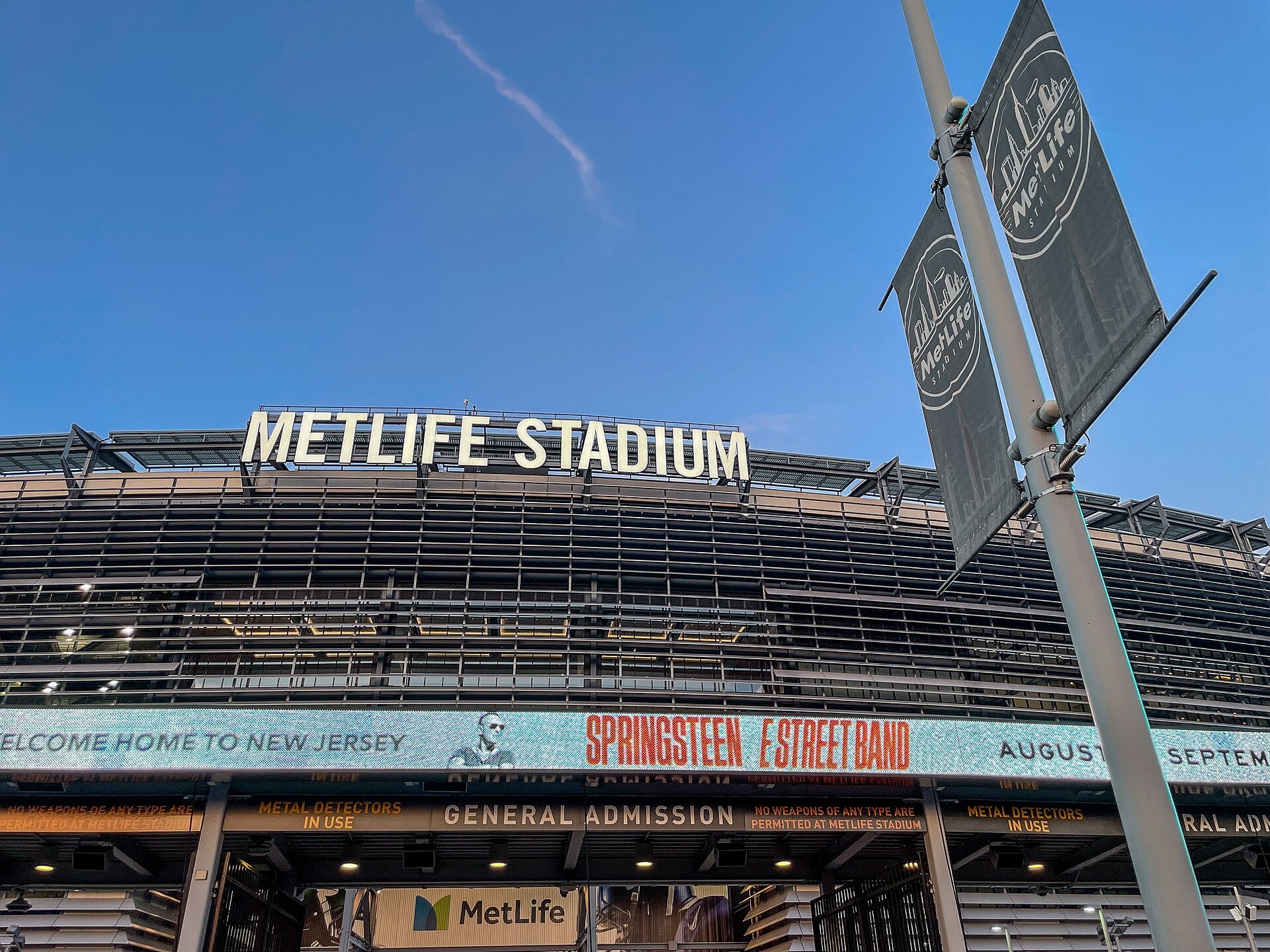
The 2026 World Cup is the biggest in the tournament’s history, and one of the hardest to keep safe. Among the threats worrying its planners is one that fits in a backpack.
Small commercial drones, once toys, are now treated by security agencies as tools for surveillance, disruption or attack. A packed stadium of tens of thousands is exactly the kind of target they fear.
To meet that threat at its eleven US venues, the American authorities have turned to an unusual weapon. It is a drone that hunts other drones and catches them in a net.
How the World Cup drone defense works
The system comes from Fortem Technologies, a Utah firm backed by Lockheed Martin. According to the company’s announcement, it won a multimillion-dollar order to protect the US venues.
Its interceptor, the DroneHunter, launches a net to snare a hostile drone in mid-air. The captured craft is then towed away or lowered by parachute, rather than blasted out of the sky.
That matters above a crowd. Shooting a drone down sends debris and a possible explosive raining onto spectators, while a net removes the threat without the fallout.
The interceptors are cued by ground radar and run through command software that can react on its own. The whole kit is built to be moved quickly, following the matches from city to city.
Fortem says it was picked as the only system allowed to physically take a drone down inside the security plan. It did the same job at the last World Cup in Qatar in 2022, on a smaller scale.
Why it matters beyond football
The contract sits inside a larger government push. The US Department of Homeland Security set up a dedicated counter-drone office and earmarked about 115 million dollars to shield the World Cup and other big national events this year.
The Rio Times reads the spending as a market signal as much as a security measure. Stopping cheap drones has become a fast-growing industry, and a global showcase is a powerful shop window for the firms that do it.
The problem is genuinely hard. No single tool stops every drone, jamming fails against models guided by fibre-optic cable, and a coordinated swarm can overwhelm defences built to catch one aircraft at a time.
That difficulty is why the threat has spread. The same cheap hardware that worries World Cup planners has already been used by armed groups in Latin America, from cartel attacks in Mexico to insurgent strikes in Colombia.
For the region, the tournament is a preview of a coming bill. Governments across the hemisphere will face pressure to buy counter-drone gear for stadiums, airports, energy sites and city centres.
There is a clean investor angle in that. The technology proven over a US stadium this summer is the same kind that ministries from Mexico City to Bogotá will be asked to fund next.
The economics of the threat are stark. A weaponised hobby drone can be assembled for a few hundred dollars, while the radars, jammers and interceptors built to stop it run into the tens or hundreds of thousands.
That gap is what drives the spending. When a cheap attacker forces an expensive defence, the cost falls on the side trying to protect crowds, borders and infrastructure, not the side trying to slip through.
The forward question is whether the defences hold. A quiet tournament would validate the net-firing approach, while a single breach over a packed stadium would reset the whole debate.
Frequently Asked Questions
What is the World Cup drone defense system?
It is a counter-drone setup chosen to protect the 2026 World Cup’s eleven US host cities, centred on Fortem Technologies’ DroneHunter interceptor. The interceptor fires a net to capture hostile drones in mid-air, backed by ground radar and command software.
Why use a net instead of shooting drones down?
Over a packed stadium, shooting a drone down risks showering debris, or a possible explosive, onto the crowd below. A net captures the drone intact and removes it, avoiding that danger and without jamming that could disrupt stadium communications.
Why does this matter for Latin America?
Cheap drones are already used by cartels in Mexico and insurgents in Colombia, so the same threat exists across the region. The tournament previews a wave of counter-drone spending governments will face to protect stadiums, airports and infrastructure.
Connected Coverage
This article was produced by The Rio Times’ automated newsroom system. How we use AI · Report an error · Editorial responsibility: Matthias Camenzind, Editor-in-Chief
Read More from The Rio Times