Brazil Truckers Strike Over a Freight Law About to Expire in the Senate

Politics
Key Facts
—The call. Driver leader Wallace Landim, known as Chorão, called a national stoppage focused on ports from midnight Monday.
—The deadline. A freight-floor decree, MP 1.343 of 2026, expires on Thursday, 16 July, unless the Senate passes it first.
—The target. Drivers blame Senate president Davi Alcolumbre for not scheduling the vote.
—The measure. The law fines firms that underpay freight.
—The stakes. Trucks move around 60 percent of Brazil’s freight, so a long stoppage threatens fuel, food and export flows.
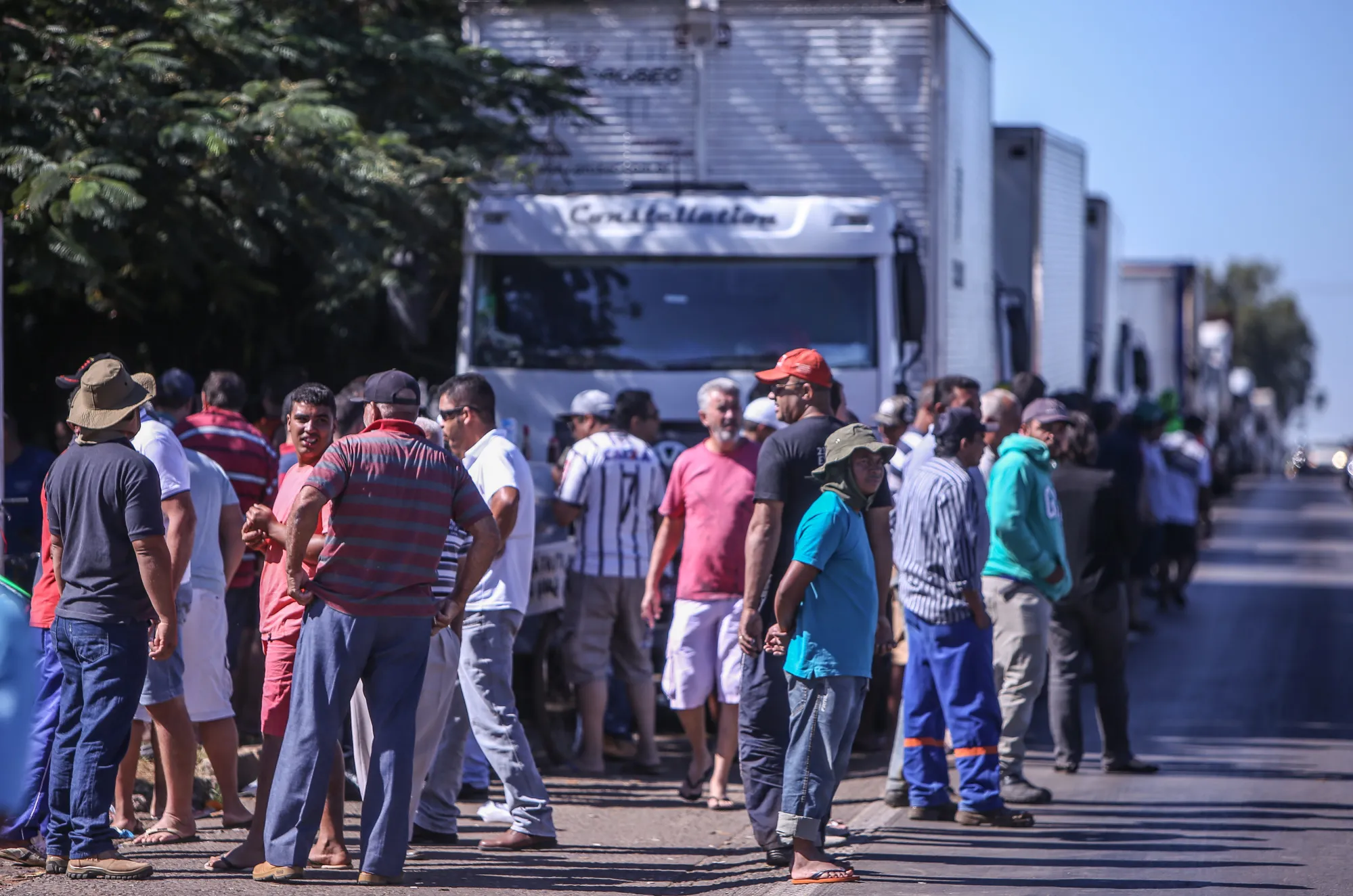
A fresh Brazil truckers strike began at ports on Monday, as driver leaders try to force the Senate to pass a freight-protection law before it lapses at the end of the week.
The stoppage was called by Wallace Landim, better known as Chorão, who heads the driver association Abrava. He told members to keep their trucks parked, with a focus on ports, rather than travel.
The aim is narrow and urgent. Drivers want the Senate to vote on a government decree that strengthens the minimum freight rate before it expires on Thursday. The pressure worked: the Senate passed the measure by voice vote on July 14, two days before the deadline, and drivers stood down their stoppages.
What the Brazil truckers strike is really about
At the center sits a provisional measure, Brazil’s term for a decree that takes effect at once but needs congressional approval to become permanent law. Issued in March, it tightens enforcement of the country’s minimum freight rate.
The lower house already approved it in June. It has been stuck in the Senate since the end of that month, and it dies on Thursday if senators do not act.
The text does several things at once. It gives the transport regulator more power to police freight prices. However, the R$5,000 monthly pay floor for long-haul drivers that the lower house had inserted was stripped out by the Senate as foreign to the decree’s original subject, a detail our reporting has shown was key to securing the chamber’s swift voice-vote approval.
It also carries penalties. Firms paying below the minimum face fines of R$1 million to R$10 million per operation for repeat offenders, alongside an amnesty for fines from road blockades after the 2022 election.
Why a Brazil truckers strike rattles the whole economy
For a foreign reader, the reason this matters is Brazil‘s reliance on road haulage. Trucks carry roughly 60 percent of the country’s cargo, and independent drivers account for the majority of that fleet.
The memory of 2018 hangs over everything. That year a truckers’ stoppage paralyzed Brazil for days, emptying supermarket shelves, grounding flights and forcing the government into a costly climbdown.
This time the category is split. The larger autonomous confederation, CNTA, is more cautious and says any full stoppage depends on union assemblies, so the movement is not yet a united front.
Business is pushing the other way. Farm and industry groups oppose the measure, arguing that tougher enforcement of the freight floor raises logistics costs and reduces room to negotiate.
That divide is a big reason the bill has stalled. The Senate is being asked to weigh a text that bundles pay rules, road-safety changes and a politically charged pardon into one vote.
The minimum freight rate itself is a legacy of the 2018 crisis. It was created to shield independent drivers from being squeezed below cost by large shippers such as farm traders and food processors.
The government issued the decree in March partly to head off unrest as global oil prices spiked. Higher diesel costs are the single biggest strain on independent drivers, whose margins are thin at the best of times.
The pressure point everyone is watching is the port network. Terminals like Paranáguá and Santos handle the grain, meat and fuel flows that a sustained blockade would choke first.
For foreign residents, the practical read is to watch adhesion over the next few days rather than the headline threat. A partial, single-day action passes almost unnoticed; a broad blockade would show up quickly at the pump and on supermarket shelves.
What triggered the Brazil truckers strike now?
A government decree strengthening the minimum freight rate expires on Thursday, 16 July, and driver leaders say the Senate has stalled the vote. They called a port-focused stoppage from Monday to force the measure onto the agenda before it lapses.
How bad could the Brazil truckers strike get?
Trucks move about 60 percent of Brazil’s cargo, so a long, well-supported stoppage could hit fuel, perishable food and exports, as happened in 2018. For now the action is partial and the largest driver group has held back.
Who is responsible for resolving the Brazil truckers strike?
Drivers put the decision squarely on Senate president Davi Alcolumbre, who controls the chamber’s agenda. Signals suggest a vote could come as soon as this week, and if senators change the text it would have to return to the lower house before reaching the president.
More: Brazil news in English, every day from The Rio Times.
Frequently Asked Questions
Why did Brazilian truckers launch a strike at ports in July 2026?
Truckers launched the strike to pressure the Senate into voting on a provisional measure, MP 1.343 of 2026, before it expires on Thursday, 16 July. The decree strengthens enforcement of the minimum freight rate and sets a R$5,000 monthly floor for long-haul salaried drivers, but has been stalled in the Senate since the end of June.
Who called the Brazil truckers strike and what did he instruct drivers to do?
The strike was called by Wallace Landim, known as Chorão, who leads the driver association Abrava. He instructed members to keep their trucks parked, with a particular focus on ports, rather than travel.
What are the potential consequences if the truckers strike continues for an extended period?
A prolonged stoppage poses a serious threat to Brazil's supply chains because trucks move around 60 percent of the country's freight. Fuel, food, and export flows could all be disrupted if the strike drags on.
Connected Coverage
Lula’s Flagship Workweek Reform Stalls in a Hostile Senate
Brazil’s Government Gives in to Truckers Demands to End Strike
Brazil 2026 Elections: Guide to Candidates, Polls and Key Dates
This article was produced by The Rio Times’ automated newsroom system. How we use AI · Report an error · Editorial responsibility: Matthias Camenzind, Editor-in-Chief