Brazil Weighs a Defense Revamp, Its Biggest Military Shake-Up Since 1999
Defense
Key Facts
—The proposal. A Defense Ministry study, reported by DefesaNet and not yet official, would build a permanent joint command and be the biggest reorganization since 1999.
—The audit. A separate, confidential audit-court report, cited by SBT News, urges cutting the service chiefs’ sway over defense policy.
—The target. Both point at a governance council where consensus rules give each commander an effective veto.
—The evidence. Flagship programmes have stretched for lack of money: the submarine plan from 5 to 26 years, cyber defense 3 to 27, and the Astros missile system 8 to 30.
—The backdrop. The debate lands as the government blocked about R$23.7 billion ($4.7 billion) across the federal budget.
A Brazil defense revamp is taking shape on two fronts at once, and both would pull power away from the army, navy and air force chiefs toward the civilian defense minister. Neither is settled, but together they signal a rare push to rewire how the country runs its military.
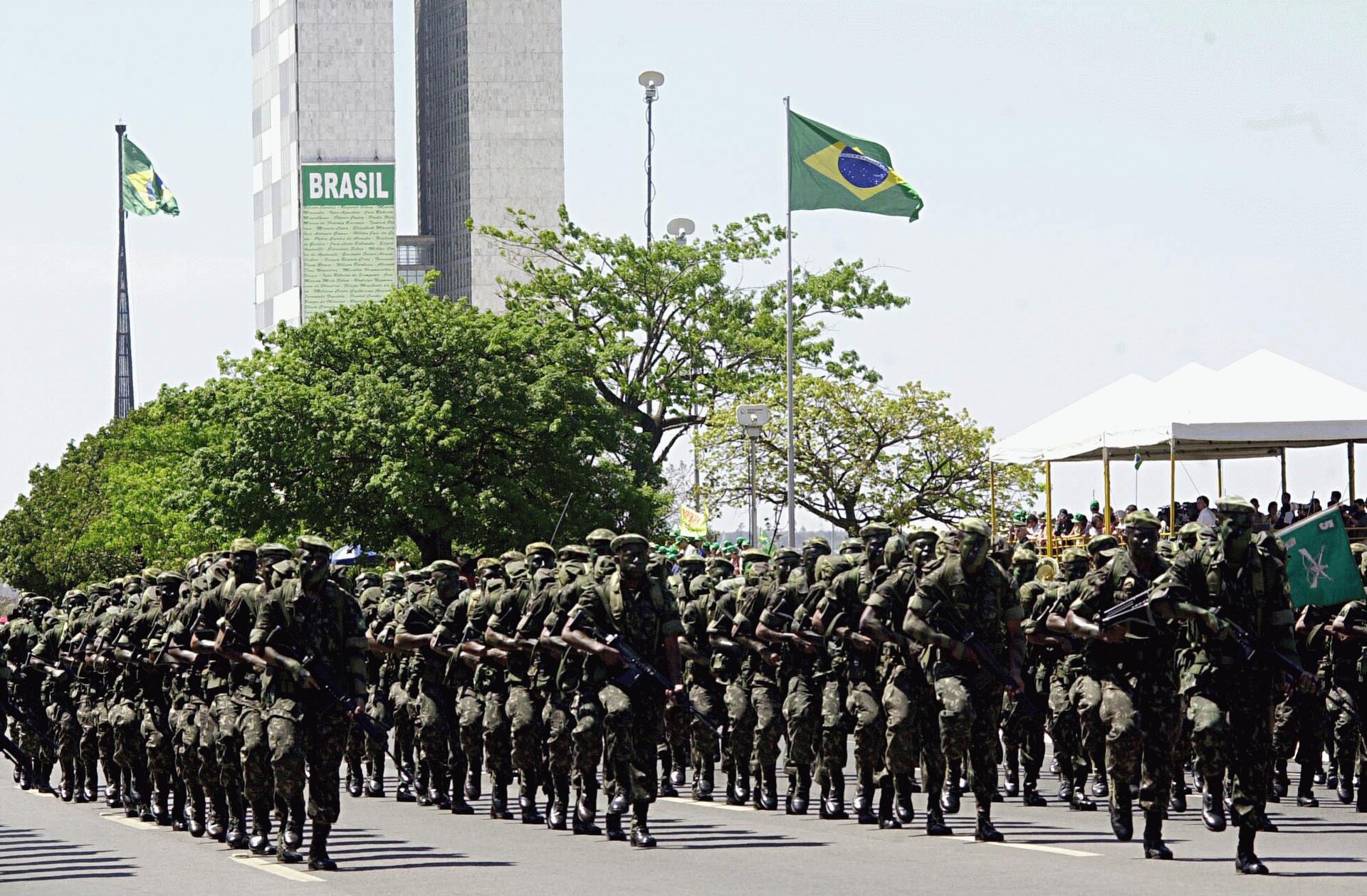
The first is a study circulating inside the Defense Ministry, reported by the specialist site DefesaNet and its editor Nelson Düring. It is described as still unofficial, but far-reaching.
What the Brazil defense revamp would change
The proposal would be the biggest reorganization of the armed forces since the Defense Ministry was created in 1999. Its core idea is to strengthen the joint staff, known as the EMCFA, into a permanent operational command.
Under that model, the navy, army and air force would focus on preparing and equipping their troops. Actually deploying forces would fall to a single, standing joint structure rather than each service acting alone.
It mirrors the setup used by several larger militaries abroad. For Brazil it would turn the Defense Ministry from a mostly political coordinator into a genuine centre of strategic direction.
The ministry was set up in 1999 to fold the old separate service ministries under one civilian head. In practice it has long leaned on the forces themselves for technical weight, a dependence the study would try to end.
One reported detail is that top four-star posts would be reserved for strategic roles rather than routine service command. That alone signals how far the rethink would reach into military hierarchy.
Where the audit court comes in
The second front is a confidential report by the technical staff of the federal audit court, the TCU, cited by SBT News. It advises the government to reduce the service commanders’ weight in setting defense policy.
Its focus is a governance council chaired by the minister but including the three commanders, where decisions must be unanimous. The technical view is that this hands each chief a veto over which programmes get priority.
The problem, in the report’s reading, is that the same officers who run the services also help decide which of their own projects get funded first. That, it argues, blurs the line between governance and management.
Why the money makes the case
The audit points to strategic programmes whose timelines have ballooned for lack of steady funding. The submarine programme’s infrastructure contract stretched from five years to twenty-six.
The army’s cyber-defense effort went from three years to twenty-seven, and the Astros missile system from eight to thirty. The report reads that as proof the project list is far larger than the budget can bear.
That squeeze is not abstract. The government recently blocked about 23.7 billion reais, roughly 4.7 billion US dollars, across the federal budget, with Defense among the hardest hit.
For a foreign reader, the thread tying both moves together is civilian control. Each, in its own way, would strengthen the defense minister’s hand over commanders long used to running their own affairs, in a country still sensitive about the military‘s political role. Our reporting has shown that the Army has historically dominated the ministry’s top ranks, a pattern that critics say a stronger joint command could help break.
Is the Brazil defense revamp official?
No. The reorganization is described as a study under discussion inside the Defense Ministry, reported by DefesaNet, and has no official status yet. The related audit-court report is confidential and was cited by SBT News.
What is the EMCFA?
The EMCFA is Brazil’s joint chiefs of staff, which plans and coordinates operations across the navy, army and air force. The proposal would upgrade it from a planning body into a permanent operational command.
Why does it matter for defense spending?
Because both moves aim to let the ministry set priorities across the forces rather than fund each service’s separate wish list. Supporters argue that would stop strategic programmes from stretching over decades as budgets fall short.
More: Brazil news in English, every day from The Rio Times.
Frequently Asked Questions
What is the main goal of the proposed Brazil defense revamp?
The proposal aims to shift power from the army, navy, and air force chiefs toward the civilian defense minister by strengthening the joint staff. It would be the biggest reorganization of the armed forces since the Defense Ministry was created in 1999.
What evidence shows the current governance model is causing problems?
Flagship programs have stretched significantly due to lack of money, with the submarine plan extending from 5 to 26 years, cyber defense from 3 to 27, and the Astros missile system from 8 to 30 years. Both the study and a separate audit point to a governance council where consensus rules give each commander an effective veto.
What are the two fronts pushing for this reorganization?
The first is an unofficial Defense Ministry study reported by DefesaNet, and the second is a separate, confidential audit-court report cited by SBT News that urges cutting the service chiefs' sway over defense policy. This debate is occurring as the government blocked about R$23.7 billion across the federal budget.
This article was produced by The Rio Times’ automated newsroom system. How we use AI · Report an error · Editorial responsibility: Matthias Camenzind, Editor-in-Chief
Read More from The Rio Times