Why Protests in Colombia Flared up Again
RIO DE JANEIRO, BRAZIL – Just two weeks after hundreds of thousands of people took to the streets in Colombia against President Iván Duque‘s government, mass protests were again expected in all cities on Wednesday. Since the first day of the strike, thousands of people have taken part in daily self-organized protests in the districts.

Concerts, pot banging, feminist flash mobs, and community gatherings are among them. The National Strike Committee had called for the whole country to be paralyzed on December 4th, to persuade the government to hold discussions about the strikers’ demands.
On the fifth day of protest, Duque announced his willingness to meet with the strike spokesmen, but only as part of talks between the government and business bodies and without taking into account the protesters’ core demands. The strike committee thus called for the government to meet with them, indigenous allies, peace organizations, and spokespersons from self-organized civic assemblies to address their demands.
On Monday, the twelfth day of the strike, Duque finally agreed to talks on the condition that Wednesday’s strike be called off. The strike committee then met with the government on Tuesday but refused to cancel the strike.
The strike movement’s demands were originally aimed at stopping reforms and decrees that would privatize the pension system and state-owned enterprises, and worsen working conditions. Even the hard-fought increase in funding for education is now being demanded by students because Duque has not kept his word.
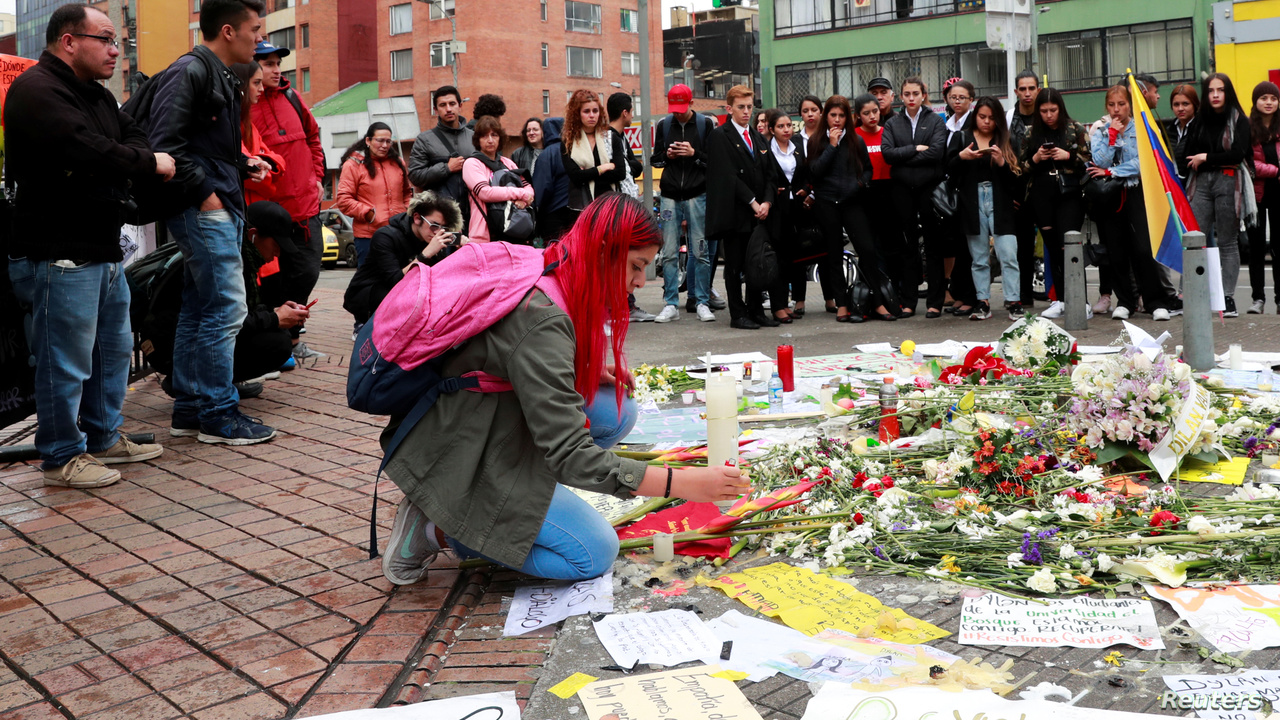
New demands have been added, such as the resumption of the peace process with the ELN guerrillas, the demilitarization of cities, and the dissolution of the infamous police counterinsurgency unit, the ESMAD, which killed 18-year-old Dilan Cruz on the fourth day of the strike. The strikers also want to discuss with the government the growing number of murders of social activists and ex-fighters of the historical guerrilla organization FARC-EP.
So far, the actions of Duque’s government refute its declared willingness to engage in dialogue with the strikers. In the midst of the protests, Duque has put state-owned companies into the hands of private financial capital. One of the protester’s demands was not to do this. The government is also pushing ahead its reforms, lowering the taxes of large corporations and increasing those of the middle and lower classes.
And despite the outrage at the killing of high school student Cruz, Duque visited the ESMAD and the police to express his gratitude “for their dedication and permanent sacrifice” in protecting Colombians. Meanwhile, reports from city residents of permanent harassment by the police and the ESMAD against people passing by are increasing, even outside demonstrations.
Nevertheless, protesters intend to persevere. Last week, the first indigenous communities traveled to Bogotá to join the protests in the city. Hundreds more are expected this week. Popular Colombian bands have also joined the mobilizations and announced a big strike concert for December 8th in Bogotá.
More: Latin America news in English, every day from The Rio Times.
This article was produced by The Rio Times’ automated newsroom system. How we use AI · Report an error · Editorial responsibility: Matthias Camenzind, Editor-in-Chief