Brazil Fuels an Ocean Ship With Ethanol for the First Time
Energy
Key Facts
—The first. A container ship refuelled with Brazilian ethanol at the Port of Santos on July 12, a national first.
—The volume. The CMA CGM Iron took on approximately 635,000 to 650,000 litres of ethanol supplied by trading group Copersucar.
—The route. The 13,000-container tri-fuel ship is bound for Asia, calling at Sri Lanka and Singapore before China.
—The cut. Companies estimate ethanol lowers emissions by about 70% versus conventional fossil bunker fuel.
—The prize. Shipping could become a large new market for Brazil, the world’s second-biggest ethanol producer.
For the first time, an ocean-going ship has refuelled with Brazilian ethanol. The operation at the Port of Santos points to a possible new export market for the country’s signature biofuel.
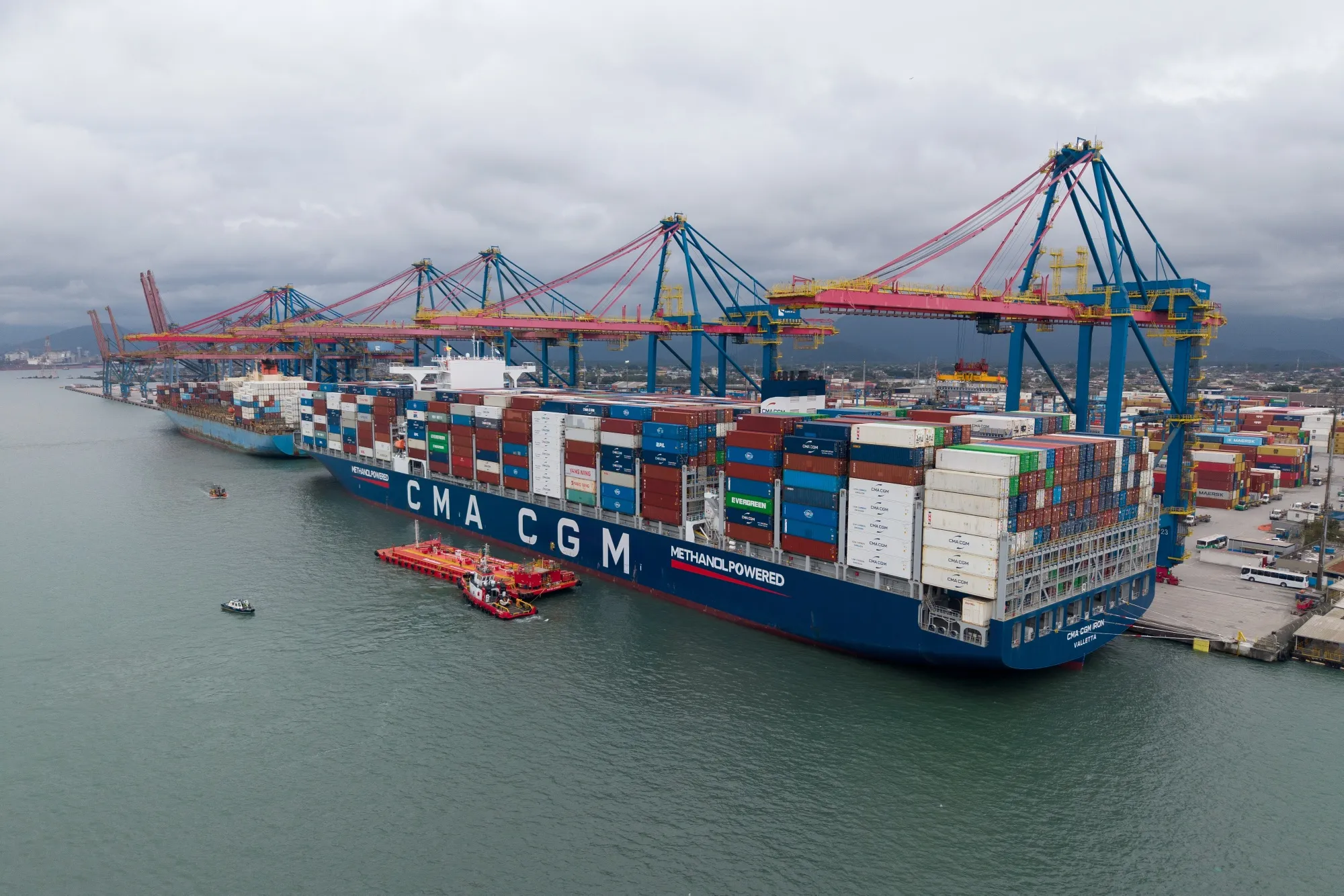
The container ship CMA CGM Iron took on ethanol during a stop at Santos on July 12. It was the first time the sugarcane-based fuel powered an ocean-going vessel in Brazil.
How the ethanol fuelling worked
The ship took on approximately 635,000 to 650,000 litres of anhydrous ethanol supplied by Copersucar, the trading arm of dozens of Brazilian sugar and ethanol producers. The refuelling was carried out by Denmark’s Bunker One.
The vessel carries up to 13,000 containers and runs a tri-fuel engine, able to use conventional bunker fuel, methanol or ethanol. It is bound for Asia, calling at Sri Lanka and Singapore before China.
The step followed two years of testing and engine work. Terminal operators AGEO and Santos Brasil also took part in the multi-company operation.
The milestone builds on Brazil’s broader push into green shipping corridors. Our reporting has shown that Porto do Açu in Rio de Janeiro is developing the world’s first green maritime route with Belgium’s Port of Antwerp-Bruges, aiming to export up to ten million tons of green ammonia annually by 2030. Petrobras has also partnered with Denmark’s European Energy to explore an e-methanol plant in Brazil, signaling that the country’s maritime fuel ambitions extend well beyond ethanol.
Why ethanol at sea matters
Shipping is one of the hardest sectors to clean up and accounts for roughly 3% of global emissions. The industry regulator has set a net-zero goal for 2050, creating pressure to find low-carbon fuels.
Companies estimate ethanol can cut a vessel’s emissions by about 70% against fossil bunker fuel. For Brazil, the world’s second-largest ethanol producer, that could open a vast new market beyond the petrol pump.
Copersucar’s chief executive, Tomás Manzano, called ethanol the most economically competitive of the green options. It is still pricier than fossil bunker fuel, but he said carbon credits could help close the gap.
Still a long way from scale
The demonstration is tiny next to the fleet. The CMA CGM Iron is one of just 12 tri-fuel ships the group runs among more than 700 vessels, and only around 70 ships worldwide can burn ethanol today.
Bottlenecks remain. Executives cite the need for new rules on producing and shipping the fuel, foreign certifications for export, and the green supply corridors that would keep such ships fuelled.
There is also resistance abroad. The European Union has questioned Brazilian ethanol on food-versus-fuel grounds, a stance some analysts read as protectionism dressed up as food security.
Still, the players are betting on scale. Bunker One says about 400 more ships able to run on ethanol or methanol are due out of shipyards in the coming years, widening the potential customer base.
For a foreign reader, the pitch is geographic. Santos, the largest port in Latin America, wants to become a low-carbon fuelling hub linking Brazil’s cheap renewable fuel to global shipping lanes.
What happened at the Port of Santos?
On July 12 the container ship CMA CGM Iron refuelled with approximately 635,000 to 650,000 litres of Brazilian ethanol, the first time the fuel powered an ocean-going vessel in Brazil. Copersucar supplied the ethanol and Bunker One carried out the operation.
How much cleaner is ethanol as a ship fuel?
Companies involved estimate ethanol cuts a vessel’s emissions by about 70% compared with conventional fossil bunker fuel. That makes it attractive as the shipping industry works toward a net-zero target set for 2050.
Can ethanol become a big marine fuel market for Brazil?
Potentially, since Brazil is the world’s second-largest ethanol producer. But scale is limited by the small number of ships able to burn it, higher costs than fossil fuel, and the need for new regulations and export certifications.
Connected Coverage
Brazil’s Corn Ethanol Eyes a New Market: Ship Fuel
Brazil’s 50-Year Ethanol Bet Pays Off as the Iran War Roils Fuel
Port of Santos Sets Record for Start of 2026 as Cargo Climbs
More: Brazil news in English, every day from The Rio Times.
Frequently Asked Questions
What happened at the Port of Santos on July 12?
The container ship CMA CGM Iron refuelled with 650,000 litres of Brazilian ethanol, the first time an ocean-going vessel was powered by the fuel in Brazil. Copersucar supplied the ethanol and Denmark's Bunker One carried out the operation.
How much can ethanol cut a ship's emissions?
Companies estimate ethanol can lower a vessel's emissions by about 70% compared with conventional fossil bunker fuel. This is important because the shipping industry has a net-zero goal for 2050.
Could this create a big new market for Brazilian ethanol?
Potentially yes, since Brazil is the world's second-largest ethanol producer, but scale is limited. Only around 70 ships worldwide can burn ethanol today, and executives say new rules, export certifications, and green supply corridors are still needed.
This article was produced by The Rio Times’ automated newsroom system. How we use AI · Report an error · Editorial responsibility: Matthias Camenzind, Editor-in-Chief