Half of South America Has Caught Fire, Sparked by Pervasive Inequality
RIO DE JANEIRO, BRAZIL – South America has been experiencing turbulent weeks. The sometimes very violent demonstrations that broke out in Chile in mid-October erupted out of the blue like lightning.
The country has so far been regarded as a beacon and stronghold of stability among Latin American countries, the country with the highest per capita income in the region and with regular, democratic changes of government between the left and right-wing.

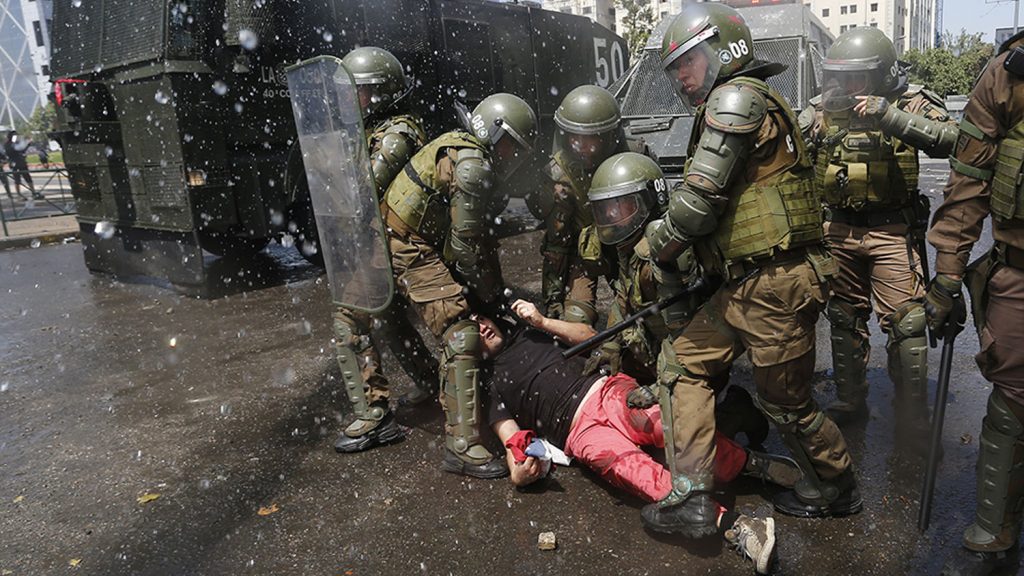
Up to one million Chileans (more than five percent of the total population) took to the streets in the capital Santiago alone to protest against growing social inequality.
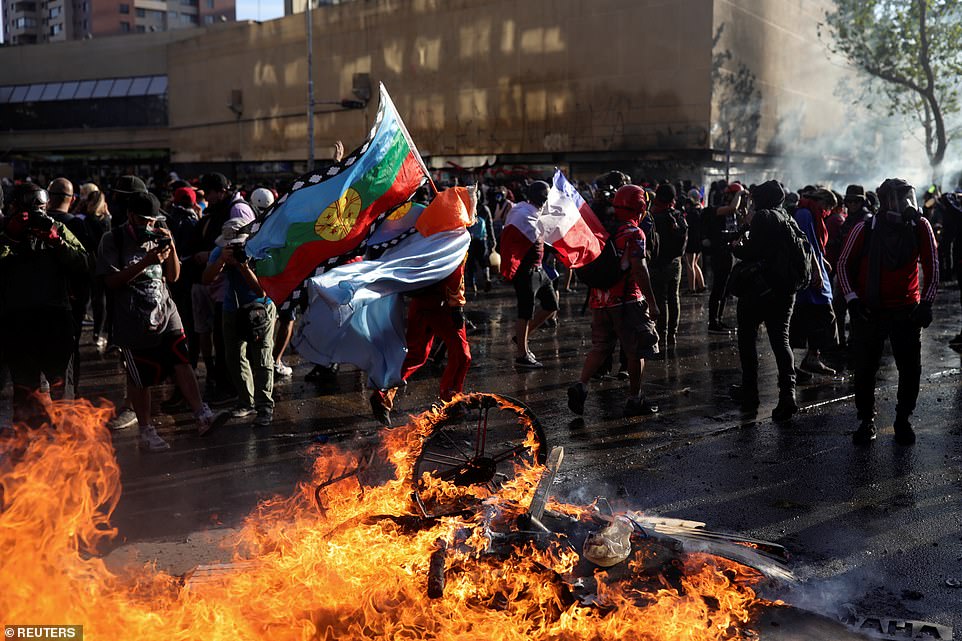
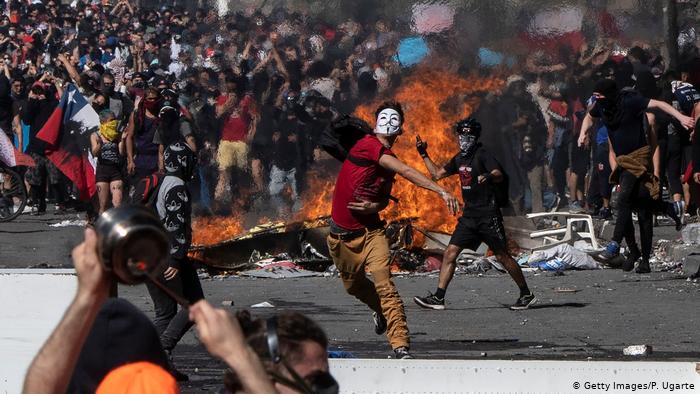
Meanwhile, a small, violent minority wreaked havoc. Dozens of shopping malls were looted and partly set on fire. Numerous other shops, state buildings and a historic church also went up in flames.
More than 20 people were killed. President Piñera acknowledged the severity of the situation and announced social improvements and a new constitution. But protests continue and the national currency is at a record low.
Continent in flames
Not only Chile, but also half of the continent’s countries were or are constantly ablaze. It is noticeable that this is not a rebellion against the left or right-wings. Regardless of their political convictions, governments are accused of failing to meet the population’s needs.
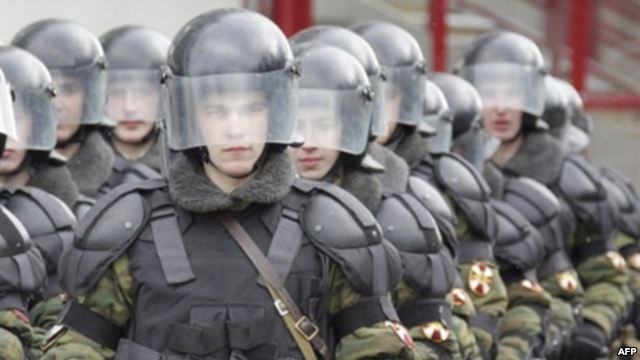
In Ecuador, a massive increase in fuel prices, ordered by the temperate left-wing President Lenín Moreno to comply with an International Monetary Fund requirement, led to nationwide protests. Moreno had to withdraw the price increase after a march of indigenous people to the capital with heavy damage.
In Colombia demonstrators demand that the government uphold minimum wages for youths and the universal right to retirement.
In Bolivia, the increasingly authoritarian left-wing president Evo Morales was forced to resign after weeks of protests over election fraud, without a stable new government having been formed so far.
In Argentina, conservative President Mauricio Macri had made himself unpopular due to a severe economic crisis. As a result, the population embarked on a sharp shift to the left in its presidential elections.
Venezuela still remains: Juan Guaidó has been trying since the beginning of the year to overthrow the country’s left-wing ruler Nicolás Maduro as the opposition’s president. In the meantime, as the internal drama continues, 4.6 million Venezuelans have fled abroad.
An Eldorado due to commodity prices
What is the source of the discontent in much of South America that is now triggering such violent eruptions? To understand this, a review of the region’s economic development over the last two decades is helpful.
The beginning of this century saw Latin America turn into an Eldorado. The sharp rise in commodity prices brought massive additional revenues to virtually all economies and governments in the region. Within a few years, the price of soybeans, the green gold of Brazil, Argentina and Paraguay, trebled.
The price of oil, which plays a key role for Venezuela and Ecuador, rose by a factor of four, and the price of copper, which is of great importance for the Chilean and Peruvian economies, increased fivefold.
The rise in commodity prices was partly due to rising demand from China. Governments were able to increase their budgets massively, and invest in programs to mitigate poverty.
Venezuelan President Hugo Chávez increased government spending from US$10 billion in 1998 to US$160 billion in 2012. During this period, the poorer Latin Americans were able to benefit twice over from growing social spending and rising wages if they were employed. Many countries set up cash transfer programs targeting impoverished families linked to school attendance and health services.
This was also intended to lay the foundations for the permanent social development of children. Within just a few years, Latin America experienced a remarkable reduction in poverty. According to the World Bank, the proportion of poverty in the total population dropped from 42.8 to 23.3 percent between 2000 and 2014. In other words, some 120 million Latin Americans succeeded in freeing themselves from the shackles of poverty.
Back to the lean years
However, the development has not continued as before. The years following 2013 brought a sharp drop in raw material prices and a dramatic deterioration in the economic situation.
Governments were forced to cut their budgets and consequently their social programs. Unemployment increased. Following the hopes that growth had awakened, millions of Latin Americans are now suddenly facing a return to social decline.
Many of the social programs were not sustainably financed. In particular, despite the strong growth in most countries, no substantial reduction was achieved in high-income vs low-income inequality .
Since 2014, around 15 million citizens (2.5 percent of Latin America’s population) have plunged back into poverty. Many others face the same threat in the future given the current economic situation.
The population’s reaction to the recent deterioration in living conditions was inevitable. Many disappointed citizens have lost confidence in their governments, partly as a result of a string of major corruption scandals.
This has led to political instability, as shown by surveys conducted by the Chilean research institute Latinobarómetro, which has regularly conducted representative surveys on social issues throughout Latin America for over twenty years. Less than half of respondents today view democracy as their preferred form of government.
Over the past eight years, the proportion has dropped from 61 to 48 percent. Four-fifths of respondents do not feel represented by those in power, and believe that they are primarily acting on behalf of less powerful groups (up from 61 to 79 percent).
Equal opportunities are paramount
Despite the evident instability, the current unrest also represents an opportunity for Latin America if it impels governments to implement the social reforms missed during the boom phase.
Chile is setting a good example, with a new constitution designed to correct the negative aspects of the Pinochet legacy, in particular social inequality and insufficient political involvement. Social inequality as a core issue in Latin America dates back to colonial times, when a rigid social order assigned its inhabitants their place according to origin and skin color.
To this day, this is the region of the world with the highest income inequality and the highest crime rate. The two do not necessarily go hand in hand, but if there is no equality of opportunity, and the impoverished are effectively prevented from progressing, crime becomes the outlet for the excluded.
Equality of opportunity will not be achieved overnight, it will take decades. The current situation may only be reversed if the state can guarantee all youths a high-quality education.
Successful Asian countries show how important it is to have an excellent education system that is accessible to all. In Latin America, the common pattern is still that good schools and universities are reserved for well-off youths. This is how social inequality is cemented.
These reforms will require great efforts from Latin America, but they are unavoidable if the region is not to revert to the instability of the past century. As long as current inequalities persist, populists of all stripes will find it easy to mobilize the disaffected against constitutional governments. The elites are responsible.
More: Brazil news in English, every day from The Rio Times.
This article was produced by The Rio Times’ automated newsroom system. How we use AI · Report an error · Editorial responsibility: Matthias Camenzind, Editor-in-Chief